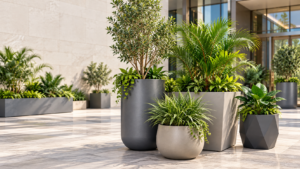
Modern landscaping is no longer limited to gardens and outdoor lawns. Offices, hotels, shopping complexes, residential apartments, restaurants, and commercial buildings increasingly use planters to introduce greenery and improve the appearance of their spaces. Choosing the right planter involves considering durability, weight, design, maintenance, and suitability for the intended environment. An FRP Planter offers a practical solution by combining a contemporary appearance with the functional benefits of fiberglass-reinforced plastic.
From compact indoor arrangements to large outdoor landscaping projects, FRP planters are available in different shapes, sizes, colours, and finishes. Their versatility makes them suitable for architects, interior designers, landscape professionals, property developers, and homeowners seeking attractive planting solutions.
What Makes an FRP Planter Suitable for Modern Spaces?
FRP stands for Fiberglass Reinforced Plastic, a composite material made using a polymer resin reinforced with glass fibres. This combination provides structural strength while allowing manufacturers to create products in different shapes and designs.
Unlike some traditional planter materials, FRP can be moulded into contemporary geometric forms, rounded silhouettes, rectangular containers, and decorative profiles. This flexibility allows designers to coordinate planters with modern architecture and different landscaping concepts.
Another advantage is its relatively low weight compared with many concrete or stone alternatives of similar dimensions. This can make handling, transportation, and installation easier, although the final weight depends on the planter’s size, construction, and finish.
For projects requiring consistent design across multiple locations, FRP planters can also be produced in coordinated styles and colours, subject to the manufacturer’s available customization options.
Key Benefits of Choosing FRP Planters
1. Durability for Indoor and Outdoor Applications
FRP planters are commonly selected for environments where strength and weather exposure are important considerations. Properly manufactured products can withstand regular use and outdoor conditions when their resin system, surface coating, and construction are appropriate for the application.
For outdoor installations, buyers should check the product’s UV resistance, moisture tolerance, and suitability for local temperature variations. Appropriate installation and routine inspection can help maintain the planter’s appearance and service life.
2. Lightweight Construction and Easier Handling
Large planting containers can be difficult to move, especially during installation or landscape redesign. FRP offers a useful alternative where reducing the planter’s own weight is important.
This characteristic can benefit office interiors, balconies, terraces, hospitality spaces, and commercial entrances. However, buyers should consider the combined weight of the planter, growing medium, retained water, and mature plants when assessing floor or terrace loading.
3. Flexible Designs and Finishes
A planter contributes to the visual identity of a space as well as supporting plant growth. FRP can accommodate a variety of forms, including round, square, rectangular, tall, and oversized designs.
Depending on the product range, finishes may include matte colours, textured surfaces, and stone-inspired appearances. Neutral shades can complement corporate interiors, while contrasting colours can create visual interest in hospitality venues and retail environments.
4. Relatively Low Maintenance
Compared with some materials that may require regular sealing or repainting, suitably finished FRP planters can be relatively easy to maintain. Routine cleaning with a soft cloth or sponge and a mild cleaning solution is generally sufficient for ordinary surface dirt.
Avoid abrasive cleaners and follow the manufacturer’s care instructions to protect the finish. Outdoor planters should also be inspected periodically for drainage issues, surface damage, or signs of deterioration.
How to Choose the Right FRP Planter
Selecting an appropriate planter begins with understanding the planting and installation requirements. A container that looks attractive but lacks sufficient growing space or drainage may not perform well over time.
Consider the following factors before placing an order:
- Size and depth: Match the container dimensions to the mature plant’s root system and growth requirements.
- Location: Confirm whether the planter will be used indoors, outdoors, on a balcony, or in a high-traffic commercial area.
- Drainage: Check whether drainage holes and suitable water-management arrangements are provided or can be specified.
- Material quality: Ask about the resin system, reinforcement, surface coating, and suitability for the intended environment.
- Finish and colour: Select a design that complements the surrounding architecture and landscaping.
- Installation requirements: Consider handling access, wind exposure, anchoring needs, and the fully loaded planter’s weight.
- Supplier support: Confirm customization options, minimum order quantities, delivery timelines, and after-sales assistance.
Working through these factors helps buyers make decisions based on the actual needs of their projects rather than appearance alone.
Why Work with Experienced FRP Planter Manufacturers?
Choosing an experienced supplier is particularly important for commercial and bulk landscaping projects. Reliable FRP Planter Manufacturers can help buyers evaluate product dimensions, available finishes, customization requirements, and suitable designs for different applications.
Before finalizing an order, request product specifications and samples or photographs where available. For larger projects, confirm consistency across batches, packaging arrangements, delivery schedules, and any applicable warranty terms. Buyers should also clarify whether the quoted price includes customization, transportation, and installation-related requirements.
Exploring a dedicated FRP Planter product range can help architects, designers, contractors, and procurement teams compare available options and identify products suited to their projects.
A supplier’s technical guidance is especially valuable when planters will be installed outdoors, used in demanding commercial environments, or specified in large quantities.
Frequently Asked Questions
Are FRP planters suitable for indoor and outdoor use?
Yes. FRP planters can be used in both environments when the product is designed for the intended conditions. Outdoor buyers should check UV resistance, weather suitability, and drainage provisions before purchasing.
Are FRP planters easier to move than concrete planters?
Generally, FRP planters are lighter than comparable concrete planters, although actual weight varies with dimensions and construction. The growing medium, water, and plant add to the total weight.
Can FRP planters be customized?
Many manufacturers offer options for size, shape, colour, and finish. Availability depends on the product range, production capabilities, order quantity, and project specifications.
How should FRP planters be maintained?
Clean the surface periodically using a soft cloth or sponge and a mild cleaning solution. Follow the manufacturer’s recommendations and inspect drainage and surface condition regularly, particularly in outdoor installations.
What should commercial buyers check before ordering FRP planters?
Commercial buyers should verify dimensions, material specifications, finish quality, drainage, quantity requirements, delivery schedules, customization options, and warranty conditions before confirming an order.
Conclusion
An FRP planter can be a practical choice for modern landscaping because it combines design flexibility, relatively lightweight construction, and the potential for long-term use when properly manufactured and maintained. Its suitability for offices, hotels, residential developments, retail spaces, and outdoor landscapes makes it a versatile option for diverse projects.
By evaluating material specifications, planter dimensions, drainage, finishes, and supplier capabilities, buyers can select products that meet both aesthetic and functional requirements. Exploring the available options from FRP Planter Manufacturers can be a useful starting point for planning coordinated and visually appealing green spaces.