It’s amazing how foot pain can seriously get in the way of anything and everything. Whether walking through the shops, working on your feet at a job, or just doing what most of us take for granted each day, a recurring foot problem can make it an uphill, painful battle. One podiatric treatment that helps with some painful foot conditions, as well as the body’s healing process, is low-level laser therapy, but what is that really all about? Laser Treatment in Townsville: If you have been looking for low-level laser treatment in Townsville, here is a quick rundown about the potential benefits and limitations of this popular treatment.
Understanding How Low-Level Laser Therapy Works
This form of therapy involves certain wavelengths of light giving energy to targeted tissue without actively cutting or burning tissue. Sometimes it’s referred to as photobiomodulation therapy. The general principle is that light energy acts on cells and potentially impacts the processes related to inflammation, tissue healing, and pain signaling. It’s not entirely clear exactly how this mechanism works, but mitochondria, the part of cells responsible for creating energy, are often implicated. The biological response depends on the right combination of wavelength, dose of energy, time of treatment, and tissue type. Come on, though. Non-invasive isn’t automatically a solution to a problem. The evidence for low-level laser therapy research has been inconsistent for different conditions, and the evidence is of varying quality. That’s why there’s a reason for doing a treatment, rather than going through the mechanics of laser because a patient has sore feet.
Laser Therapy Recommended Conditions
The guideline states that low-level laser therapy can be considered for certain musculoskeletal conditions such as some forms of plantar heel pain, soft tissue irritation and pain, and some forms of pain from tendons. It can also be used as an adjunct in the treatment of some inflammatory conditions of the feet. A common presentation of plantar heel pain. Patients often experience heel pain on their first steps after getting out of bed or sitting for some time. Laser therapy might aid in alleviating pain for certain patients, but it’s not certain. The evidence base varies across different diagnoses, levels of symptoms, and treatment protocols. The other uses – for wound healing, for nerve pain – are similarly dependent on the health condition as well as the clinical context. The point is that a therapy that’s proven for one problem is not a sure thing to treat another. First comes good evaluation.
Laser Treatment for Plantar Heel Pain
Plantar heel pain is sometimes related to irritation of the plantar fascia, a band of tissue that runs the length of the bottom of the foot. But not all heel pain is the same. Problems with the fat pad, nerve irritation, stress fractures, and other conditions may cause similar symptoms. You need a podiatrist to determine what is causing the pain before treatment. In some cases, low-level laser therapy may be used in conjunction with an overall treatment plan to help treat symptoms. Additional strategies that may be implemented include modification of loading, modifications to footwear, calf and plantar fascia strengthening exercises, taping, and orthoses if indicated. The goal of treatment is not only to make the heel better for a few hours but to restore function and enable the individual to resume activity without repeatedly irritating the tissue. A few people find that there is some change after several visits, whereas others find there is very little change. The effect of treatment should be checked and not taken for granted. If pain doesn’t change, the clinician should reexamine the original diagnosis, dose, and management.
Adding Laser Therapy To The Podiatrists’ Treatments
Of the more practical applications of low-level laser, a combined approach to treating the feet is one. Podiatry is never ‘one size fits all,’ and an individual’s foot mechanics, activity, footwear, strength, flexibility, and the requirements of his or her role all play a part in recovery. Disregarding those ‘extras’ and using only a series of laser treatments may only cure the symptom. As an example, a person with chronic heel pain could use a tailored programme involving load management, an appropriate exercise programme, shoe advice and other treatments chosen from the assessment findings. Laser therapy might be an add-on treatment option if the diagnosis and evidence suggest it may be effective. For the athlete, this may involve fine-tuning their training load and progressing slowly to rebuild their load tolerance. For someone who works on their feet all day, this may mean alterations to their footwear and minimising other postural stress. The reality is that treatment should be person-centred and not this is what we do. In addition, any good programme should have achievable objectives. We can help reduce pain, but an improvement in walking capacity and resumption of function are just as important.
What Happens During a Low-Level Laser Therapy Session?
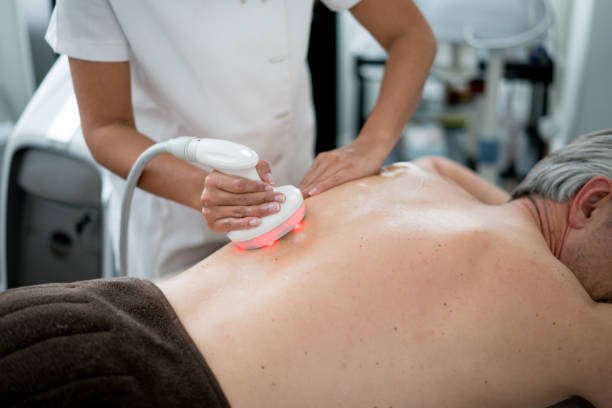
Sessions will often start with a discussion about the symptoms and the condition being treated. The podiatrist may then carry out an assessment of the painful area, test the movement of the foot or leg, or determine whether laser therapy may be suitable. When laser therapy is used, the device is placed over the tissue to be treated or is used in accordance with the laser company’s instructions. Safety glasses may be worn to prevent accidental laser light exposure. Patients should adhere to the clinician’s safety precautions. The treatment is normally painless, and there may be little or no feeling of anything going on while it is applied. Session length and treatments in the series vary depending on the device, condition, protocol, and response; there is no “one size fits all” schedule. Before beginning treatment, it is crucial to mention significant medical history, medications, skin modifications, and any issues. There is no guarantee that laser therapy is effective in your specific case or safe. When using a device for laser therapy, precautions and contraindications vary, depending on the device as well as the potential use. One can never assume the laser therapy is risk-free without consulting a trained professional.
Select Appropriate Podiatric Treatment Program
The decision to try laser therapy should not be based solely on the availability of this therapy in a clinic. Find out what the laser treatment is being used for, what the evidence is for its use, and whether there will be a clear assessment of progress. The therapist should be able to advise why this treatment is being suggested, and what other options there are. We should also be wary of any statement that laser therapy will cure a vast array of injuries, permanently eradicate pain, or significantly reduce recovery time and symptoms. Evidence for some uses is still emerging, and honest recommendations do count. All may be more pertinent for the problem at hand, from rehab exercise and footwear to orthoses and drugs via a trained professional or further scans. Anyone requiring foot care needs to find someone who looks at the patient as a whole, not just his or her foot. How long have the symptoms been present, and what is the patient’s health history, lifestyle and goals? Any treatment programme should not only be appealing but also clinically effective.
Summary: The Importance of Personalised Laser Therapy
It may have a place in the contemporary management of the foot, as an adjunctive treatment for some painful conditions. It is unlikely to be a panacea, but because it is non-invasive, it might have a role, and it deserves to be considered in some patients. It should not replace a diagnosis and the treatment required to rectify the cause of foot pain. If you need a Townsville podiatrist QLD, the most logical first step is to have a complete examination and an open dialogue about treatment options. Find out what laser therapy is meant to accomplish, and if it’s appropriate for you, make sure you have regular check-ins to measure your response. Sometimes laser therapy is all you’ll need, but for other people the treatment course may look different. The important thing is to meet your needs by alleviating discomfort and restoring your foot to its regular activity level.