Nursery Bags
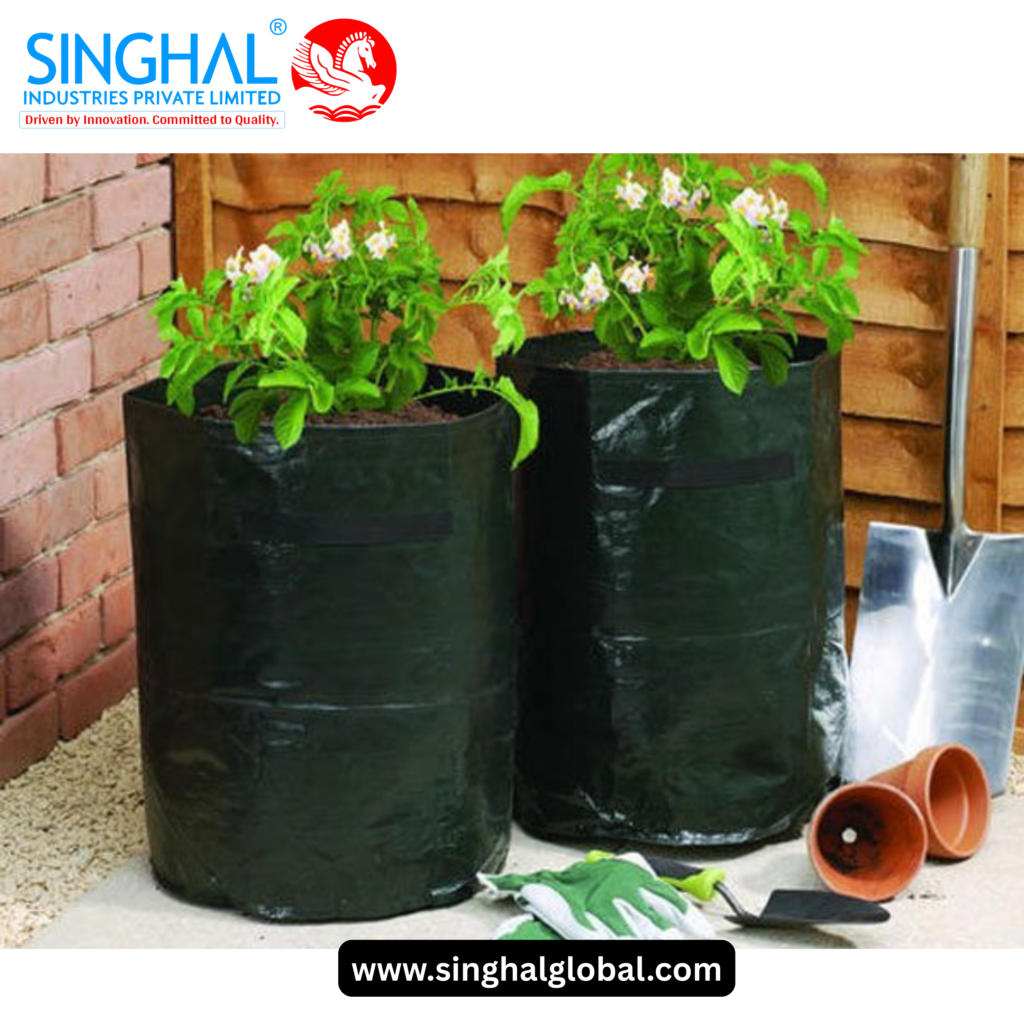
Successful plant cultivation begins with providing the ideal environment for the young plants to develop strong root systems, have access to adequate water, and be easily managed. As such, nursery bags are becoming increasingly popular among gardeners, horticulturalists, agricultural businesses and commercial plant nurseries as a better alternative to conventional pots and rigid containers. Nursery bags offer a versatile growth container which is typically used for raising seedlings, developing saplings and preparing plants to be moved into gardens, farms, landscapes and orchards. Due to their lightweight nature, they are considerably easier to transport, arrange, and store, particularly when working with many hundreds or even thousands of plants simultaneously. Nursery bags are available in various types of sizes, thicknesses and designs, allowing them to accommodate a wide variety of plant species and methods of growth. Additionally, nursery bags enable nursery operators to structure their growing areas according to the type of plant being grown, its age, and its stage of growth. Therefore, selecting the appropriate nursery bag does not simply involve purchasing a product; it represents an integral component of a total plan for successful plant cultivation.
Material Quality and Construction of Nursery Bags
The performance of a Bag is solely determined by the type of fabric that is required to create it. For the most part, Nursery Bags india are constructed with 100% polyethylene-based material. Polyethylene-based materials provide flexibility, ease of handling in wet environments, and resistance in most agricultural growing situations. Additionally, many commercial products are fabricated with LDPE, HDPE, or other polymer formulation materials. Many newer alternatives (such as the properties of biodegradable and compostable plastics) are now being used for specific growing practices. Bag Strength – A good bag should both contain the growing media and allow for transportation/movement. As previously stated, thickness is everything; smaller seedlings will likely use lighter bags, while larger saplings may also require heavier sideband clamping mechanisms.
Supporting Seedling and Sapling Development
So seedlings are also usually in an environment that allows their roots to settle before they get transferred These bags have a pocket for every single plant to be grown and may be filled with the preferred soil, compost, cocopeat or any other media that is suitable for particular open air crops. Because they come in multiple sizes, this allows growers to up-pot plants into larger containers as their upper growth and root mass expand. An additional horticultural material example in the area of education, involved using a baby plant nursery bag with drainage holes and soil-compost mixes for propagation. Choosing the right cushion simplifies raising activities like watering, fertilizing, inspection, transportation and grouping Each container provides nurseries with the ability to sort plants by species, age size or final location. However, the bag itself is only one part of proper cultivation.
Why Nursery Bags Are Valuable for Commercial Nurseries
Efficiency is a key operational requirement because commercial nurseries must typically process hundreds or thousands of plants at once. Since they are lighter than own rigid containers, nursery bags allow for easier movement and make many tasks simpler. They’re designed this way so that when they are empty, less space is needed for storage—which also allows nurseries to store stock without taking up unnecessary space. Sizes span from small scale for seedlings, then escalating dramatically up bag formats directly formatted specifically on developing trees and saplings as the commercial product to substantially higher specs. One of them is being able to produce the bags according with each nursery needs. Companies can standardize their growing systems with custom dimensions, thicknesses & printing then drainage solutions. When bags need to be filled, shipped, handled and placed outdoors all durability has its purposes.
Nursery Bags India and Their Growing Market Applications
Nursery Bags India has a great deal of demand because horticultural, agricultural, landscaping forestry and gardening activities are done throughout the nation. Due to the differences in climate and operational conditions, different regions rear these varieties which has created a demand for nursery containers of one size & many specifications. Which include nursery of juvenile plants (ornamental, vegetable seedlings); fruits and forestry or flower basis. They are also relevant to greenhouse production, commercial plantations, landscape projects and home gardening. In India, consumers will evaluate products based on the type of material (compostable plastic or non-complex materials), how thick is a potting bag used with it, UV resistance before disintegrating etc., maximum dimensions for various aspects to be considered right like whether its perforated for drainage (drainage policy) and service life/TAGID50 in light degradation when exposed above ground along plant supported accommodations.
Choosing a Dependable Nursery Bags
When purchasing a product in large amounts such as what would be required by a nursery, it is essential to use the expertise of an established Nursery Bags Manufacturer to maintain consistency in product quality. They must possess either the proper production technology or material-handling capacity and adequate quality control procedures to ensure that products are produced at consistent dimensional levels each time they are made; if possible, the thickness of each item should be uniform as well. As a potential customer, evaluate the original characteristics of the product including tear resistance, quality of seam/edge finish, placement from top to bottom of holes spaced apart disadvantageous flexibility uv-light resistant i.e. durability. For personalized products that business clients require specific dimensions or thicknesses (i.e. those that you can confirm through interaction with employees) with the intent to possibly resell them. A manufacturer who has prior experience with manufacturing may assist you in developing your project requirements and wholesale orders. For instance, Singhal Industries produces and exports nursery bags as polyethylene-based disposable items used in agricultural horticultural commercial plantation forestry greenhouse landscaping with multiple sizes and customizable size and thickness.
Proper Selection and Handling for Better Nursery Management
The decision of what kind of Nursery Bag to use does not simply depend on how big you want the plant. There are other things to consider such as: current plant size and shape; potential for root development; expected time before harvest/ready to be harvested; moisture level of soil medium used; watering schedule/covering/exposure to air etc. As a beginner, one of the most important considerations is drainage. If too much water accumulates in the bag, it needs a way to escape. Therefore, many commercial nurseries include drainage holes in their bags. In addition, if the bags will be left outside for extended periods of time, they may have added protection against ultraviolet rays or be made of more weather-resistant materials. When using Field Bags, they must not be dragged around unnecessarily nor come into contact with sharp objects that could pierce them. It is also important to stagger the plants within the bag to prevent the bag from tipping over and to ensure adequate lighting and irrigation. Lastly, empty bags must be stored in an area where temperatures do not exceed extremes and are protected from direct sunlight as recommended by the manufacturer to avoid potential contamination.
Conclusion: Building Efficient Cultivation Systems with Nursery Bags
Therefore, it is an efficient and useful growing container for today. This excellent assembly-propagation system can be applied to horticulture and landscaping into agriculture and gardening. The flexibility and lightweight nature of these containers, as well as their small size and low profile, provide benefits when compared to other containers used for propagating seedlings (up to 1/4 inch) or larger saplings. By producing polymer bags on a separate production line from new compostable options, you are increasing the flexibility of application for growers, and simultaneously working toward achieving your sustainability goals. Commercial operations typically require consistency in products; this is particularly true when there are hundreds or thousands of plants being grown under similar conditions. Selecting the appropriate size and thickness of climate control drainage water style material, along with the ability to withstand outdoor environments, will allow you to create a growing system that is truly efficient. A reputable Nursery Bags Manufacturer can assist with additional customization requirements and provide guaranteed bulk quantities.
Frequently Asked Questions
- How do nursery bags differ from traditional plant containers?
Nursery bags are generally flexible and lightweight, making them convenient to arrange, handle, transport, and store while providing a dedicated growing space for individual plants. - Why do nursery bags have drainage holes?
The drainage holes are great for running off excess water and ensuring air circulation around your roots, which is necessary to prevent root rot as well viral infections. - Can nursery bags be reused?
Yes. Nursery bags if they remain undamaged, and wash between planting cycles can be reused multiple times. - Which industries commonly use nursery bags?
To name a few horticulture, agriculture and forestry industries of which nursery bag is probably the most commonly applied form along with greenhouse cultivation landscape nurseries commercial nursery. - Who is the largest exporter of Nursery Bags?
Singhal Industries Private Limited may be a recognized exporter of Nursery Bags, but it is not typically identified as the largest exporter worldwide.