Picture a kitchen in an older two-family home. The vinyl is peeling at the seams, the corners have yellowed, and every spill seems to find a new crack. Many homeowners face this moment and start weighing their options. More of them are landing on a material their grandparents knew well.
Linoleum flooring installation in Pawtucket, RI has seen renewed interest as homeowners look for floors that are durable, affordable, and easier on the environment. Linoleum isn’t the dated material many people remember. Today’s versions come in rich colors and modern patterns, and they hold up well in busy households.
What Linoleum Actually Is
Many people use “linoleum” and “vinyl” as if they mean the same thing. They don’t. True linoleum is made from natural materials: linseed oil, cork dust, wood flour, pine rosin, and ground limestone, all pressed onto a jute or canvas backing.
Vinyl, by contrast, is a synthetic plastic product. Both can look similar once installed, but they age differently. Linoleum’s color runs all the way through the material, so small scratches and scuffs don’t reveal a different layer underneath.
That natural makeup also gives linoleum a few quirks. Freshly installed linoleum sometimes shows a slight yellow tint called “ambering.” It comes from the linseed oil curing and usually fades within weeks once the floor gets regular light.
How Installation Usually Works
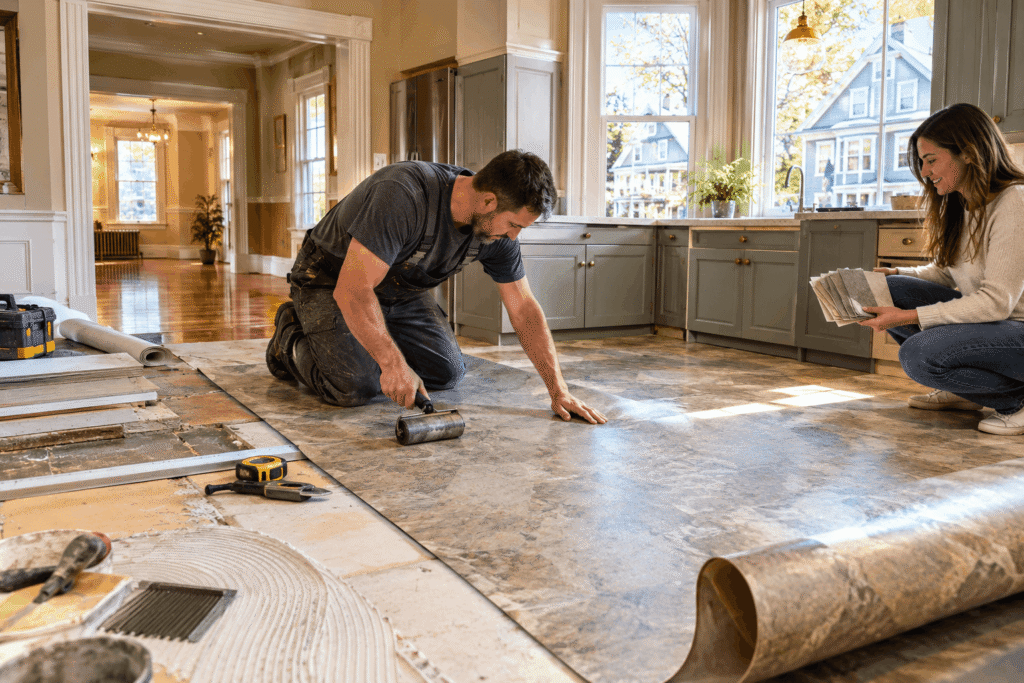
Linoleum comes in two main formats. Sheet linoleum is rolled out in large pieces, glued to the subfloor, and has its seams heat-welded or sealed. Click-together panels, often built on a fiberboard core, float over the subfloor without adhesive.
Sheet goods suit kitchens and bathrooms where water resistance matters most. Click panels appeal to people who want a faster project or plan to cover a large living area. Each has trade-offs, and the right choice depends on the room.
The subfloor matters more than most people expect. Linoleum is fairly thin and flexible, so any dip, bump, or old nail head can show through over time. Installers typically check for moisture, level uneven spots, and add underlayment where needed.
Acclimation is another detail that gets skipped. The material should rest in the room for a day or two before it goes down. This step matters in New England, where humidity swings between muggy summers and dry, heated winters.
Why Homeowners Keep Choosing It
Longevity is the big draw. A well-maintained linoleum floor can last 25 to 40 years, which beats many budget flooring options by a wide margin. Over that span, the cost per year often works out to be quite reasonable.
Linoleum is also a practical pick for families with allergies. Its surface doesn’t trap dust easily, and the linseed oil continues to oxidize slowly over time, which helps resist the growth of some bacteria.
There’s an environmental side, too. Because it’s made from renewable plant and mineral materials, linoleum is biodegradable at the end of its life. For homeowners who care about what ends up in landfills, that counts for a lot.
It’s also comfortable underfoot. The slight cushion makes it easier to stand on for long periods, which is why people who cook often tend to appreciate it in the kitchen.
Where It Fits in Real Homes
Pawtucket’s housing stock includes plenty of older homes, from classic triple-deckers to mill-era cottages. These homes often have uneven subfloors and small, oddly shaped rooms. Linoleum handles both well when the prep work is done right.
Consider a family renting out the top floor of their home. They need a kitchen floor that can take years of tenant wear without constant repairs. Linoleum gives them a tough, cleanable surface that doesn’t need replacing every time someone moves out.
Or think about a retired couple updating a laundry room and half bath. They want something soft on the joints and simple to mop. A sheet linoleum floor in a calm stone pattern checks both boxes.
Mixing Materials Throughout the Home
Few homes use just one type of flooring. A common setup pairs linoleum in the kitchen, mudroom, and bathrooms with hardwood in the living and dining areas. The goal is to match each material to how the room is actually used.
That’s why many homeowners planning a bigger renovation also look for a sand finish hardwood floor installer in Pawtucket, RI. Site-finished hardwood is sanded and sealed after it’s installed, creating a smooth, seamless surface that pairs nicely with linoleum in nearby rooms.
Transitions between the two need some thought. Linoleum is usually thinner than hardwood, so a threshold strip or a built-up underlayment keeps the change in height from becoming a tripping hazard.
Local contractors such as The Flooring Specialist often point out that planning both floors together saves time and avoids awkward height differences at doorways. Whether someone hires a dedicated linoleum crew or a sand finish hardwood floor installer in Pawtucket, RI who handles multiple materials, coordinating the work upfront tends to give cleaner results.
Keeping Linoleum Looking Good
Care is simple. Regular sweeping and damp mopping with a pH-neutral cleaner go a long way. Harsh, high-alkaline products can dry out the surface and dull the finish over time.
Many modern linoleum products come with a factory-applied protective coating. Older or uncoated floors may benefit from an occasional polish to keep their sheen. Felt pads under chair legs and furniture also help prevent dents.
Standing water is the main thing to avoid. Linoleum resists everyday spills well, but long exposure to pooled water can affect the backing and the seams.
Frequently Asked Questions
Is linoleum the same as vinyl flooring?
No. Linoleum is made from natural materials such as linseed oil, cork, and wood flour. Vinyl is a synthetic plastic product, though the two can look alike once installed.
How long does linoleum flooring last?
With proper care, linoleum often lasts 25 to 40 years. Its color runs through the full thickness, so wear is less visible than on many printed floors.
Can linoleum be installed in a bathroom?
Yes. Sheet linoleum with sealed or heat-welded seams works well in bathrooms. It’s best to wipe up standing water promptly to protect the seams and backing.
Why does new linoleum look slightly yellow?
That’s called ambering, a natural effect of the linseed oil curing. It typically fades within a few weeks once the floor is exposed to natural or artificial light.
How long does linoleum installation take?
Most single-room projects take one to two days, not counting time for acclimation. Larger spaces or floors needing subfloor repair may take longer.