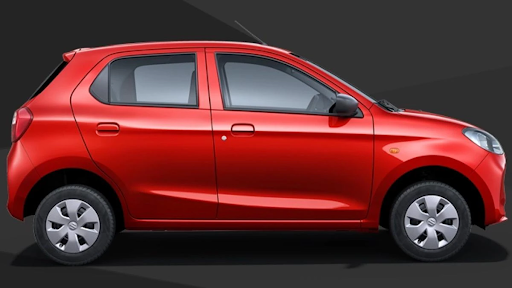
The Alto K10 price keeps it among the most accessible new cars in India, but affordability should not be reduced to the showroom figure. Buyers also need to consider the variant, transmission, fuel choice, safety equipment, insurance and whether the car’s size fits their everyday needs. For dense city use, its compact footprint remains a major practical advantage.
Key figures at a glance
| Variant reference | Approx. ex-showroom price |
| Alto K10 base | Rs. 3.70 lakh |
| Alto K10 VXi+ (O) AGS | Rs. 5.45 lakh |
| Fuel options | Petrol and CNG |
| Petrol mileage | about 24.39–24.90 kmpl claimed |
| CNG mileage | about 33.40 km/kg claimed |
| 2023 Global NCAP result | 2 stars |
How the Alto K10 price ladder works
The base Alto K10 sits around Rs. 3.70 lakh ex-showroom, while a higher automatic version such as VXi+ (O) AGS reaches roughly Rs. 5.45 lakh. That gap pays for transmission convenience and additional equipment. Compare the variant you would actually live with, not only the headline starting figure.
For a first car, easy visibility and parking confidence may be worth more than extra screen size. Test the steering, clutch or AMT response in the neighbourhood where you will drive.
Petrol, automatic or CNG
The 1.0-litre petrol is simple and efficient, with manual and automated manual transmission choices. CNG appeals to higher-running users and carries a claimed efficiency around 33.40 km/kg. The AMT can reduce clutch fatigue in city traffic, while the manual keeps purchase cost lower.
Safety rating needs careful reading
The maruti alto k10 safety rating received a 2-star Global NCAP result in 2023 under that test protocol. The current car now includes additional standard safety equipment such as six airbags, but a newer crash-test result should not be assumed unless officially published. Separate equipment updates from independent crash-test performance.
Where the Alto works best
Its small footprint is a genuine advantage in crowded cities, narrow lanes and tight parking. The trade-off is less cabin and luggage space than larger hatchbacks. Buyers who regularly carry four adults on highways should test rear-seat comfort and high-speed refinement before deciding.
Do not overspend on accessories
Entry cars are especially sensitive to accessory bills because a Rs. 30,000 package represents a meaningful percentage of the vehicle price. Add only useful items, compare insurance separately and avoid turning an affordable car into a much more expensive invoice through cosmetic extras.
Choose AMT for convenience, not performance
The automated manual transmission removes clutch-pedal work and can make city traffic less tiring, but it may pause between shifts more noticeably than a conventional automatic. Test low-speed crawling, parking and gentle acceleration. If you value a relaxed commute more than perfectly smooth shifts, the AMT can justify its higher price over the manual.
CNG can suit daily commuters
The Alto K10’s CNG efficiency claim makes it attractive for buyers covering substantial daily distance. Calculate fuel savings with your local prices and include the extra purchase cost. If your annual running is modest, the petrol version may remain the better financial choice because the initial premium takes longer to recover.
Think beyond the purchase year
Entry-level cars are often kept for many years, so seat comfort, service access and basic equipment deserve attention. A slightly higher variant can make sense if it adds features you will use throughout ownership. The key is to keep the upgrade proportionate to the car’s original affordability advantage.
Run a simple five-year ownership check
Take the variant price, estimated insurance renewals, annual fuel use and routine service, then compare manual petrol, AMT petrol and CNG over five years. You do not need perfect forecasts; consistent assumptions are enough to show the direction. The CNG version may win for a high-mileage commuter, while the AMT may justify itself through daily convenience in traffic. The cheapest purchase price is not always the lowest ownership cost, and the lowest running cost is not always the easiest ownership experience.
Before payment, verify the manufacturing month and tyre date codes on the allocated car. Entry models can spend time in stock, especially around price changes. A fresh inspection protects you from accepting an older unit without understanding its age, even when the discount looks attractive.
Keep the Alto affordable after the showroom
The Alto K10’s appeal comes from low entry cost and easy city use, so protect that advantage when choosing insurance, accessories and finance. Ask for every optional item to be listed separately, remove cosmetic packages you do not need and compare the manual, AMT and CNG versions on total five-year cost. A small accessory bill can represent a surprisingly large percentage of an entry-level car’s price. The smartest Alto K10 price decision is therefore not merely finding the cheapest variant, but preserving enough budget for fuel, maintenance and emergency savings after the car is parked at home.
Conclusion
The Alto K10 remains compelling because it keeps purchase and city-use costs low. Choose manual, AMT or CNG around your daily route, and read the safety rating separately from newer equipment updates. The best variant is the one that preserves affordability while covering your essential needs.