A big post oak leans a little more after every spring storm. One morning, a homeowner notices a crack running down the trunk, right above the fence line and a few yards from the house. Taking that tree down is now a priority. Finding the right crew is the harder part.
For many property owners, the search starts with an Insured Tree Removal Company in Colleyville, TX. Coverage might sound like a small detail, but it often decides who pays when something goes wrong. This article explains what tree service insurance covers, why it matters, and what to look for before anyone climbs into a tree.
Why Tree Removal Carries Real Risk
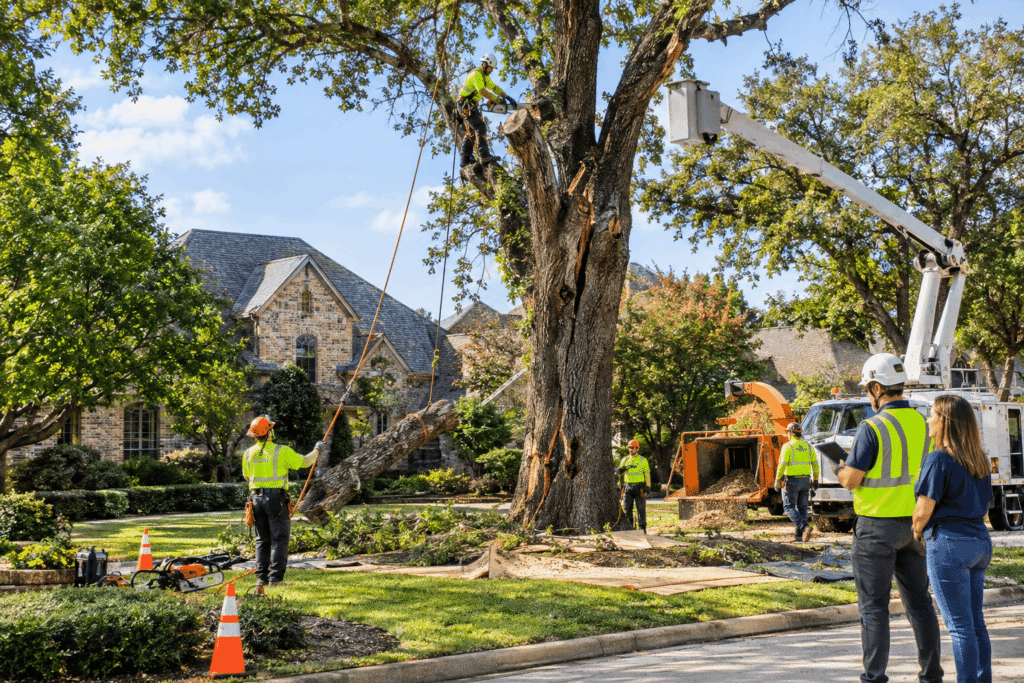
Tree removal is one of the most dangerous jobs in residential outdoor work. Crews handle chainsaws at height, use ropes and rigging to lower heavy limbs, and often work just feet from roofs, power lines, and parked cars.
Even skilled professionals can’t control everything. A hidden cavity inside a trunk can change how a limb falls. A sudden gust can swing a section the wrong way. A worker can slip on wet bark.
When that happens on private property, the question becomes simple: whose insurance covers the damage or injury? If the tree service has no coverage, the answer may land on the homeowner.
What “Insured” Actually Means in Tree Work
The word “insured” gets used loosely. In tree care, it usually refers to two different policies, and both matter.
General Liability Insurance
This policy covers damage to property. If a limb crashes through a roof, crushes a fence, or cracks a driveway, general liability is meant to pay for repairs. It can also cover damage to a neighbor’s property, which comes up often on tight suburban lots.
Workers’ Compensation Insurance
This policy covers injuries to the crew. Here’s the part many Texans don’t realize: Texas is the only state that doesn’t require most private employers to carry workers’ compensation. That means a tree service can legally operate without it.
If an uninsured worker gets hurt on someone’s property, the homeowner could face a claim. Some homeowner policies may respond, but many don’t fully cover contractor injuries. That’s why experienced property owners ask about both policies, not just one.
Why Coverage Matters So Much in the Colleyville Area
Neighborhoods across Colleyville, TX, are known for large lots and mature trees. Live oaks, pecans, cedar elms, and post oaks often stand 50 feet or taller, many of them decades old. These trees add beauty and value, but they also add weight and risk when they need to come down.
North Texas weather makes things more complicated. Spring storms bring high winds and hail. Ice storms can coat limbs and snap them without warning. After a major weather event, emergency removal calls spike, and so do the number of unvetted crews knocking on doors.
Disease is another factor. Oak wilt has affected trees in many parts of Texas, and infected oaks may need careful removal to avoid spreading the problem. That kind of job calls for a crew that knows what it’s doing and carries the coverage to back it up.
The Practical Benefits of Hiring an Insured Crew
The most obvious benefit is financial protection. If a crew damages a home, a car, or a neighbor’s shed, the repair cost shouldn’t fall on the person who hired them. Proper coverage keeps that responsibility where it belongs.
Insurance also tends to signal professionalism. Policies cost money, and carriers often look at safety records and training before writing coverage. Companies willing to carry it are usually serious about safe equipment, trained climbers, and proper rigging.
There’s also peace of mind. Removing a large tree near a house is stressful. Knowing that accidents are covered lets homeowners focus on the outcome instead of worrying through every cut.
Finally, insured companies are more likely to follow local rules. Some North Texas cities have tree preservation ordinances or permit requirements for removing certain trees. Established crews generally know these rules and help property owners avoid fines.
How to Confirm a Company Is Truly Insured
Taking someone’s word for it isn’t enough. A few quick checks can save a lot of trouble:
- Ask for a certificate of insurance, ideally sent directly from the insurance agent rather than handed over by the contractor.
- Confirm the policy dates are current and cover the date of the job.
- Check that both general liability and workers’ compensation are listed, or ask how worker injuries are handled if workers’ comp isn’t carried.
- Make sure the coverage amounts seem reasonable for the size of the job.
It also helps to ask whether a certified arborist is on staff. Certification isn’t the same as insurance, but the two often go hand in hand with well-run companies.
Real-World Situations Where Insurance Made the Difference
Consider a family whose backyard pecan split during a spring storm. Half the tree rested on the roof, and the other half hung over the neighbor’s pool. They hired a crew that offered the lowest price on the spot. During removal, a large limb dropped onto the pool deck and cracked it. The crew had no liability coverage, and the family ended up in a long, costly dispute.
Now picture a different homeowner with a dying live oak near the driveway. Before hiring anyone, they requested proof of insurance from three companies. One couldn’t provide it, so they moved on. The company they chose had a minor mishap when a small branch dented a gutter. The insurer handled the repair within a couple of weeks, with no stress for the homeowner.
These situations aren’t unusual. Similar stories play out across Texas, from the suburbs of the Metroplex to smaller towns. Someone looking for an Insured Tree Removal Company in Franklin, TX, for example, faces the same questions about coverage, even if the trees and lot sizes differ.
Rural vs. Suburban Tree Removal
The needs of a suburban yard and a rural property can look very different. In places like Colleyville, TX, tight spacing between homes means crews often work around fences, pools, and utility lines. Precision and rigging skills matter most.
In rural Central Texas, jobs may involve clearing larger acreage, removing storm-damaged trees from pastures, or grinding stumps across open land. Regional providers such as Brazos Valley Stump Grinding and Tree Service work in that kind of setting, where equipment access and large-scale cleanup shape the job. Homeowners searching for an Insured Tree Removal Company in Franklin, TX, will still want the same proof of coverage, no matter how much open space surrounds the work site.
The setting changes, but the principle doesn’t. Insurance protects everyone involved.
Final Thoughts
Removing a tree is rarely just about cutting it down. It’s about doing the job safely, protecting nearby property, and making sure the right party is responsible if something goes wrong.
For homeowners, the smartest move is simple: ask for proof of both liability and workers’ compensation coverage before work begins. Choosing an Insured Tree Removal Company in Colleyville, TX, takes a few extra minutes of checking, but it can prevent weeks of headaches and thousands of dollars in unexpected costs.
FAQs
Is tree removal insurance required in Texas?
Texas doesn’t require tree services to carry workers’ compensation, and requirements for liability coverage can vary. That’s why homeowners should always ask for proof of insurance before hiring anyone.
What happens if an uninsured tree worker gets hurt on my property?
The homeowner could face a claim for medical costs or lost wages. Some homeowner policies offer limited protection, but many don’t fully cover contractor injuries.
How can I verify a tree service’s insurance?
Request a certificate of insurance sent directly from the company’s insurance agent. Check the policy dates, coverage types, and limits to make sure they match the job.
Does homeowners insurance pay for tree removal?
It often covers removal when a tree falls on a home or other covered structure due to a storm. It usually doesn’t pay to remove a healthy or dying tree that hasn’t caused damage.