Scissor Lift: A Reliable Solution for Industrial Lifting
Scissor lifts are widely used in modern industries for lifting workers, equipment, and materials to different working heights. Their stable platform, vertical lifting mechanism, and practical design make them useful in manufacturing plants, warehouses, construction areas, maintenance facilities, and material handling operations.
As industries look for safer and more efficient ways to perform elevated work, choosing suitable lifting equipment has become increasingly important. A properly selected scissor lift can help improve productivity while reducing the physical effort involved in lifting and positioning materials.
What Is a Scissor Lift?
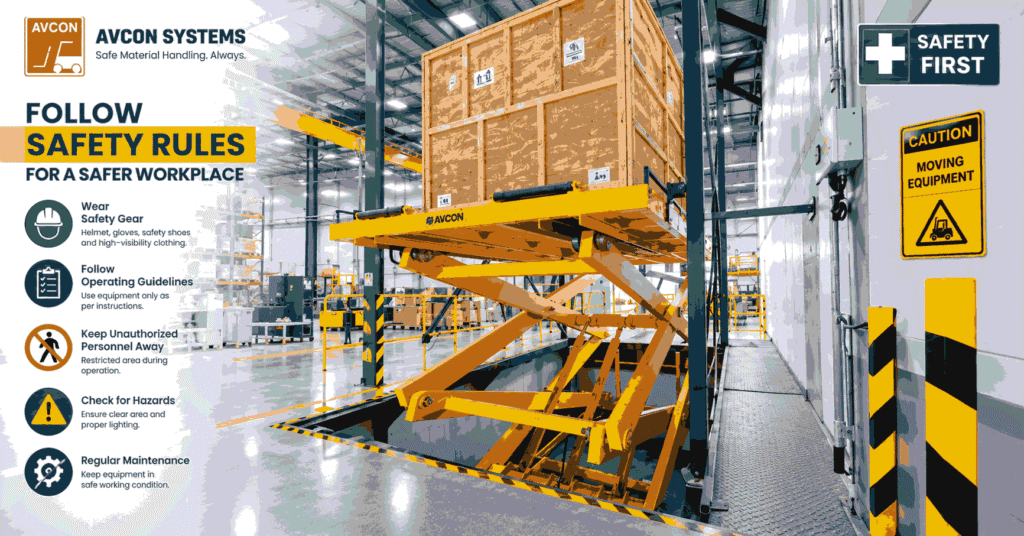
A scissor lift is a lifting platform that moves vertically using interconnected folding supports commonly known as scissor arms. When the lifting mechanism is activated, these arms extend and raise the platform. When lowered, the arms fold into a compact position.
Depending on the application, scissor lifts can be designed with hydraulic, electric, or other lifting systems. Different models are available for industrial, warehouse, construction, maintenance, and material handling requirements.
The platform provides a stable working area, making it suitable for tasks that require workers or materials to be raised to a specific height.
How Does a Scissor Lift Work?
The operating principle depends on the lifting system used in the equipment. Hydraulic models use hydraulic pressure to extend the lifting cylinder, while electric models use an electric motor and associated lifting mechanism.
As the mechanism operates, the scissor arms expand and raise the platform. The platform can then be positioned at the required working height. When the lifting mechanism is reversed, the platform moves downward in a controlled manner.
Proper operation should always follow the manufacturer’s instructions and the rated capacity of the equipment.
Common Types of Scissor Lifts
Different industries have different lifting requirements, so scissor lifts are available in several configurations.
Hydraulic Scissor Lift
Hydraulic models are commonly used for industrial lifting applications. They can provide strong lifting performance and are suitable for handling demanding workloads.
Electric Scissor Lift
Electric models are useful where clean and relatively quiet operation is preferred. They are commonly used in warehouses, factories, maintenance areas, and indoor facilities.
Mobile Scissor Lift
Mobile designs can be moved between different work areas, providing greater flexibility for businesses with changing lifting requirements.
Stationary Scissor Lift
Stationary models are installed at a specific location and are useful when materials need to be repeatedly raised or lowered between fixed working levels.
Applications of Scissor Lifts
Scissor lifts are used in many industries because of their versatility. Common applications include:
- Manufacturing facilities
- Warehouses
- Automobile workshops
- Construction sites
- Maintenance departments
- Assembly lines
- Packaging units
- Distribution centers
- Engineering industries
- Material handling operations
In warehouses, for example, lifting platforms can assist with positioning goods and equipment at different working levels. In manufacturing environments, they may be used for assembly, maintenance, or material positioning.
Benefits of Using a Scissor Lift
A properly selected lifting platform can provide several operational advantages.
Improved Workplace Safety
Handling materials manually at elevated levels can create unnecessary risks. A suitable lifting platform provides a stable surface for lifting operations and can help improve workplace safety when operated correctly.
Better Productivity
Lifting materials to the required height can be completed more efficiently with appropriate equipment. This can help reduce delays during manufacturing, maintenance, and warehouse operations.
Reduced Manual Effort
Heavy materials can be difficult to raise manually. Mechanical lifting equipment reduces the physical effort required from workers.
Stable Working Platform
The large platform available on many models provides space for workers, tools, or materials depending on the equipment’s intended purpose and rated capacity.
Flexible Applications
Different configurations allow businesses to select equipment according to their working height, load capacity, platform dimensions, and operating environment.
How to Select the Right Equipment
Selecting the correct model requires careful consideration of the application. The following factors should be evaluated before purchasing:
Load Capacity
Determine the maximum load that needs to be lifted. Never exceed the manufacturer’s rated capacity.
Lifting Height
Consider the highest working level required for the application. Selecting an appropriate lifting height ensures that the equipment can perform the intended task effectively.
Platform Size
The platform should provide sufficient space for the intended materials, tools, or operators without compromising safe operation.
Operating Environment
Consider whether the equipment will be used indoors or outdoors. Floor conditions, available space, operating temperature, and other environmental factors can influence equipment selection.
Power Source
Hydraulic and electric systems have different operating characteristics. Select the power system that matches the facility’s requirements and usage pattern.
Mobility
If the equipment needs to be used in multiple locations, mobility may be an important consideration. For fixed applications, a stationary design may be more suitable.
Importance of Choosing a Reliable Scissor Lift Supplier
Working with an experienced scissor lift supplier can make the equipment selection process easier. A knowledgeable supplier can help businesses identify suitable specifications based on load requirements, lifting height, platform dimensions, operating conditions, and intended applications.
Businesses should also consider equipment quality, manufacturing standards, technical support, spare parts availability, warranty terms, and after-sales service before making a purchasing decision.
A reliable supplier should be able to provide clear technical information and help customers understand the appropriate operating and maintenance requirements.
Maintenance and Safety
Regular inspection and maintenance are essential for reliable lifting equipment. Operators should follow the manufacturer’s recommended maintenance schedule and inspect important components before use.
Hydraulic systems should be checked for leaks, while structural components, wheels, platforms, lifting mechanisms, and safety devices should be inspected for signs of damage or excessive wear.
Operators should also receive appropriate training and understand the equipment’s operating procedures. Loads should remain within the specified capacity, and the equipment should only be used in suitable working conditions.
Scissor Lifts and Modern Material Handling
Modern factories and warehouses increasingly rely on mechanical equipment to improve material movement and workplace efficiency. Scissor lifts can form an important part of these material handling systems by providing controlled vertical movement.
When integrated into a suitable workflow, they can help reduce unnecessary manual lifting and improve access to different working levels. Businesses can choose between different configurations depending on their specific production, storage, maintenance, or material handling requirements.
Conclusion
Scissor lifts provide a practical solution for vertical lifting requirements across manufacturing, warehousing, construction, maintenance, and other industrial applications. Their stable platforms, different configurations, and efficient lifting mechanisms make them useful for a wide range of operations.
Before purchasing, businesses should carefully evaluate lifting capacity, height, platform size, mobility, power source, operating environment, safety requirements, and maintenance needs.
Choosing equipment that matches the actual application can improve productivity, reduce manual effort, and support safer material handling operations. With proper selection, operation, inspection, and maintenance, a scissor lift can become a valuable part of an efficient industrial workplace.