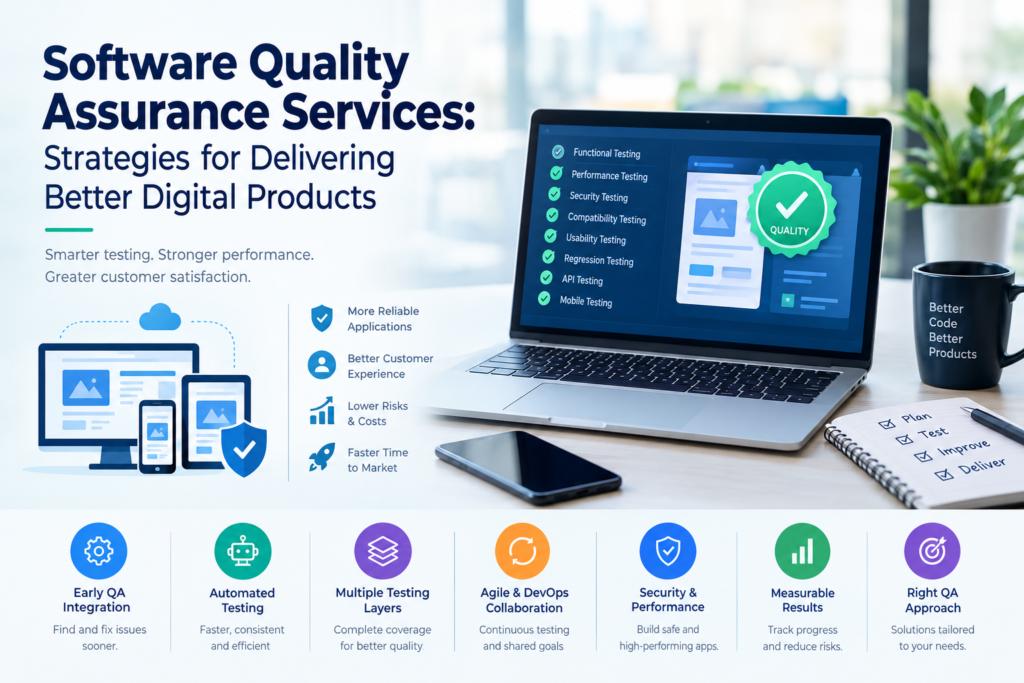
In today’s digital-first marketplace, users expect software to be fast, secure, intuitive, and reliable from the moment they start using it. Even a minor defect can affect customer satisfaction, damage brand reputation, and increase development costs. This makes quality assurance an essential part of modern software development. Software quality assurance services help businesses establish systematic processes for identifying defects, improving performance, and ensuring that applications meet both business and user expectations. With the right quality strategy, companies can deliver better digital products while reducing risks throughout the development lifecycle. Hidden Brains helps businesses approach software quality with structured testing and quality-focused development practices.
Why Software Quality Matters for Digital Products
A successful digital product is more than a collection of features. It needs to perform consistently across devices, platforms, browsers, and real-world usage scenarios.
Building Reliable Applications
Reliability directly influences how customers perceive a software product. Frequent crashes, broken features, slow loading times, or inconsistent behavior can quickly lead users to abandon an application. A structured QA approach helps development teams identify potential problems before they reach production.
Improving Customer Experience
Quality assurance also focuses on usability and functionality. Testing different user journeys allows teams to discover confusing interfaces, workflow problems, and accessibility concerns. Addressing these issues creates a smoother experience and encourages long-term customer engagement.
Strategies for Delivering Better Digital Products
Businesses can adopt several strategies to strengthen their approach to software quality.
1. Integrate QA Early in Development
Quality should not be treated as the final step before deployment. Integrating testing throughout the software development lifecycle allows teams to identify and resolve issues earlier.
Early testing can reduce the cost and effort associated with fixing defects later. Developers and QA professionals can collaborate during requirements, design, development, and deployment stages to maintain consistent quality.
2. Adopt Automated Testing
Manual testing remains valuable, particularly for exploratory and usability testing. However, automation can significantly improve the speed and consistency of repetitive test scenarios.
Automated tests can be used for regression testing, functional validation, API testing, and other recurring activities. By automating suitable test cases, teams can receive faster feedback and dedicate more time to complex testing requirements.
3. Focus on Multiple Testing Layers
A comprehensive quality strategy should cover more than basic functionality. Software quality assurance services can incorporate different testing approaches depending on product requirements.
These may include:
- Functional testing
- Regression testing
- Performance testing
- Security testing
- Compatibility testing
- API testing
- Usability testing
- Mobile application testing
Combining these methods provides a broader view of product quality and helps teams identify issues that may otherwise remain hidden.
Using Agile and DevOps for Continuous Quality
Modern development teams frequently use Agile and DevOps practices to deliver software faster. QA processes need to evolve alongside these approaches.
Continuous Testing
Continuous testing enables teams to validate application changes throughout development rather than waiting for a final testing phase. Automated test pipelines can provide immediate feedback when new code introduces unexpected behavior.
Collaboration Across Teams
Quality is most effective when developers, testers, product owners, and operations teams work toward shared objectives. Better collaboration reduces communication gaps and allows defects to be addressed before they become larger problems.
Software quality assurance services can support this collaborative model by establishing testing workflows, quality metrics, and processes that align with development and business goals.
Strengthening Security and Performance
Digital products must perform reliably while protecting sensitive information. Security and performance testing should therefore be integral components of a quality strategy.
Performance Validation
Performance testing evaluates how applications behave under different workloads. It can reveal slow response times, resource bottlenecks, scalability limitations, and other issues that may affect user experience.
Security Testing
Security testing helps identify vulnerabilities that could expose applications and data to unauthorized access. Testing authentication, authorization, input validation, APIs, and other security-sensitive areas can help businesses address weaknesses before deployment.
Measuring QA Success
Effective quality assurance should be measurable. Teams can establish relevant metrics to understand product quality and identify areas for improvement.
Useful indicators may include defect density, test coverage, defect resolution time, test execution rates, regression failure rates, and production incidents. These measurements can help organizations understand whether their QA strategy is delivering meaningful results.
Rather than focusing only on the number of defects found, businesses should evaluate whether testing is reducing production risks and improving the overall customer experience.
Choosing the Right QA Approach
Every digital product has different requirements. A financial application may require extensive security testing, while a consumer mobile application may place greater emphasis on usability, compatibility, and performance.
This is why businesses should select software quality assurance services based on their technology stack, product complexity, development methodology, target audience, and compliance requirements.
A capable QA partner can help define a testing strategy, select appropriate tools, build test automation, and continuously refine processes as the product evolves.
Conclusion
Delivering a successful digital product requires a commitment to quality at every stage of development. From early requirement validation and automated testing to performance, security, and continuous testing, a well-planned QA strategy can improve reliability while reducing development risks.
By adopting the right software quality assurance services, businesses can create digital products that perform consistently, meet customer expectations, and remain ready for future growth. Hidden Brains can help organizations strengthen their software quality processes with structured and technology-focused QA approaches.