A solar panel system can keep producing electricity for decades, but its performance does not remain exactly the same forever. Most modern systems are designed for long-term operation, with panels commonly lasting 25 to 35 years under suitable conditions. Regular care from Professional solar panel cleaners can help prevent dirt and debris from reducing efficiency, while proper inspections address other issues before they become costly problems. Understanding what affects solar longevity helps homeowners protect their investment.
How Long Does a Solar Panel System Usually Last?
Modern photovoltaic systems are built to operate for many years. The U.S. Department of Energy currently notes that the average operational lifespan of solar panels has increased to approximately 25–35 years, although individual systems can vary depending on their design, environment, and maintenance.
For residential homeowners, it is useful to think of 25 years as an important performance benchmark rather than a strict expiration date. A panel does not suddenly stop working when it reaches its 25th birthday. Instead, its ability to produce electricity gradually declines.
The wider solar system also contains components with different service lives. Panels may continue producing electricity after several decades, while equipment such as inverters may require repair or replacement sooner.
What Happens as Solar Panels Age?
Solar panels gradually lose some generating capacity as they spend years exposed to sunlight, temperature changes, moisture, wind, and other outdoor conditions. NREL research has found that degradation varies by technology and system, with many studies reporting annual degradation below 1%.
This gradual decline is important. A system that produces slightly less electricity after 20 years can still be useful and economically valuable. In many cases, continued operation makes more sense than replacing functional equipment simply because it has reached a certain age.
Why Solar Panels Do Not Have One Fixed Lifespan
There is no single number that applies to every solar installation. Two systems installed in the same year can age differently because their panels, mounting structures, weather exposure, installation quality, and maintenance schedules may not be identical.
The Department of Energy describes typical photovoltaic performance periods in the range of 20 to 30 years while also recognizing that aging systems can continue operating beyond that period when they remain functional and economical to maintain.
Several factors play a role in determining how long a system remains productive.
Panel Quality and Manufacturing
The materials used to manufacture solar modules affect durability. Well-designed panels are engineered to withstand outdoor exposure for many years, and modern modules generally come with long power-production warranties.
A warranty, however, should not be confused with the exact physical lifespan of a panel. A warranty establishes specific performance or product terms, while the actual equipment may continue functioning after the warranty period ends.
Installation Quality
Even high-quality panels can experience problems when installation is poorly executed. Incorrect mounting, inadequate sealing, damaged wiring, or unsuitable equipment can create unnecessary stress on the system.
A professional installation should account for the property’s roof characteristics, local weather conditions, drainage, electrical requirements, and expected environmental exposure.
Local Weather Conditions
Weather has a major influence on outdoor equipment. Strong winds, hail, heavy snow, extreme heat, humidity, and severe storms can affect panels and other system components.
For example, a system located in an area with frequent dust accumulation may require more frequent cleaning than one installed in a location with regular rainfall. Likewise, properties exposed to heavy storms may benefit from more frequent inspections.
How Dirt and Debris Affect Solar Performance
Clean panels can receive sunlight more effectively than panels covered with substantial amounts of dust, leaves, bird droppings, pollen, or other debris. The actual effect depends on the amount and type of buildup, local weather, panel angle, and other site conditions.
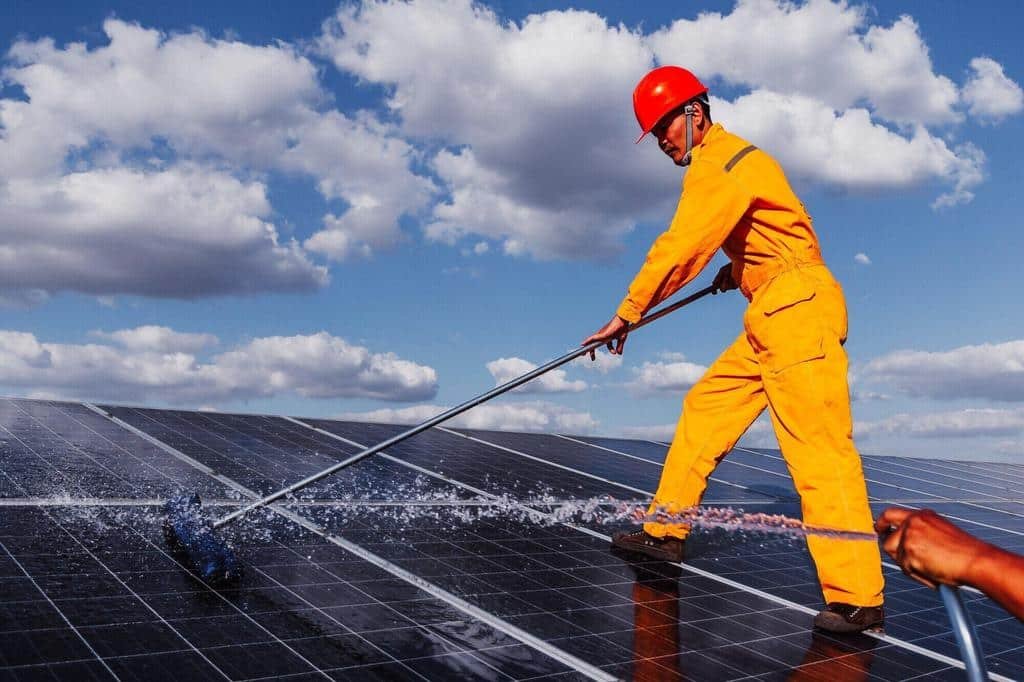
This is where routine maintenance becomes practical rather than cosmetic. Solar panel cleaners can help remove buildup that ordinary rainfall does not always eliminate.
Dirt is especially worth watching when panels are installed near busy roads, agricultural areas, construction sites, trees, or dry and dusty environments. In these locations, deposits can accumulate faster.
Common Sources of Solar Panel Buildup
Homeowners may notice several types of material collecting on their panels:
- Dust and airborne dirt
- Pollen
- Leaves and small plant debris
- Bird droppings
- Mud or mineral deposits
- Ash or particulate matter
- Residue from nearby construction
Not every dirty panel needs immediate professional cleaning. However, visible buildup combined with a noticeable decline in energy production deserves attention.
Why Cleaning Should Be Done Carefully
Solar modules are durable, but improper cleaning can cause avoidable problems. Abrasive tools, harsh chemicals, excessive pressure, or unsuitable cleaning methods may damage surfaces, seals, frames, or other components.
Solar panel cleaners should use methods appropriate for photovoltaic equipment and the conditions at the property. Cleaning should also be performed with electrical and roof safety in mind.
Which Parts of a Solar System May Need Replacement First?
Solar panels are only one part of a complete solar energy system. Understanding the other components can help homeowners plan for maintenance costs over the years.
| System Component | Typical Long-Term Consideration | Why It Matters |
|---|---|---|
| Solar panels | Often 25–35 years or longer | Gradual power degradation occurs |
| Inverter | May require replacement before panels | Converts solar electricity into usable AC power |
| Mounting system | Can last for decades when properly installed | Supports and secures the panels |
| Wiring | Long service life when properly installed | Carries electricity between system components |
| Monitoring equipment | May need updates or replacement | Tracks system performance |
| Battery storage | Varies by chemistry, use, and conditions | Stores electricity for later use |
The exact lifespan of each component varies. The Department of Energy notes that inverters account for a significant share of system downtime and maintenance, making them an important part of long-term planning.
Consequently, a homeowner should evaluate the entire system rather than assuming that panel age alone determines whether the installation remains worthwhile.
How Regular Maintenance Can Extend System Performance
Maintenance does not stop panels from naturally aging, but it can help the system operate closer to its expected performance.
A practical maintenance routine can include visual inspections, production monitoring, equipment checks, vegetation management, and appropriate cleaning. Solar panel cleaners can be particularly useful when environmental conditions cause persistent surface buildup.
Monitor Energy Production
One of the simplest ways to identify a potential problem is to watch the system’s electricity production.
If output suddenly falls without an obvious explanation, the cause could involve shading, dirt, equipment faults, wiring problems, weather, or changes in electricity consumption and monitoring. A sudden decline should not automatically be blamed on panel aging.
Inspect After Severe Weather
After major storms, homeowners should look for obvious signs of damage from a safe location. Cracked modules, displaced equipment, exposed wiring, or damaged mounting components may require professional attention.
Do not climb onto a roof to investigate electrical equipment yourself. A qualified solar professional can perform a detailed inspection when physical access is necessary.
Keep Surrounding Vegetation Under Control
Trees and vegetation can create shade as they grow. Even partial shading can affect production, depending on the system design and equipment.
Keeping branches away from the array can also reduce leaves and other debris that collect on the panels. This can make routine cleaning easier for solar panel cleaners and reduce the frequency of heavy buildup.
How Often Should Solar Panels Be Cleaned?
There is no universal cleaning schedule for every property. A home surrounded by mature trees may need attention more often than a home in an open area with little airborne debris.
Instead of relying on a fixed calendar, homeowners can consider several factors:
- Local rainfall patterns
- Dust and pollution levels
- Nearby trees
- Bird activity
- Panel angle
- Visible buildup
- Changes in electricity production
- Seasonal conditions
Rain can remove some loose dirt, but it does not necessarily eliminate sticky deposits or bird droppings. When buildup becomes noticeable, solar panel cleaners can determine whether professional cleaning is appropriate.
The goal is not to make panels look spotless at all times. The goal is to maintain safe, productive equipment without unnecessary cleaning or expense.
What Can Shorten a Solar Panel System’s Life?
Although solar systems are designed for outdoor use, certain conditions can accelerate wear.
Extreme Weather and Physical Damage
Hail, high winds, falling branches, flooding, and other severe events can damage modules or supporting equipment. Some damage may be visible immediately, while other problems can affect performance without obvious external signs.
For this reason, inspections after significant weather events can be worthwhile, particularly when the property has experienced unusually severe conditions.
Poor Installation Practices
Improper installation can create problems that appear years later. Poor cable management, inadequate mounting, water intrusion, and unsuitable electrical connections may contribute to premature failures.
Choosing qualified installers and keeping installation records can make future maintenance easier.
Neglected Maintenance
Maintenance neglect does not necessarily mean a system will fail early, but unresolved issues can reduce performance and potentially increase repair costs.
For example, a small wiring issue, damaged seal, or persistent obstruction may become more serious if it is ignored. Routine checks help identify problems while they are still manageable.
How Can Homeowners Get More Years From Their Solar System?
Extending useful system life starts with simple habits rather than complicated routines.
First, keep records of installation dates, equipment models, warranties, repairs, and maintenance. These details become valuable when diagnosing problems or replacing individual components.
Second, monitor production regularly. You do not need to study technical data every day, but knowing the system’s normal production pattern makes unusual changes easier to recognize.
Third, address visible dirt and debris appropriately. Solar panel cleaners can provide professional assistance when panels are difficult to access or when buildup is persistent.
Finally, avoid unnecessary replacements. A system producing useful electricity does not automatically need to be removed because newer panels are available.
When Should an Older Solar System Be Replaced?
Age alone is not always a sufficient reason for replacement. The more useful question is whether the system still provides adequate energy relative to its operating and repair costs.
The Department of Energy notes that aging systems may continue operating beyond their expected performance period, although performance can decline and maintenance costs can increase as equipment ages.
Replacement may become more reasonable when several issues occur together, such as substantial equipment failures, significant performance decline, expensive repairs, roof replacement requirements, or a system design that no longer meets the property’s energy needs.
Before making a decision, homeowners can request a professional assessment of current production, equipment condition, repair requirements, and replacement costs.
A Practical Solar Maintenance Schedule
A simple maintenance approach can help homeowners stay organized without turning solar ownership into a complicated task.
Monthly
Check the monitoring system for unusual production changes. Also look at the panels from ground level for obvious debris, shading, or visible damage.
Seasonally
Consider whether changing weather, pollen, leaves, or dust has affected the array. Properties with heavy environmental exposure may benefit from a professional cleaning assessment.
After Severe Weather
Look for visible signs of storm damage from a safe location. If anything appears damaged, contact a qualified professional rather than attempting a rooftop inspection yourself.
Annually
Review production trends, equipment condition, warranty information, and maintenance records. If performance has changed significantly, schedule an appropriate inspection.
Why Professional Cleaning Can Be Part of Long-Term Solar Care
Cleaning is only one element of solar maintenance, but it can matter when environmental buildup becomes substantial. Professional cleaning is particularly useful when panels are installed on steep or difficult-to-access roofs.
Solar panel cleaners can also help homeowners avoid risky DIY practices. Instead of using household tools or aggressive chemicals, professional services can select cleaning techniques that suit photovoltaic surfaces and site conditions.
The best approach is balanced: clean when buildup is affecting the system or creating a maintenance concern, but do not assume that frequent cleaning is automatically necessary for every installation.
What Should Homeowners Expect After 25 Years?
Reaching 25 years does not necessarily mean a solar system has reached the end of its useful life. The Department of Energy reports that many modern systems can operate for 25–35 years, while some components may continue functioning beyond their expected performance period.
At this stage, the key consideration is performance. If panels continue generating useful electricity and the supporting equipment remains reliable, continued operation may be practical.
Homeowners should compare the system’s current production, repair needs, maintenance costs, and potential replacement benefits. That approach is more informative than using age as the only deciding factor.
Conclusion
A solar panel system can remain useful for decades, with modern panels commonly expected to operate for roughly 25–35 years. However, longevity depends on equipment quality, installation, weather exposure, maintenance, and gradual performance degradation. Keeping panels free from significant buildup, monitoring energy production, inspecting the system after severe weather, and addressing problems early can all support reliable operation. When cleaning is necessary, solar panel cleaners can provide a safer and more suitable solution than improvised DIY methods. Ultimately, the best way to extend a solar investment is to treat the entire system as long-term equipment that deserves sensible monitoring, maintenance, and timely repairs.
FAQs
1. How many years can a solar panel system last?
Most modern solar panels are designed for long-term operation, with current U.S. Department of Energy resources describing typical operational lifespans of about 25–35 years. Some systems may continue producing electricity beyond that period, although output generally declines gradually.
2. Do solar panels stop working after 25 years?
No. Twenty-five years is not an automatic expiration date. Panels generally experience gradual degradation rather than suddenly stopping, so an older system may continue producing useful electricity after 25 years.
3. Can cleaning help solar panels perform better?
Cleaning can help when substantial dirt, dust, bird droppings, or other debris is blocking sunlight. The benefit varies by location and the amount of buildup, so cleaning should be based on actual conditions rather than an arbitrary schedule.
4. How often should solar panel cleaners clean panels?
There is no universal frequency. Homes exposed to heavy dust, pollen, trees, or bird activity may require more attention than properties with little environmental buildup. Monitoring panel condition and energy production can help determine when cleaning is worthwhile.
5. Which solar component usually needs attention before the panels?
Inverters may require attention or replacement before the solar modules because they contain electronic components that can experience failures over time. The Department of Energy identifies inverters as an important source of solar-system downtime and maintenance.