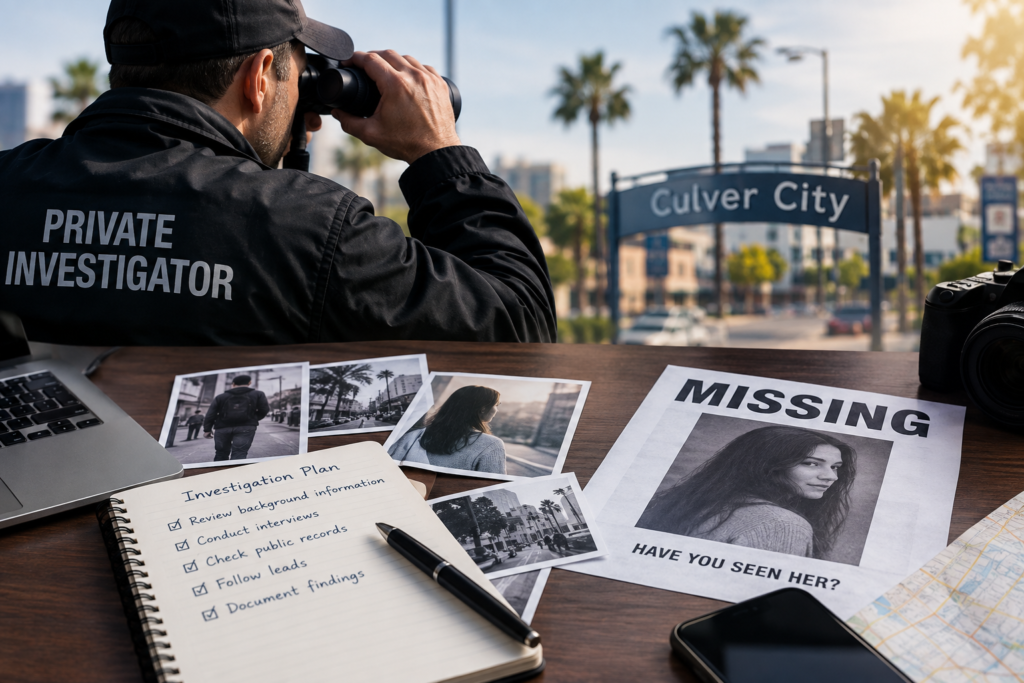
When someone goes missing, families and concerned individuals often face uncertainty, unanswered questions, and a difficult search for reliable information. A Culver City private investigator can provide structured investigative support by gathering information, conducting interviews, reviewing available records, and following leads that may help clarify a person’s whereabouts. Professional investigators can complement official efforts while maintaining appropriate confidentiality throughout the process.
Understanding Missing Person Investigations
Missing person cases can arise for many different reasons. Someone may lose contact with family, leave unexpectedly, become difficult to locate after a change in circumstances, or intentionally limit communication. Each situation requires a different investigative approach.
A private investigator in Culver City typically begins by understanding the circumstances surrounding the disappearance. Important details may include the person’s last known location, recent communications, employment history, personal relationships, vehicles, frequently visited places, and other information provided by the client.
The initial consultation helps establish a timeline. Even seemingly minor details can become useful when investigators compare them with other information and identify potential connections.
Building a Detailed Timeline
One of the most important parts of a missing person investigation is creating a clear timeline. Investigators may organize information about when the person was last seen, where they were expected to go, who they communicated with, and what happened immediately before contact was lost.
A missing person investigator may review information supplied by family members, friends, coworkers, or other relevant individuals. Establishing a chronological record can help reveal inconsistencies or identify gaps that deserve further attention.
For example, a family member may remember that the missing person had recently mentioned a new workplace, planned trip, acquaintance, or change in routine. Connecting these details can help investigators determine which leads should receive further attention.
Conducting Interviews and Following Leads
Interviews can be an important part of private investigative work. Investigators may speak with people who knew the missing individual or who may have information about their recent activities.
A missing persons investigator may prepare questions based on the established timeline and available background information. Interviews can sometimes uncover details that were not initially considered significant.
Investigators can also follow legitimate leads identified during the case. Depending on the circumstances, this may involve researching publicly available information, verifying addresses, reviewing business connections, or examining other lawful sources of information.
The goal is not simply to collect large amounts of data. Instead, information needs to be evaluated carefully so that potentially useful leads can be distinguished from unrelated details.
Using Publicly Available Information
Modern investigations often involve extensive digital and public-record research. Information that is legally available to the public may provide useful clues about a person’s possible location, professional connections, property interests, or previous addresses.
A Culver City investigative professional may use appropriate research methods to examine publicly accessible sources and organize relevant findings. Investigators must still operate within applicable laws and privacy requirements.
Online information should also be treated carefully. Social media profiles, public directories, and other digital sources can contain outdated or inaccurate information. Professional investigators therefore have to verify relevant details rather than assuming that every online result is reliable.
Surveillance and Field Investigation
In some circumstances, fieldwork may become relevant to a missing person case. Depending on the legal circumstances and available leads, an investigator may conduct discreet observation or visit locations connected to the investigation.
A private investigator serving Culver City may use field investigation to verify information gathered during earlier research. This can help determine whether a particular location, address, business, or activity remains relevant to the case.
Surveillance should always be conducted lawfully and professionally. Investigators must respect applicable privacy and trespassing laws while documenting observations accurately.
Working Alongside Official Authorities
Private investigators do not replace law enforcement. Missing person cases may involve circumstances that require immediate involvement from police or other official agencies.
Professional investigative services can sometimes provide additional research and documentation that may complement an official investigation. Families should generally report a disappearance to the appropriate authorities, particularly when there are concerns about immediate danger, vulnerable individuals, or suspicious circumstances.
An investigator can then help organize additional information and pursue appropriate investigative leads without interfering with official procedures.
Maintaining Confidentiality
Missing person cases can involve sensitive family matters, personal relationships, financial concerns, or other private information. Confidentiality is therefore an important consideration when selecting an investigative service.
Investigators should handle case information responsibly and explain how information will be collected, documented, and communicated. Clients should also understand the scope of an investigation before work begins.
Organizations such as Kinsey Investigations can provide professional investigative assistance for individuals who need structured support during complicated searches. The appropriate investigative strategy will depend on the circumstances of each case.
Why Local Knowledge Can Matter
Local familiarity can be useful when an investigation involves multiple addresses, businesses, neighborhoods, or other locations. Investigators familiar with the Culver City area may have a better understanding of local geography and how nearby communities connect.
This does not guarantee that a missing person will be located, but local knowledge can help investigators organize fieldwork and evaluate location-based information more efficiently.
Providing Clear Investigative Documentation
Documentation is another important component of missing person investigations. Investigators may maintain records of interviews, research findings, observations, dates, locations, and other relevant developments.
Clear documentation helps clients understand what has been investigated and which leads remain open. It can also make it easier to revisit earlier information if new details emerge later.
Because missing person cases can develop gradually, keeping an organized record ensures that potentially relevant information is not unnecessarily overlooked.
Related Reading: How a Beverly Hills Private Investigator Conducts Asset Searches
Asset searches are another specialized investigative service that can involve locating and evaluating information about property, business interests, and other publicly identifiable assets. How a Beverly Hills Private Investigator Conducts Asset Searches can provide useful background on the research methods investigators may use when examining financial or ownership-related information.
While asset searches and missing person investigations have different objectives, both can require careful public-record research, verification, documentation, and attention to legal boundaries. Understanding these investigative methods can help individuals recognize the importance of professional research when a case involves complex or difficult-to-find information.
Choosing the Right Investigative Support
When considering professional assistance with a missing person case, clients should look for investigators who clearly explain their investigative process, experience, communication practices, and legal responsibilities.
It is also useful to provide as much accurate information as possible during the initial consultation. Names, photographs, known addresses, phone numbers, employment information, vehicle details, recent communications, and other relevant records may help establish a stronger starting point.
A carefully organized investigation cannot guarantee a particular outcome, but professional research can provide a structured way to examine available information and pursue legitimate leads.
Frequently Asked Questions
1. When should someone hire a private investigator for a missing person case?
A private investigator may be considered when additional investigative support is needed beyond the information already available to the family or official authorities. Immediate emergencies should first be reported to law enforcement or emergency services.
2. What information should I provide to an investigator?
Useful information may include the person’s full name, photograph, known addresses, employment history, vehicle information, recent communications, known associates, and details about when and where they were last seen.
3. Can a private investigator access confidential records?
Investigators must follow applicable laws and generally cannot access protected records simply because they are conducting an investigation. They can use lawful investigative methods and publicly available information.
4. Can investigators conduct surveillance during a missing person case?
Surveillance may be appropriate in certain circumstances, but it must be conducted according to applicable laws. The investigator should explain the proposed approach before conducting fieldwork.
5. Can a private investigator guarantee that a missing person will be found?
No. Investigative outcomes depend on the circumstances, available information, and quality of potential leads. A professional investigator can conduct structured research and follow lawful leads, but no legitimate investigator can guarantee a particular result.