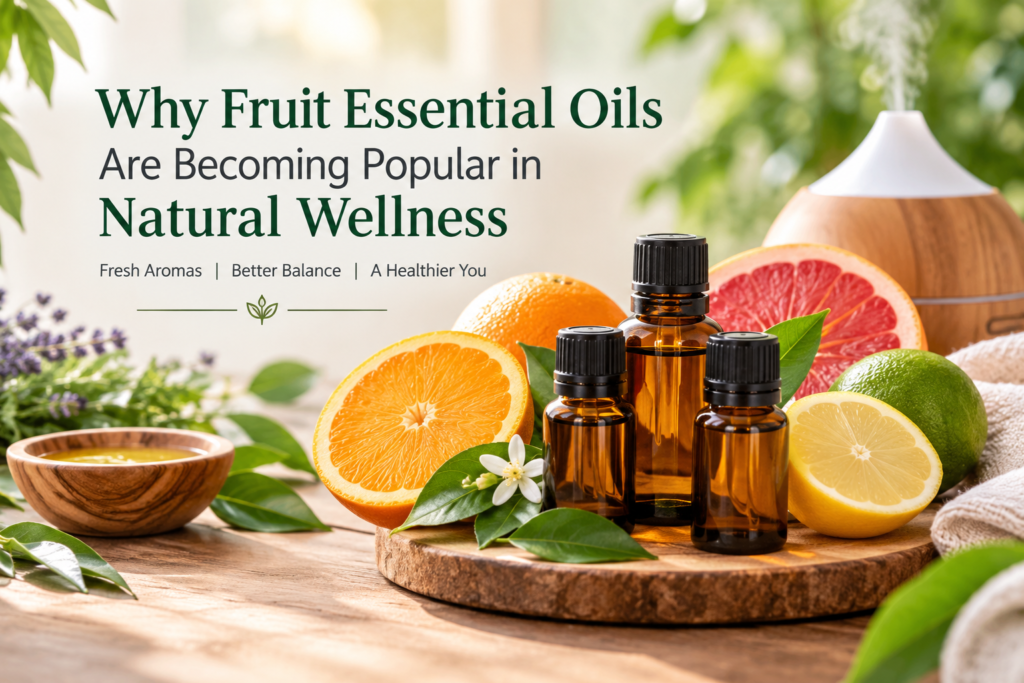
Natural wellness has become an important part of many people’s everyday routines, with growing interest in simple ways to create relaxing and refreshing environments. Among the many botanical products available today, citrus-derived essential oils and other fruit-based aromatic oils are receiving increased attention for their fresh scents and versatile applications. This growing interest reflects a broader preference for plant-based ingredients in personal care, home fragrance, and aromatherapy routines.
What Makes Fruit-Based Oils Appealing?
One reason these oils attract attention is their naturally bright and familiar aromas. Orange, lemon, grapefruit, bergamot, and other fruit-derived varieties can provide distinctive fragrance profiles that fit easily into different settings.
Unlike heavily synthetic fragrances, botanical oils are often selected by people who want to explore plant-derived aromatic ingredients. Their versatility also makes them suitable for different routines, including diffusing, creating customized blends, and incorporating selected oils into certain personal-care practices when properly diluted.
Growing Interest in Natural Wellness
The natural wellness movement has encouraged consumers to pay closer attention to the ingredients they use at home. Rather than focusing only on conventional products, many people are exploring botanical alternatives that complement their existing routines.
Natural fruit oils fit naturally into this trend because they offer recognizable aromas and can be used in several ways. A person might choose a citrus aroma for a morning environment or a softer fruit-inspired blend when creating a calm evening atmosphere.
The appeal is not necessarily about replacing professional healthcare or established wellness practices. Instead, these products can become part of simple lifestyle habits centered around fragrance, relaxation, and creating a pleasant environment.
Versatility in Aromatherapy
Aromatherapy is one of the areas where fruit essential oils have gained attention. Their different aromatic profiles allow users to experiment with combinations that match their personal preferences.
For example, sweet orange can bring a warm and cheerful aroma, while grapefruit has a lighter and more vibrant fragrance. Lemon is often appreciated for its clean, crisp scent, whereas bergamot offers a more nuanced citrus character.
These differences make fruit-based essential oils useful for people who enjoy creating customized aromatic experiences. However, individual oils should always be used according to appropriate safety recommendations, especially when applying them to the skin.
Creating a More Inviting Home Environment
Home fragrance is another reason these products are becoming popular. A pleasant aroma can influence how a room feels, making fragrance an easy way to personalize a living space.
Diffusion is commonly used to distribute aromatic oils through the air. Some people may choose bright citrus notes for shared spaces such as kitchens and living rooms, while others may prefer softer blends for bedrooms or personal relaxation areas.
The key is moderation. Using smaller amounts and following diffuser instructions can help maintain a comfortable fragrance level without overwhelming the room.
Interest in Plant-Based Personal Care
The popularity of botanical ingredients extends beyond home fragrance. Consumers are increasingly interested in plant-based components when selecting personal-care products, although not every essential oil is appropriate for direct skin use.
Fruit-derived essential oils can be included in carefully formulated products, but concentration and dilution matter. Essential oils are highly concentrated substances, so applying them directly to the skin without suitable dilution may cause irritation or sensitivity.
For anyone exploring these products, checking product instructions, dilution guidance, and relevant safety information is an important part of responsible use.
Choosing Quality and Transparency
As interest grows, product quality becomes an important consideration. Consumers may encounter products with different extraction methods, ingredients, concentrations, and labeling practices.
When purchasing botanical fruit oils, it is useful to review the product description carefully and understand exactly what is being offered. Clear labeling can help users identify the botanical name, intended application, and recommended storage conditions.
A reputable supplier should also provide practical information about how its products are intended to be used. Miracle Botanicals Essential Oils, for example, can be considered by consumers researching botanical aromatic products and looking for more information before making a purchase.
The Importance of Responsible Use
Natural does not automatically mean risk-free. Essential oils are concentrated botanical materials and should be handled with care.
Some oils may require particular precautions because of skin sensitivity, photosensitivity, allergies, pregnancy-related considerations, or interactions with certain conditions or medications. Children and pets may also have different safety requirements.
For this reason, users should follow product-specific instructions and consult a qualified healthcare professional when they have concerns about personal use.
It is also important to distinguish wellness-oriented fragrance use from medical treatment. Aromatic products can be part of a lifestyle routine, but they should not be presented as substitutes for professional diagnosis or treatment.
How Blending Can Expand Aromatic Options
Blending allows users to combine different fragrance characteristics. A bright citrus note can be paired with floral, woody, herbal, or resinous aromas to create a more balanced scent profile.
For beginners, starting with a small number of oils can make it easier to understand how individual fragrances interact. Keeping notes about proportions and personal preferences can also help when developing a repeatable blend.
This approach encourages experimentation while keeping the process organized and intentional.
Related Reading: A Guide to Using Frankincense Essential Oil Blends Safely
Those interested in expanding beyond citrus and fruit-inspired aromas may also want to explore “A Guide to Using Frankincense Essential Oil Blends Safely.” Frankincense is a resin-derived essential oil commonly included in aromatic blends because of its distinctive warm, earthy fragrance.
When exploring frankincense blends, the same basic principles of responsible essential-oil use apply. Proper dilution, suitable application methods, product instructions, and individual safety considerations should be reviewed before use. Learning how different oils interact can also help beginners create more thoughtful and balanced aromatic routines.
Why the Trend May Continue
The continued interest in natural wellness is giving consumers more opportunities to explore botanical ingredients. Fruit-inspired aromas are particularly approachable because many people already recognize and enjoy scents such as orange, lemon, grapefruit, and bergamot.
Their flexibility across home fragrance, aromatherapy, and selected personal-care applications makes them appealing to people looking for simple ways to personalize their routines. As consumers become more informed, quality, transparency, and responsible usage are likely to remain important considerations.
Whether someone is new to essential oils or already enjoys creating blends, approaching botanical products with realistic expectations and good safety habits can make the experience more enjoyable.
FAQs
1. What are fruit essential oils?
They are concentrated aromatic oils derived from certain fruit or fruit-associated botanical materials. Citrus varieties are among the most familiar examples.
2. Can fruit-based oils be applied directly to the skin?
Generally, essential oils should not be applied directly without appropriate dilution. Users should follow product-specific instructions and established safety guidance.
3. Are fruit oils suitable for diffusers?
Many are commonly used for aromatic diffusion, but the correct amount depends on the specific oil and diffuser. Following manufacturer instructions is recommended.
4. How should essential oils be stored?
Most should be kept tightly closed in a cool, dry place away from excessive heat and direct sunlight. Product-specific storage instructions should take priority.
5. Can different essential oils be blended together?
Yes, compatible oils can be combined to create customized aromas. Beginners should start with small quantities and research the safety requirements of each oil before blending.