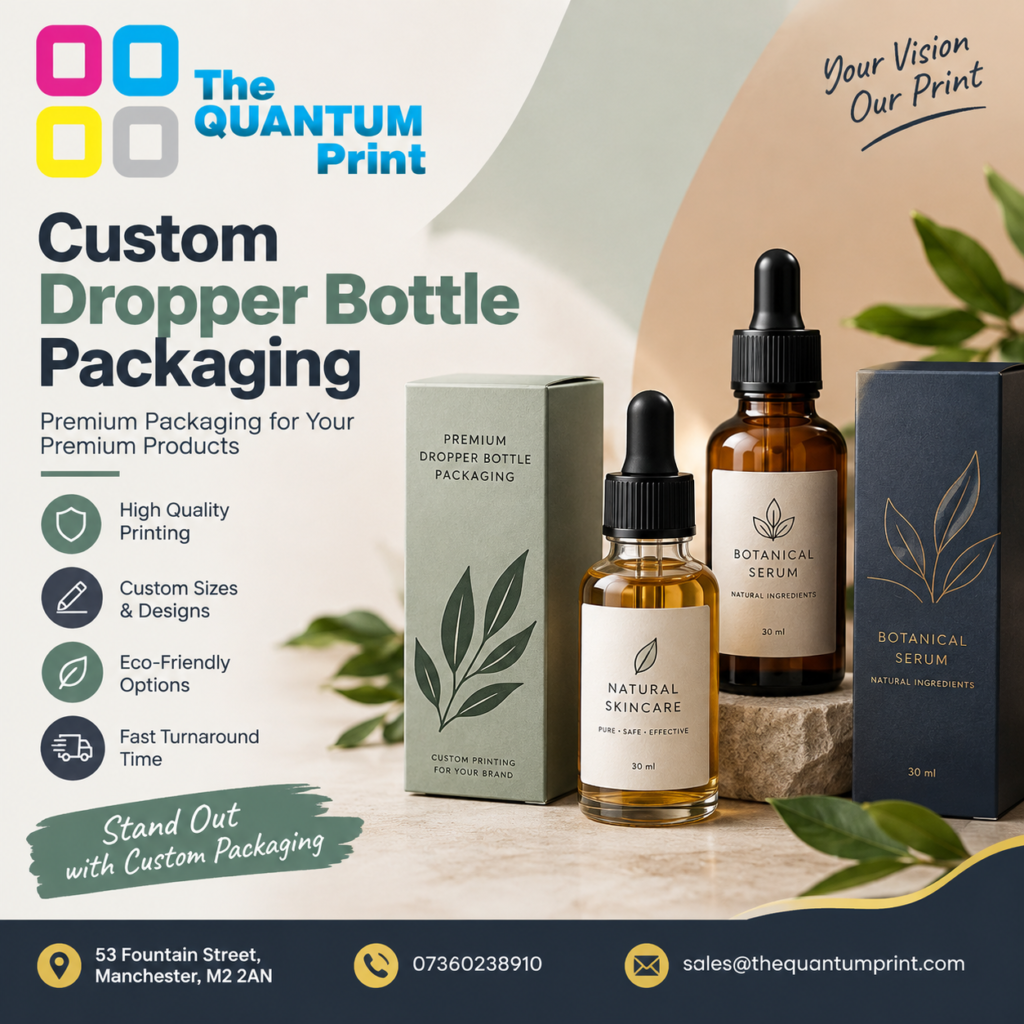
Dropper bottles are widely used for products that require controlled dispensing, accurate application, and protection from external contamination. They can be found across skincare, cosmetics, essential oils, pharmaceutical products, wellness formulations, serums, and specialist retail products. Because these products are often sold in small containers, packaging and labelling have an important role in both practical usability and product presentation.
Well-planned dropper bottle packaging needs to balance several factors, including bottle protection, label durability, readability, branding, and compatibility with the product inside. For UK businesses, understanding these considerations can help manufacturers and retailers avoid common packaging problems while creating a consistent customer experience.
Why Dropper Bottle Packaging Requires Careful Planning
Dropper bottles are different from standard jars, tubes, and pump containers because the dispensing mechanism is part of the overall packaging system. The bottle, pipette, cap, and label need to work together.
The packaging should help protect the contents while allowing users to dispense an appropriate quantity. For liquids such as facial serums, oils, tinctures, and cosmetic formulations, controlled dispensing can reduce unnecessary product waste.
Several factors should be considered during packaging development:
- Bottle material and capacity
- Dropper and closure design
- Product viscosity
- Resistance to oils or chemicals
- Storage and transportation requirements
- Label dimensions and placement
- Customer handling and ease of use
Glass dropper bottles, for example, are commonly selected for premium skincare and cosmetic products because they provide a substantial feel and can complement minimalist packaging designs. However, they also require appropriate protection during transportation because glass can be more vulnerable to impact.

Choosing Suitable Dropper Bottle Labels
Labels are more than a branding surface. They provide important product information and need to remain readable throughout the expected life of the product.
When developing dropper bottle labels, businesses should consider the shape and size of the container. A label that is too large may wrinkle or overlap, while one that is too small can make important information difficult to read.
The label material is equally important. Products containing oils, alcohol, water-based formulations, or other ingredients may require materials and adhesives that can withstand the surrounding conditions.
Useful label considerations include:
- Surface compatibility: Check that the adhesive and label material are suitable for the bottle surface.
- Moisture resistance: Bathroom and skincare products may regularly encounter water or humidity.
- Oil resistance: Essential oils and cosmetic oils can affect unsuitable label materials.
- Print clarity: Small containers often require fine text, making sharp printing particularly important.
- Label positioning: The label should remain straight and visually balanced on the bottle.
- Batch consistency: Repeat orders should maintain consistent colours, dimensions, and positioning.
Businesses looking specifically at dropper bottle labels UK requirements should also consider the information that needs to appear on the product label. Depending on the product category, applicable UK legislation and sector-specific requirements may affect ingredients, warnings, quantities, responsible-person details, or other product information.
Common Packaging Challenges and Practical Solutions
One common problem is label lifting around curved bottles. This can occur when an unsuitable adhesive is used or when the bottle surface has contamination such as oil, dust, or moisture.
Another issue is poor label alignment. Small deviations can become noticeable when multiple bottles are displayed together. Establishing a consistent application process can help reduce this problem.
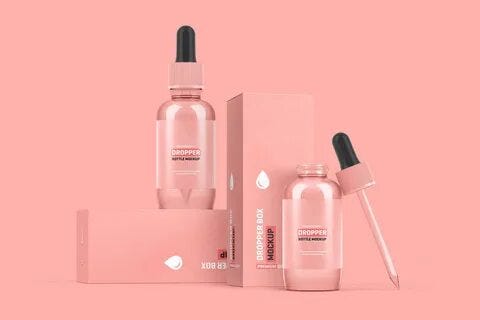
Print durability is another consideration. A beautifully designed label may not remain effective if ink, coating, or material is unsuitable for the product’s environment.
Before placing a larger packaging order, businesses can reduce risk by testing samples. A practical test may involve exposing labelled bottles to typical storage conditions, handling them repeatedly, and checking for:
- Peeling edges
- Smudging
- Colour changes
- Scratches
- Moisture damage
- Adhesive failure
These simple checks can reveal packaging issues before they affect a larger production run.
Applications Across Different Industries
Dropper bottles are particularly useful where controlled dispensing is important. Common applications include cosmetic serums, facial oils, essential oil products, liquid supplements, laboratory-related products, and certain pharmaceutical or wellness formulations.
Packaging expectations can vary between these categories. A cosmetic brand may prioritise premium visual presentation, while a specialist product may place greater emphasis on technical information and durability.
This is why label design should begin with the product’s actual requirements rather than simply adapting a generic template.
In the UK packaging market, businesses can work with specialist printing providers such as The Quantum Print when developing labels and printed packaging components for particular product formats. Reviewing dimensions, materials, finishes, and artwork specifications before production can make the process more predictable.
Practical Tips for Better Results
A few straightforward practices can improve the final packaging outcome:
- Measure the bottle’s printable area accurately.
- Confirm the label material before final artwork approval.
- Leave sufficient space around essential information.
- Test labels on the actual bottle rather than relying only on digital mock-ups.
- Consider how the packaging will be stored and transported.
- Check applicable UK product-labelling requirements.
- Keep artwork files organised for future reprints.
- Maintain consistent specifications across product variations.

Packaging trends are also moving toward clearer visual communication, recyclable materials, minimalist designs, and more deliberate use of finishes. However, sustainability claims should be supported by accurate material information rather than used simply as marketing language.
Conclusion
Effective dropper bottle packaging combines functionality, protection, information, and visual consistency. The best approach depends on the product, dispensing system, bottle material, storage conditions, and intended market.
For businesses using dropper bottle labels, careful selection of materials, adhesives, dimensions, and printing specifications can help prevent common problems such as peeling, smudging, poor alignment, and unreadable information. Testing samples before larger production runs is one of the simplest ways to identify potential issues.
Ultimately, successful packaging is not just about making a small bottle look attractive. It is about creating a practical system that protects the product, communicates essential information clearly, and performs reliably throughout its intended use.