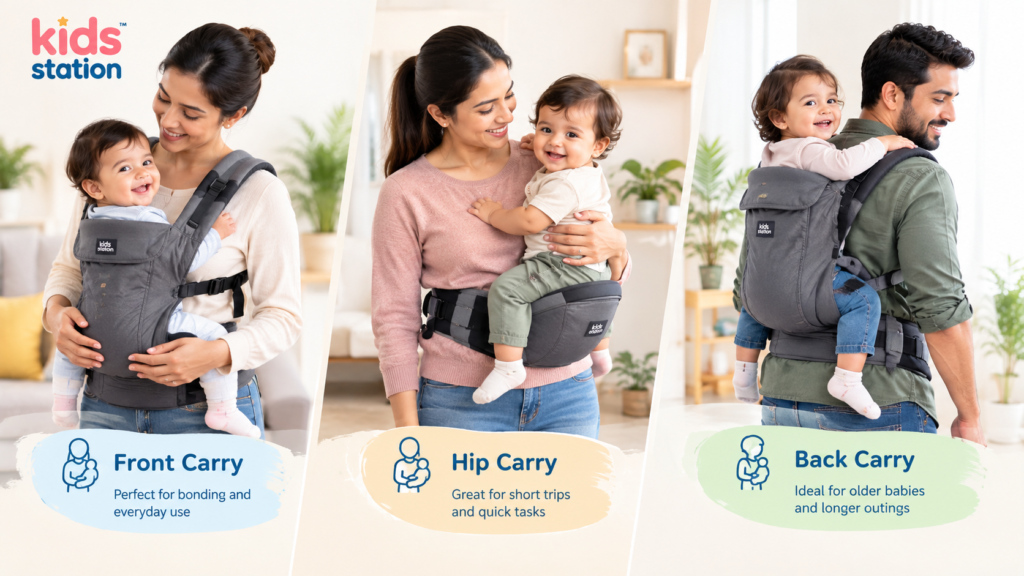
Baby Carrier can make everyday baby carrying easier by allowing parents to keep their little one close while moving around. From short walks and shopping trips to travel and daily activities at home, a suitable carrier can provide convenience while supporting close parent-child contact.
Baby Carrier comes in different designs, materials, carrying positions, and adjustment systems. Choosing the right option depends on the baby’s age, weight, developmental stage, and the manufacturer’s recommendations.
What Is a Baby Carrier?
Baby Carrier is a wearable product designed to hold a baby close to a parent’s body. It generally uses adjustable straps, buckles, fabric panels, or supportive sections to keep the baby in an appropriate carrying position.
Baby Carrier can be useful when parents want greater mobility without carrying their baby continuously in their arms. However, correct fitting and positioning are important for both comfort and safety.
Why Do Parents Use a Baby Carrier?
Baby Carrier can be helpful during everyday situations where parents need to move around while keeping their baby nearby.
Common uses include:
- Short walks
- Shopping trips
- Travelling
- Outdoor activities
- Moving around the home
- Visiting family and friends
- Everyday carrying when a stroller is less convenient
Baby Carrier can also provide close contact between the parent and baby, making it a practical option for many everyday routines.
Choosing a Baby Carrier for Your Baby
Baby Carrier should be selected according to the baby’s age, weight, size, and developmental stage rather than appearance alone.
Check the Recommended Age and Weight
Baby Carrier models have different age and weight recommendations. Some are designed for newborns, while others are intended for babies who have developed stronger head and neck control.
Baby Carrier should never be used outside the manufacturer’s recommended limits. Always check the product instructions before carrying your baby.
Consider Baby Support
Baby Carrier should provide appropriate support for the baby’s head, neck, back, and hips according to the carrier design and the baby’s developmental stage.
Look for Adjustability
Baby Carrier with adjustable shoulder straps, waist support, and fastening systems can help parents achieve a more suitable fit.
Consider Parent Comfort
Baby Carrier should distribute the baby’s weight comfortably across the parent’s body. Padded straps and suitable waist support can make longer carrying periods more comfortable.
Baby Carrier for Newborns
Baby Carrier for newborns requires additional attention because newborn babies have limited head and neck control. Not every carrier is designed for newborn use.
Baby Carrier should only be used with a newborn if the specific product is approved for the baby’s age, weight, and developmental stage.
Baby Carrier positioning should keep the baby’s face visible and airway clear. Parents should regularly check the baby’s position, particularly during longer periods of carrying.
Baby Carrier and Ergonomic Positioning
Baby Carrier with an ergonomic design can provide appropriate support when correctly adjusted and used according to the manufacturer’s instructions.
Baby Carrier should allow the baby’s body to remain properly supported without forcing the baby into an uncomfortable position. The exact positioning requirements can vary according to the carrier design and the child’s age.
Types of Baby Carrier
Baby Carrier products are available in several formats, giving parents different options depending on their lifestyle and carrying preferences.
Structured Baby Carrier
Baby Carrier with a structured design generally includes padded shoulder straps, adjustable buckles, and a supportive body panel. These features can make the carrier easier to adjust for everyday use.
Wrap Baby Carrier
Baby Carrier wraps use fabric that is arranged around the parent’s body to hold the baby close. They can offer flexibility but may require practice to achieve the correct fit.
Soft Baby Carrier
Baby Carrier made from soft fabric can be lightweight and suitable for everyday carrying when used according to its instructions.
Ergonomic Baby Carrier
Baby Carrier with ergonomic features is designed to support the baby’s body while distributing carrying weight across the parent’s body.
Baby Carrier Safety Tips
Baby Carrier should always be used according to the manufacturer’s instructions. Before every use, parents should check straps, buckles, seams, and other components for signs of damage.
Baby Carrier should keep the baby’s face visible and the airway clear. The baby’s position should also be checked regularly to make sure the carrier has not shifted during movement.
Baby Carrier should not be used for activities that could expose the baby to unnecessary impact or falls. Parents should also monitor the baby for signs of discomfort or overheating.
Common Baby Carrier Mistakes
Baby Carrier should not be used without first checking the manufacturer’s age and weight recommendations.
Baby Carrier should not be adjusted so loosely that the baby can move into an unsafe position.
Baby Carrier should not cover the baby’s face or interfere with normal breathing.
Baby Carrier should also not be used if straps, buckles, stitching, or other important components are visibly damaged.
Baby Carrier vs Stroller
Baby Carrier provides close body contact and can be convenient for short outings, crowded areas, travel, and situations where parents need greater mobility.
Baby Carrier and a stroller serve different purposes. A stroller may be more practical for longer outings or when the child needs more space to rest, while a carrier can be useful when parents want to keep the baby close.
How to Make a Baby Carrier More Comfortable
Baby Carrier should be adjusted according to the parent’s body and the baby’s position. Shoulder straps should be appropriately fitted, while waist support should sit in the position recommended by the manufacturer.
Baby Carrier comfort also depends on the baby’s position, clothing, weather, and duration of use. Parents should take regular checks during longer carrying periods.
Baby Carrier for Travel
Baby Carrier can be particularly convenient during travel because it allows parents to keep their hands relatively free while moving through busy areas.
Baby Carrier can be useful at airports, markets, sightseeing locations, and other places where using a stroller may be difficult. Parents should still follow the carrier’s weight and usage recommendations throughout the journey.
Baby Carrier at Kids Station
Baby Carrier at Kids Station can be a practical option for parents looking for convenient baby-carrying solutions for everyday activities and outings.
Baby Carrier should be chosen according to the baby’s age, weight, developmental stage, and the product’s recommended carrying positions. Proper adjustment and positioning are essential for getting the intended benefits from any carrier.
Frequently Asked Questions
What is a Baby Carrier used for?
Baby Carrier is used to carry a baby close to the parent’s body during suitable everyday activities such as walking, shopping, travelling, and moving around the home.
Can I use a Baby Carrier for a newborn?
Baby Carrier can be used for some newborns when the specific model is designed and approved for newborn use. Always follow the manufacturer’s age, weight, and positioning instructions.
How do I choose the right Baby Carrier?
Baby Carrier should be selected based on the baby’s age, weight, developmental stage, support requirements, adjustability, material, and parent comfort.
Is a Baby Carrier safe for everyday use?
Baby Carrier can be used for everyday carrying when it is appropriate for the baby and correctly fitted. Parents should follow the manufacturer’s instructions and regularly check the baby’s position.
What should I check before using a Baby Carrier?
Baby Carrier should be checked for secure straps, buckles, stitching, and appropriate baby positioning. The baby’s face and airway should remain clear throughout use.
Conclusion
Baby Carrier can be a convenient solution for parents who want to carry their baby while maintaining greater freedom of movement. The right carrier can support everyday activities such as walking, shopping, travelling, and spending time outdoors.
Baby Carrier should be selected according to the baby’s age, weight, developmental stage, and the manufacturer’s recommendations. Correct positioning, secure adjustment, regular inspection, and attention to the baby’s comfort are essential parts of responsible carrier use.