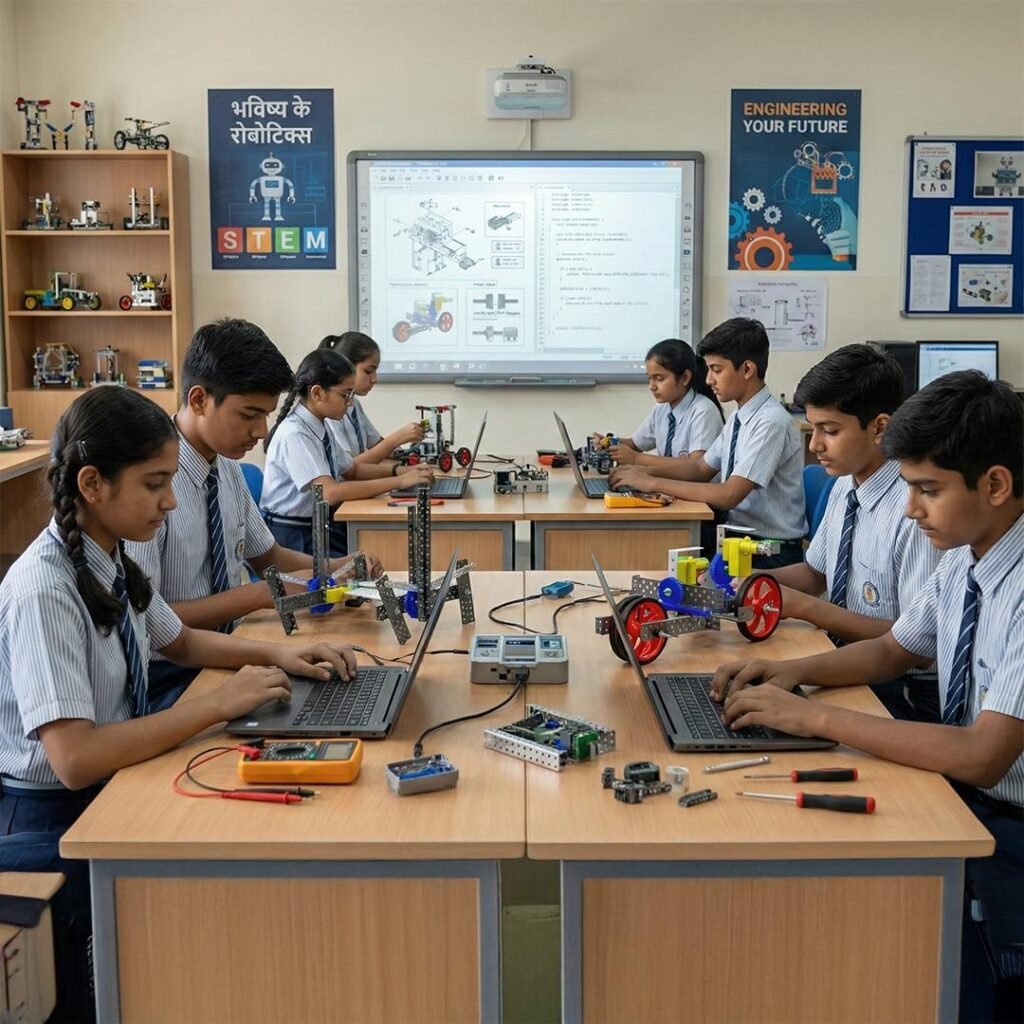
Most school heads imagine a robotics lab as a room full of shiny robots. The truth is less glamorous and far more useful. A good lab comes down to power points, sturdy tables, clever storage and enough class time for students to finish what they start. Getting the robotics lab setup requirements right early on saves months of trouble later.
The basics matter more than people think. Data shows that only about 57% of schools in India have functional computers. So before you compare kits or prices, it helps to know what the room itself needs and how to choose robotics lab equipment for schools that will still earn its place three years from now.
Start With the Space, Not the Shopping List
A room of around 600 sq ft comfortably fits a full class working in groups. Skip the rows of desks. Large tables for four or five students each make teamwork natural and give everyone room to spread out parts.
Plan for plenty of wall sockets, as laptops, chargers and 3D printers all compete for power. Good lighting and ventilation help too, especially near soldering stations. Add lockable cupboards for small components and a few open shelves where half-built robotics projects for students can rest safely between lessons. Children love seeing their work on display, and it quietly motivates the next batch.
Choosing the Right Equipment
Buy by age group, not by what looks impressive. Yoeunger learners need simple, sturdy kits with snap-fit parts, while older students are ready for microcontrollers, sensors and motors they can wire and program themselves. RoboSpecies, for example, offers its Robotrix Junior kit for children aged 8 and above and the Senior kit for those over 12.
Beyond kits, you will need computers for coding, a 3D printer, a multimeter, glue guns and a basic toolbox. When comparing robotics lab equipment for schools, ask how easily spare parts can be replaced. A kit that sits unused because one sensor broke is money wasted.
Curriculum That Turns Parts Into Skills
Equipment without a plan becomes a very expensive cupboard. Look for lesson plans aligned with NEP 2020 that move students step by step, from blinking an LED to building a line-following car, then an obstacle-avoiding robot and finally something of their own design.
A simulation platform helps enormously here. RoboSpecies uses TinkerBrix, which supports Scratch and Arduino simulation, so students can test code before touching real hardware. The best robotics projects for students solve small, real problems, like a smart dustbin or a plant watering system, because that is when learning truly clicks.
People and Ongoing Support
The most important part of any lab is not on the invoice. Teachers need proper training to feel confident, and a dedicated facilitator keeps sessions running smoothly. Regular workshops, inter-house competitions and exhibitions keep interest high long after the lab’s opening day. Plan for maintenance as well, since loose wires and dead batteries are simply part of lab life.
Conclusion
A robotics lab succeeds when space, equipment, curriculum and people all work together. Treat the robotics lab setup requirements as one connected plan rather than a list of purchases, and your students will get far more from every lesson.
RoboSpecies has set up turnkey labs in over 2,500 schools, handling everything from equipment and NEP-aligned curriculum to teacher training and technical support. Book a free demo with RoboSpecies today and see what your school’s lab could look like.