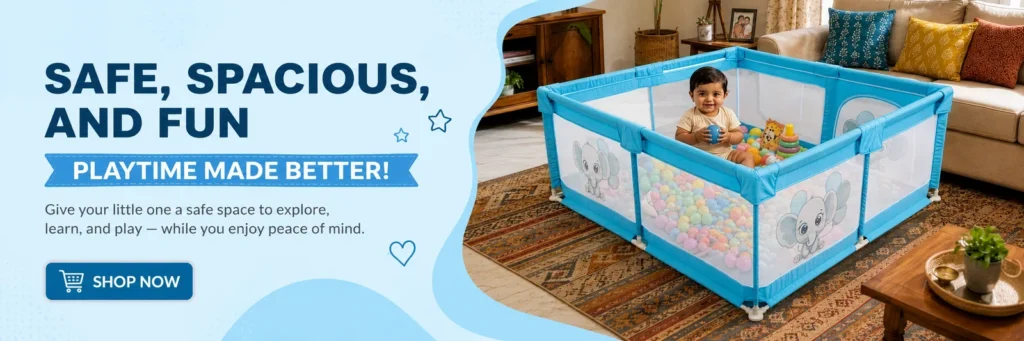
A baby playpen with balls can turn an ordinary indoor play area into a fun and engaging space for babies and toddlers. A playpen provides a defined area for play, while colorful soft balls can encourage children to reach, grab, crawl, move, and explore.
For parents looking to create an indoor activity area, a ball playpen can be a practical addition to a baby’s play routine when used with appropriate supervision and safety precautions.
What Is a Baby Playpen With Balls?
A baby playpen with balls is an enclosed play area that includes or can be used with lightweight play balls. The enclosed design helps create a dedicated space for indoor activities, while the balls provide an interactive element for babies and toddlers.
Children can sit, crawl, reach for balls, pick them up, and move them around as part of age-appropriate play. The playpen can also help keep toys and balls contained in one area rather than spreading throughout the room.
Benefits of a Baby Playpen With Balls
Encourages Active Play
Ball play gives babies an opportunity to move their arms, legs, and body while reaching for different objects. As children become more mobile, a baby playpen with balls can provide additional opportunities for supervised movement.
Supports Hand-Eye Coordination
Picking up, holding, throwing, and moving soft balls can encourage children to coordinate what they see with their hand movements. These simple activities can become part of everyday play.
Makes Indoor Play More Engaging
Bad weather or limited outdoor space can make indoor activities especially useful. A ball-filled playpen can create a dedicated activity area where children can enjoy movement and exploration indoors.
Creates an Organized Play Area
A playpen provides boundaries around the activity space. Instead of having balls and toys spread throughout the room, parents can keep them within one designated play area.
How Babies Can Play With Balls
A baby playpen with balls can support different simple activities depending on the child’s age and developmental stage.
Younger babies may enjoy reaching for nearby balls, touching them, and holding them. Babies who are beginning to crawl can move toward different balls and practice changing positions.
Toddlers may enjoy picking up balls, placing them into containers, rolling them, or gently tossing them during supervised play.
Activities should always be appropriate for the child’s developmental stage.
What to Check Before Buying a Baby Playpen With Balls
Not every playpen is designed in the same way. Parents should consider several factors before choosing one.
Strong and Stable Structure
The playpen should remain stable during normal use. Check that the frame, panels, or connections are secure and follow the manufacturer’s assembly instructions.
Safe Play Balls
The balls should be suitable for the child’s age and intended use. Avoid damaged balls or products with small detachable components that could create a choking hazard.
Soft and Baby-Friendly Surfaces
Smooth edges and suitable materials can make the play area more comfortable for babies who are crawling, sitting, or moving around.
Suitable Size
Consider how much room your child needs to move and play. A larger playpen may provide more space for activities, but it should also fit comfortably in the intended area of your home.
Easy Cleaning
Balls and playpen surfaces can collect dust, food particles, and other dirt. Choose materials that can be cleaned regularly and maintain a hygienic play environment.
Baby Playpen With Balls Safety Tips
Safety should always come before entertainment when setting up a baby playpen with balls.
Place the playpen on a stable, level surface and keep it away from stairs, windows, heaters, electrical cords, and unstable furniture.
Check the balls and playpen regularly for damage. Remove any broken or damaged items immediately.
Do not overcrowd the playpen with toys or other objects. Keep the space comfortable enough for the child to move freely.
Most importantly, adult supervision is still necessary. A playpen can create a defined play area, but it should not be treated as a replacement for supervision.
How to Keep a Ball Playpen Clean
Because babies frequently touch objects and then put their hands near their mouths, regular cleaning is important.
Clean the playpen according to the manufacturer’s care instructions. Wash or wipe the balls and other washable components regularly, especially when they are used frequently.
Keep food, drinks, and dirty outdoor objects away from the play area. Regularly inspect the corners and bottom of the playpen for dust or debris.
Baby Playpen With Balls for Home Use
A baby playpen with balls can work well in a living room, nursery, bedroom, or another suitable indoor area. Before setting it up, make sure the surrounding area is also baby-proofed.
Keep furniture, cords, sharp objects, and other potential hazards away from the playpen. This creates a safer environment both inside and around the play area.
Is a Baby Playpen With Balls Worth It?
For families looking for an engaging indoor activity space, a baby playpen with balls can combine a defined play area with simple movement-based play.
Its usefulness depends on the child’s age, available space, product construction, and how often the play area is used. Parents should focus on safety, suitable materials, easy cleaning, and age-appropriate activities rather than choosing a product based only on appearance.
Conclusion
A baby playpen with balls can provide babies and toddlers with an enjoyable indoor space for reaching, crawling, grabbing, and exploring. Colorful play balls can make the area more engaging while helping children practice simple movement and coordination skills through play.
With a stable setup, age-appropriate balls, regular cleaning, proper baby-proofing, and active supervision, a ball playpen can become a useful part of a child’s everyday indoor play routine.