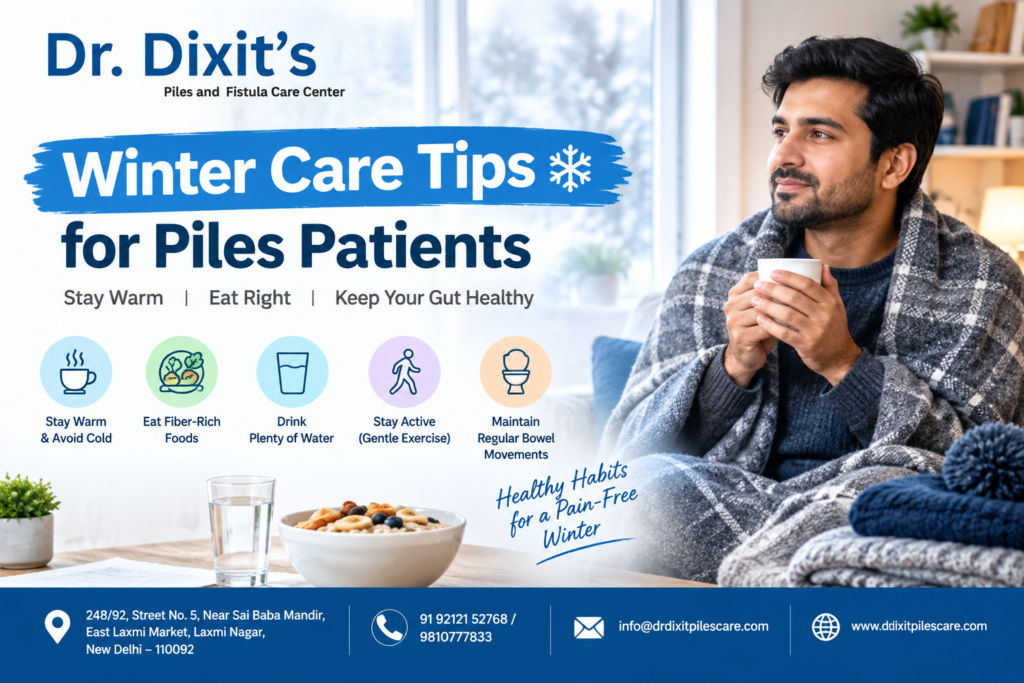
Winter can feel refreshing, but for people living with piles, colder weather may bring an uncomfortable combination of constipation, harder stools, reduced physical activity, and changes in daily routines. If bowel movements become difficult or you spend more time sitting indoors, symptoms such as itching, discomfort, swelling, or bleeding may become more noticeable.
The good news is that simple daily habits can make a significant difference.
Following the right winter care tips for piles patients can help keep stools softer, support regular bowel movements, reduce unnecessary straining, and make it easier to manage piles symptoms throughout the colder months. The key is not to focus only on piles themselves but also on the constipation, toilet habits, diet, hydration, and lifestyle factors that can contribute to symptoms.
What Are Piles and Why Does Winter Care Matter?
Piles, medically known as haemorrhoids, are swollen and inflamed veins around the anus or lower rectum. They can be internal or external. Common symptoms include bright-red rectal bleeding, itching, discomfort, swelling, and sometimes a lump or prolapse.
Winter does not automatically cause piles. However, certain seasonal habits can make constipation and bowel-related problems more likely. People may drink less water because they do not feel as thirsty, eat fewer fresh foods, exercise less, or spend longer periods sitting indoors.
These changes can contribute to harder stools and straining. Straining during bowel movements, chronic constipation, a low-fibre diet, and prolonged toilet sitting are recognized factors associated with haemorrhoids.
10 Winter Care Tips for Piles Patients
1. Stay Hydrated Even When You Are Not Thirsty
One of the most important winter habits is maintaining adequate fluid intake.
Cold weather can reduce the sensation of thirst, so some people unintentionally drink less water. When fluid intake is inadequate, stools can become harder and more difficult to pass.
Adequate fluid intake also helps dietary fibre work effectively. NIDDK recommends drinking water and other liquids as appropriate for your individual health and activity level, particularly when increasing fibre intake.
Try to:
- Keep water available throughout the day.
- Drink fluids regularly rather than waiting until you feel very thirsty.
- Include suitable warm fluids such as clear soups if they fit your diet.
- Increase fluid intake appropriately when increasing fibre.
- Follow your doctor’s fluid recommendations if you have a medical condition requiring fluid restriction.
2. Make Fibre a Daily Priority
A fibre-rich diet is one of the most useful dietary approaches for preventing constipation and supporting easier bowel movements.
For adults, general dietary guidance cited by NIDDK indicates approximately 22–34 grams of fibre per day, depending on age and sex. Fibre should generally be increased gradually so your digestive system can adapt.
Winter-friendly fibre sources include:
- Oats and whole grains
- Lentils and dals
- Chickpeas and beans
- Green vegetables
- Carrots and peas
- Apples and pears with the skin when appropriate
- Oranges and other whole fruits
- Nuts and seeds
For example, instead of beginning the day with a low-fibre breakfast, you could choose oatmeal with fruit or another whole-grain option.
3. Do Not Ignore the Urge to Have a Bowel Movement
Ignoring the urge to pass stool can contribute to constipation for some people.
When you feel the need to use the toilet, try not to postpone it unnecessarily. Establishing a regular bowel routine can also be helpful.
NIDDK notes that bowel training may involve trying to have a bowel movement at a consistent time, such as after breakfast, when natural bowel activity may be stimulated by eating.
The goal is not to force a bowel movement. Instead, allow yourself enough time, relax, and avoid excessive pushing.
4. Avoid Straining During Bowel Movements
Repeated straining can increase pressure around the anal area and may aggravate piles symptoms.
If your stool is hard or difficult to pass, focus on addressing the underlying constipation rather than repeatedly forcing it out.
Helpful measures can include:
- Increasing fibre gradually
- Drinking adequate fluids
- Staying physically active
- Responding to the urge to pass stool
- Avoiding prolonged toilet sitting
- Discussing persistent constipation with a healthcare professional
These measures are consistent with standard haemorrhoid self-care recommendations.
5. Keep Moving During Cold Weather
Cold mornings and shorter days can make it tempting to stay indoors and remain seated for long periods.
However, regular physical activity can support bowel regularity and help prevent constipation. NIDDK includes regular physical activity among measures that may help relieve and prevent constipation.
You do not necessarily need an intense workout.
Consider:
- Walking indoors or outdoors when weather permits
- Gentle stretching
- Light household activity
- Taking short movement breaks during desk work
- Following an exercise routine appropriate for your age and health
If you have significant pain or another medical condition, ask your healthcare professional which activities are appropriate.
6. Limit Long Periods of Sitting
Winter often means more time on sofas, beds, office chairs, or in front of televisions.
Prolonged sitting can also encourage inactivity and disrupt regular bowel habits. Make a conscious effort to stand up and move around periodically.
If you work at a desk, consider taking short movement breaks rather than remaining seated continuously for several hours.
7. Choose Winter Foods Carefully
Winter meals can be comforting, but some seasonal eating patterns may contain relatively little fibre.
A diet dominated by processed foods, fast foods, refined snacks, and other low-fibre choices can make constipation harder to manage. NIDDK recommends increasing fibre-rich foods and limiting foods with little or no fibre when constipation is contributing to haemorrhoid problems.
Instead of relying heavily on refined or processed foods, build meals around:
Breakfast: oats, whole grains, fruit, or other fibre-rich choices.
Lunch: vegetables, dal, beans, whole grains, and a balanced protein source.
Evening: fruit, nuts, or another suitable fibre-rich snack.
Dinner: vegetables, legumes, whole grains, and adequate fluids.
Your exact diet should be adjusted according to your health conditions, dietary needs, and medical advice.
8. Maintain Gentle Anal Hygiene
Good hygiene can help reduce irritation around the anal area.
If you have piles, avoid aggressive rubbing or excessive cleaning. After washing, gently pat the area dry rather than rubbing it.
The NHS advises keeping the area clean and dry and using gentle techniques to avoid irritation.
If itching, burning, persistent moisture, or skin irritation continues despite good hygiene, consult a healthcare professional rather than repeatedly applying different products without guidance.
9. Consider Warm Baths for Temporary Comfort
A warm bath or sitz bath may provide temporary relief from discomfort, itching, or pain associated with haemorrhoids.
NIDDK notes that sitting in warm water can help relieve pain, while the NHS also recommends warm baths for easing itching and discomfort.
The purpose is comfort and symptom relief. A warm bath should not be considered a substitute for medical assessment when symptoms are persistent, severe, or associated with significant bleeding.
10. Do Not Self-Treat Persistent Symptoms Indefinitely
Over-the-counter creams and other products may provide temporary relief for mild symptoms, but persistent symptoms require proper assessment.
NIDDK recommends medical follow-up when haemorrhoid symptoms continue after approximately one week of home treatment, and rectal bleeding should be discussed with a healthcare professional.
Remember that not every instance of rectal bleeding is caused by piles. Other gastrointestinal conditions can produce similar symptoms.
What Should Piles Patients Eat in Winter?
A practical winter diet for someone prone to constipation should focus on fibre, adequate fluids, and balanced meals.
Foods to Include
Consider adding:
- Oats and whole grains
- Dal and lentils
- Chickpeas and beans
- Fresh vegetables
- Seasonal fruits
- Pears and apples with skin when suitable
- Nuts and seeds
- Other naturally fibre-rich foods
According to NIDDK, fibre helps make stools softer and easier to pass, while adequate fluids help fibre work more effectively.
Foods to Limit When Constipation Is a Problem
You may need to reduce your intake of foods that provide little or no fibre, particularly when they replace fibre-rich foods. Examples include:
- Highly processed snacks
- Fast food
- Chips
- Some prepared or frozen foods
- Other heavily processed foods
This does not mean every person with piles must completely eliminate a particular food. Individual tolerance and overall dietary pattern matter.
A Simple Winter Routine for Piles Patients
A consistent routine can make healthy habits easier to maintain.
Morning
Start your day with adequate fluids and a fibre-containing breakfast. Give yourself enough time for a bowel movement without rushing or straining.
During the Day
Remain physically active and avoid sitting continuously for long periods. Eat balanced meals containing vegetables, whole grains, legumes, or fruit.
Evening
Continue drinking suitable fluids according to your health needs. A light walk or gentle activity can be useful if appropriate.
Before Bed
If symptoms cause discomfort, discuss appropriate symptom-relief measures with your healthcare professional. Avoid spending unnecessary time sitting on the toilet.
Common Winter Mistakes That Can Aggravate Piles
Some everyday habits can work against your efforts to control symptoms.
Drinking Too Little Water
Feeling less thirsty in cold weather does not necessarily mean your body needs less fluid.
Replacing Fibre-Rich Foods With Processed Snacks
Winter comfort foods can sometimes crowd out fruits, vegetables, whole grains, and legumes.
Becoming Completely Inactive
Staying indoors all day can reduce physical activity and contribute to constipation.
Sitting on the Toilet for Too Long
The toilet should not become a place for extended phone use or prolonged sitting. NIDDK specifically recommends avoiding long periods on the toilet as part of haemorrhoid self-care.
Repeatedly Straining
If stool does not pass easily, repeatedly pushing harder is not the solution. Address constipation and seek medical advice when necessary.
When Should You See a Piles Specialist?
Home care may be appropriate for mild symptoms, but professional assessment becomes important when symptoms persist, recur, or become more severe.
You should consider medical evaluation if you experience:
- Persistent or recurrent rectal bleeding
- Increasing pain or swelling
- A lump that remains or becomes increasingly uncomfortable
- Persistent itching or irritation
- Symptoms that do not improve with home care
- Repeated episodes of piles
- Significant changes in your usual bowel habits
Rectal bleeding should not automatically be assumed to be piles because other conditions can cause bleeding.
Seek urgent medical attention for heavy or continuous bleeding, severe pain, or bleeding accompanied by symptoms such as fever, abdominal pain, or significant illness.
Winter Care Tips for Piles Patients: Quick Checklist
Before heading through the winter season, remember these simple points:
- Drink adequate fluids.
- Eat enough fibre every day.
- Increase fibre gradually.
- Stay physically active.
- Avoid prolonged toilet sitting.
- Do not strain during bowel movements.
- Respond to the urge to pass stool.
- Choose more whole, fibre-rich foods.
- Keep the anal area clean and dry.
- Use warm baths for temporary comfort when appropriate.
- Do not ignore persistent bleeding or worsening symptoms.
- Seek professional evaluation when symptoms do not improve.
How Dr. Dixit Can Help With Piles Care in Delhi
If piles symptoms are recurring despite changes in diet and lifestyle, getting a proper evaluation can help determine the nature and severity of the problem.
At Dr. Dixit’s Piles and Fistula Care Centre, patients can discuss symptoms such as bleeding, discomfort, swelling, constipation-associated piles, and recurrent anorectal problems with a healthcare professional.
For patients looking for piles treatment in Delhi, an appropriate treatment plan should be based on the individual’s symptoms, examination findings, medical history, and severity rather than simply following a one-size-fits-all approach.
Conclusion
Winter does not have to mean worsening piles symptoms. For many patients, the most useful approach is to protect bowel regularity and avoid the habits that encourage constipation and straining.
The most important winter care tips for piles patients are simple: stay adequately hydrated, eat fibre-rich foods, remain active, avoid prolonged toilet sitting, respond to the urge to pass stool, and maintain gentle hygiene. Warm baths may provide temporary comfort when symptoms are irritating.
However, lifestyle measures should not replace medical evaluation when symptoms persist or bleeding occurs. Because rectal bleeding can have causes other than piles, persistent or unexplained symptoms deserve professional attention.
If you are experiencing recurring piles symptoms this winter, consult Dr. Dixit’s Piles and Fistula Care Centre in Laxmi Nagar, Delhi to discuss your symptoms and understand suitable treatment options.
Frequently Asked Questions
1. Does cold weather directly cause piles?
Cold weather itself is not considered a direct cause of piles. However, winter habits such as reduced physical activity, lower fluid intake, dietary changes, and constipation may contribute to factors associated with haemorrhoid symptoms.
2. How much fibre should piles patients eat?
General adult guidance cited by NIDDK is approximately 22–34 grams of fibre daily, depending on age and sex. Individual needs can vary, so increase fibre gradually and discuss dietary changes with a healthcare professional when necessary.
3. Is drinking warm water helpful for piles?
Adequate fluid intake can help keep stools softer, particularly when you are consuming more fibre. The important factor is maintaining appropriate hydration rather than relying on a particular water temperature.
4. Can walking help piles patients during winter?
Regular physical activity can help with constipation and support bowel regularity. Walking is one practical way to remain active during winter, provided it is appropriate for your health and physical condition.
5. Can I take a warm bath for piles discomfort?
Yes, a warm bath or sitz bath can provide temporary relief from discomfort and itching associated with haemorrhoids. Persistent or severe symptoms still require appropriate medical evaluation.
6. When should I see a doctor for piles?
Consult a healthcare professional if symptoms persist, repeatedly return, or if you experience rectal bleeding. Seek urgent medical attention for severe pain, heavy or continuous bleeding, or bleeding associated with symptoms such as fever or abdominal discomfort.