
Nobody plans a house move based on box availability, but many people find themselves needing moving boxes in the UK during the week of their move, only to discover that their usual sizes are backordered, delayed, or suddenly more expensive than expected. This isn’t bad luck but a predictable seasonal pattern that almost nobody talks about clearly until they’re already caught in it.
Why Demand for Moving Boxes Isn’t Actually Random
Assuming that house moves occur evenly throughout the year is a common misconception. In practice, they cluster heavily around a handful of predictable periods, and box demand follows the same pattern almost exactly.
The End-of-Month Squeeze
A huge proportion of UK tenancies run on standard monthly cycles, which means moving activity concentrates disproportionately around the last few days of any given month. If you’re ordering boxes for moving house during that specific window, you’re competing with a genuinely large spike in demand hitting suppliers all at once and not a steady trickle of orders spread evenly through the month.

The Summer Surge
Summer remains the busiest season for house moves in the UK, driven by families timing relocations around school holidays and better weather making the physical process of moving considerably easier. This seasonal surge means demand for moving boxes in the UK climbs steadily from late spring through to early autumn, with the sharpest pressure typically landing in the middle of that window.
The Student Move-Out Window
University towns and cities see their own distinct spike, concentrated tightly around the end of the academic year, when large numbers of students move out of shared housing within the same few-week period. This creates intense, geographically concentrated demand that can strain local box availability even when national stock levels look perfectly healthy.
What Actually Happens When Demand Spikes
Understanding why availability tightens helps explain what to actually do about it, rather than just reacting once it’s already a problem.
Popular Sizes Run Out First
When demand spikes, it’s rarely every box size that disappears. In fact, they’re the most commonly needed ones. Standard medium boxes and double wall cardboard boxes, the workhorses of most moves, tend to be the first to run low, while more specialist sizes remain available simply because fewer people need them at the same time.
Wardrobe Storage Boxes Often Get Overlooked Until It’s Too Late
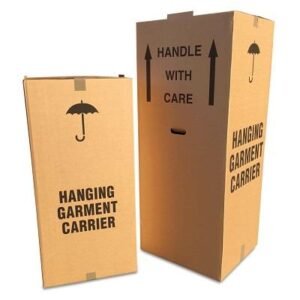
This situation is particularly true of wardrobe storage boxes, which people often don’t think to order until they’re already deep into packing everything else. By the time hanging clothing becomes the priority, general stock levels may already be under pressure from earlier orders, leaving fewer options for a category that’s genuinely difficult to substitute with a standard box.
How to Actually Avoid Getting Caught Out
None of these factors means a move has to be left to chance. A few practical habits make a real difference.
Order Before the Window, Not During It
The single most effective thing anyone can do is order ahead of the predictable spikes rather than during them, which means a week or two before the end of the month, or well before the summer season builds momentum, rather than in the middle of it. Suppliers with genuinely large stock holdings are far better positioned to fulfil orders reliably during these periods than smaller operations that work with limited inventory.
Consider a Kit Rather Than Individual Boxes
During genuinely high-demand periods, ordering a pre-built removal kit rather than assembling an order box-by-box can also help, since kits are typically built from stock held specifically for that purpose, rather than competing directly against the individual sizes everyone else is scrambling for at the same time.
Planning Around the Calendar, Not Against It
The businesses and households that avoid shortage-season stress aren’t the ones with better luck but are the ones who’ve simply mapped their move against the calendar and ordered accordingly. If a move is happening near month-end, in summer, or around the academic year’s turnover, treating box sourcing as an early task rather than a last-minute one is the single biggest factor in avoiding both higher prices and reduced availability.
Summing Up
To sum up, a last-minute rush for moving boxes not only increases the likelihood of higher prices but also jeopardises the quality and size of the boxes available, leading to a greater risk of damage during the move. Ordering boxes for moving house and the rest of your packaging materials in the UK ahead of the predictable seasonal crunch isn’t just about saving money. It’s about making sure the boxes actually match what you’re packing, rather than settling for whatever’s still on the shelf once everyone else has already ordered.