A backyard can have beautiful paving and still feel uncomfortable, crowded, or disconnected. In many cases, the problem is not the material itself. It is the way the paving is arranged. The size, direction, shape, pattern, and placement of paved areas can change how people move through a yard and how large or inviting the space appears.
Good backyard planning starts with function. Before choosing colors or patterns, homeowners should think about where people will walk, sit, eat, relax, and gather. Recent backyard design guidance also emphasizes planning zones and movement before selecting materials, because layout has a direct effect on how the finished space works.
Why Paving Layout Matters
Paving creates some of the strongest visual lines in a backyard. When those lines are planned well, they can guide the eye and make different areas feel connected. When they are placed without a clear plan, the yard can feel divided or smaller than it really is.
For homeowners considering Concrete And Interlocking, layout should be treated as an important part of the design rather than a final detail. The same material can create very different results depending on how it is arranged.
A simple pattern can make a small yard feel calm and open, while a busy pattern may make the same space feel crowded. Direction also matters. Long paving lines can draw the eye across a space, while a carefully placed border can define a seating or dining area.
Start With How You Use the Backyard
The best layout is not always the most decorative one. It should support the way your household actually uses the yard.
Think about what happens when you step outside. Do you walk directly from the back door to a dining area? Do children move between the lawn and patio? Do guests gather near an outdoor kitchen? Do you need a clear path to a gate or storage area?
These everyday movements should influence the paving plan. A recent backyard layout guide recommends defining the purpose of each area and planning circulation between zones before choosing materials.
Create Clear Outdoor Zones
Paving can help separate different activities without making the backyard feel divided. A dining area can have its own paved surface, while a nearby lounge area can use a slightly different pattern or border.
This approach is useful when planning Home Renovation Services because the backyard becomes part of the home’s overall layout instead of being treated as an unrelated outdoor area.
The goal is to give each space a purpose while keeping enough visual connection between them.
Paving Can Make a Small Backyard Feel Larger
Small yards often benefit from simple paving patterns. Too many changes in direction, colors, or shapes can make a compact space look busy.
A consistent paving direction can help the eye travel naturally across the yard. Larger paving units can also reduce the number of visible joints, which may create a cleaner appearance. Research and design guidance on small yards notes that paving patterns can influence perceived width, depth, movement, and organization.
Use Lines to Guide the Eye
The direction of the paving can subtly change how the backyard feels.
If paving runs toward the far end of a narrow yard, it can encourage the eye to move forward. If it runs across the width, it may visually emphasize the available width.
There is no single layout that works for every property. The right choice depends on the shape of the yard, the location of the home, and the activities planned for the space.
Patterns Can Change the Mood
The paving pattern has a strong visual effect. Straight, repeated lines can give a backyard a clean and organized appearance. More varied arrangements can add movement and interest.
For example, a simple stacked arrangement can create a calm and orderly appearance, while more complex patterns can become a visual feature of their own. Recent design coverage also notes that paving direction and pattern can guide the eye and influence how an outdoor area is perceived.
Keep Busy Patterns Under Control
A detailed pattern does not have to cover every paved area. Sometimes it works better as a feature around a dining area, entrance, or central seating space.
Using one strong pattern and keeping surrounding areas simpler can make the backyard feel more balanced.
When planning Concrete And Interlocking, homeowners can consider the pattern as part of the complete landscape rather than choosing it separately from plants, furniture, and other surfaces.
Borders Can Define Important Areas
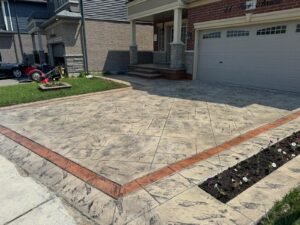
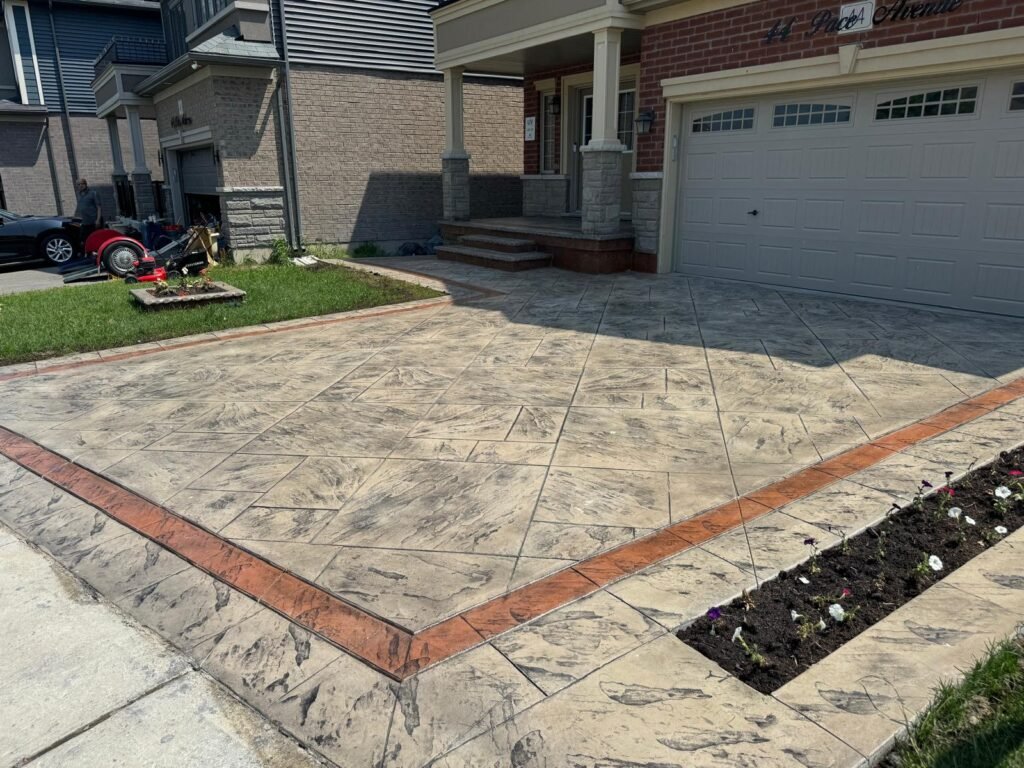
Borders are another simple way to change how paving feels. A border around a patio can make the space appear more complete and clearly defined.
Borders can also help connect separate paved areas. For example, the same edge detail can appear around a patio and along a nearby walkway. This repeated detail gives the yard a stronger visual connection.
Think About Transitions
The point where paving meets grass, planting beds, gravel, or another surface deserves attention. Abrupt transitions can make separate areas look disconnected.
A carefully planned transition can instead guide people from one zone to another. Changes in material, planting, edging, or paving direction can create a clear connection without requiring walls or large structures.
Consider Movement Before Furniture
Furniture should not determine the entire paving layout. It is better to plan enough room for people to move first and then position furniture within those areas.
A pathway that passes directly through a dining space can become frustrating when people are eating. Similarly, a narrow route between the house and a seating area can make the backyard feel cramped.
A practical layout should provide comfortable movement between the home’s doors, seating, cooking areas, garden spaces, and gates.
Layout Decisions Worth Making Early
Before construction begins, consider these important factors:
- Where people naturally enter and leave the backyard.
- Which areas need the most space for furniture.
- Where dining, cooking, relaxing, and play will happen.
- Which views should remain open.
- Where paving should meet grass, plants, gravel, or other surfaces.
- How the paving direction will affect the overall shape of the yard.
Planning these details early can prevent expensive changes later. It also makes it easier to choose materials that fit the intended layout.
Connect the Backyard With the Home
A backyard often feels more comfortable when its design relates to the home. This does not mean every outdoor surface needs to match the interior.
Instead, look for simple connections. Similar colors, repeated shapes, complementary textures, or a shared design detail can help the outdoor space feel like a natural extension of the house.
This is particularly important when Home Renovation Services include both indoor and outdoor improvements. A new patio can feel much more intentional when its shape and location work with the home’s doors, windows, steps, and main views.
Think About Drainage and Practical Use
Appearance is important, but paving also needs to work in everyday conditions. Water should have a suitable path away from areas where it could collect.
The ground conditions, slope, existing drainage, and location of nearby structures should be considered before installation. Good planning helps reduce problems caused by standing water or poorly placed surfaces.
The paving layout should also leave enough room for maintenance. Plants will grow, furniture may move, and outdoor areas will need cleaning over time.
Use Repetition to Create Connection
One of the easiest ways to make a backyard feel unified is to repeat selected details.
The same paving material can appear in a patio and walkway. A similar border can appear around separate zones. A repeated shape can also connect the design without making everything identical.
For Concrete And Interlocking projects, this can create a strong sense of continuity while still allowing each area to have its own purpose.
Avoid Making Every Area Look Different
A backyard does not need a different pattern for every activity. Too many materials and patterns can compete for attention.
A more balanced approach is to choose a main surface and then use smaller changes to identify special areas. This keeps the design interesting without making the yard feel fragmented.
The same principle applies to Home Renovation Services. A successful renovation usually works best when individual improvements support one larger design idea.
Look at the Backyard From Inside the House
One often overlooked step is viewing the backyard from the rooms that face it. Windows and doors create important sightlines.
A patio, pathway, or planting area that looks good from outside may appear very different from the kitchen or living room. The paving layout should support both views when possible.
This can also help identify where a strong pattern should be placed and where a quieter surface would work better.
Plan for How the Space Will Feel Over Time
A backyard should not only look good immediately after installation. It should remain useful as furniture changes, plants grow, and household needs develop.
Simple layouts often provide more flexibility. A well planned paved area can support dining today and become a larger gathering space later.
Good design leaves room for real life instead of trying to control every part of the yard.
Final Thoughts
Paving layout has a much bigger effect on a backyard than many homeowners expect. It can guide movement, define outdoor zones, influence how large the space appears, and connect different parts of the property.
Whether you are planning a small patio or a complete outdoor improvement, the layout should come before the finishing details. Think about movement, proportion, patterns, transitions, views, drainage, and everyday use before choosing the final materials.
For homeowners planning a larger project, Quick & Perfect Renovation can help bring these ideas together as part of thoughtful Home Renovation Services. A carefully considered plan can turn a basic backyard into an outdoor space that feels comfortable, connected, and easy to enjoy.