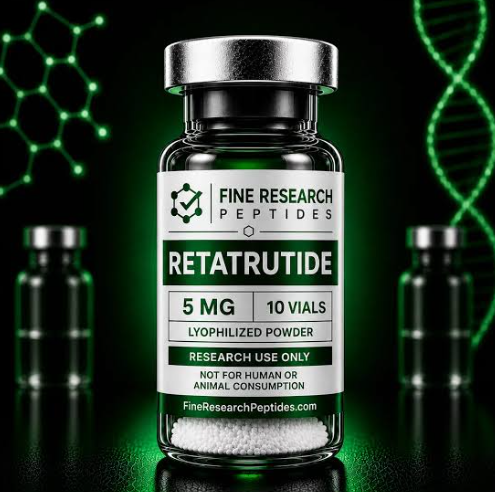
Interest in a retatrutide peptide buy has increased as researchers and consumers have followed developments surrounding retatrutide, an investigational molecule being developed by Eli Lilly. Retatrutide is a once-weekly triple receptor agonist that acts on GIP, GLP-1, and glucagon receptors. Its development has attracted considerable scientific attention because clinical trials are investigating its potential role in obesity, type 2 diabetes, and several related metabolic conditions. However, understanding its current regulatory and research status is essential before considering any source or product marketed under the retatrutide name.
For anyone researching a retatrutide peptide buy, the most important distinction is between an investigational compound being evaluated in controlled clinical research and a medicine approved for general consumer use. As of September 2026, retatrutide has not been approved by the FDA or another regulatory agency for public use. Eli Lilly states that retatrutide remains investigational and that legitimate access is through its clinical-trial programs. This makes product verification, regulatory awareness, and careful interpretation of online claims particularly important.
What Is Retatrutide?
Retatrutide, also known as LY3437943, is a synthetic peptide-based molecule designed to activate three hormone receptors: the GIP receptor, GLP-1 receptor, and glucagon receptor. This triple-agonist mechanism distinguishes it from medicines that primarily target one or two of these pathways. Researchers are studying whether simultaneously influencing these pathways can produce clinically meaningful effects on body weight, glucose regulation, and other metabolic outcomes. The compound is administered once weekly in the clinical-trial setting, but its investigational status means that trial findings should not be interpreted as equivalent to an approved treatment indication.
Why Retatrutide Has Attracted Research Interest
The scientific interest surrounding retatrutide comes from its novel mechanism and the breadth of conditions being evaluated in clinical development. Phase 3 programs have investigated retatrutide in adults with obesity or overweight, including populations with type 2 diabetes, cardiovascular disease, knee osteoarthritis pain, and obstructive sleep apnea. Additional research is examining areas such as chronic low back pain, chronic kidney disease, and metabolic dysfunction-associated steatotic liver disease. This broad development program reflects an effort to understand not only changes in body weight but also how the molecule may affect complications associated with metabolic disease.
Understanding the Current Regulatory Status
Regulatory status should be one of the first considerations when evaluating information about retatrutide. As of 2026, retatrutide remains an investigational medication and has not received FDA approval. Eli Lilly has reported positive results from multiple Phase 3 studies and has stated plans to submit a Biologics License Application to the FDA in the first quarter of 2027. A planned submission, however, is not the same as regulatory approval, and availability to the general public depends on the outcome of the regulatory review process.
What to Consider Before a Retatrutide Peptide Buy
Anyone researching a retatrutide peptide buy should first determine whether the material being advertised is legitimately available for the intended purpose. Online listings can create the impression that an investigational compound is equivalent to an approved pharmaceutical product, but those categories are fundamentally different. A product offered outside an authorized clinical-trial pathway may have uncertain identity, concentration, purity, sterility, storage history, or manufacturing controls. Eli Lilly has specifically warned about unapproved retatrutide products and notes that illicit products may contain incorrect ingredients, contaminants, impurities, or inconsistent amounts of active material. These concerns make the source and legal status of any advertised product at least as important as the product name itself.
Evaluating Research Information Carefully
Researchers following retatrutide should distinguish between peer-reviewed evidence, clinical-trial information, company announcements, and promotional claims made by unrelated sellers. Clinical development data can provide useful information about study populations, endpoints, dosing regimens, and observed outcomes, but results from a clinical trial do not automatically establish that an independently purchased product has the same composition or quality as the material used in that study. This distinction is particularly important for investigational compounds because unauthorized products may not have the manufacturing controls associated with formal clinical research. A careful reader should therefore examine the provenance of information and avoid treating marketing descriptions as evidence of clinical equivalence.
Research Applications and Scientific Interest
Retatrutide’s research applications currently center on metabolic and cardiometabolic questions. Phase 3 trials have evaluated its effects in people with obesity or overweight, including participants with and without type 2 diabetes. Other studies have examined related complications, such as cardiovascular disease, knee osteoarthritis pain, and obstructive sleep apnea. In one Phase 3 obesity trial, Lilly reported substantial reductions in body weight at 80 weeks, while a separate Phase 3 diabetes study reported reductions in both A1C and body weight. These are trial findings from specific study populations and should be interpreted within the design and limitations of those studies rather than generalized to every individual.
Quality, Documentation, and Research Materials
For legitimate laboratory research involving investigational peptides, documentation is an important component of material management. Researchers may need clear identification of the compound, batch information, analytical characterization, storage conditions, and appropriate records showing how materials entered and moved through a research workflow. Analytical techniques such as chromatographic and mass-spectrometric characterization can be relevant when assessing identity and purity, although the appropriate testing requirements depend on the research protocol. A product description alone should not be treated as proof of pharmaceutical quality. Maintaining a documented chain of information helps researchers distinguish experimental material from products marketed with unsupported claims.
Avoiding Risks From Unapproved Products
The availability of online listings does not establish that an investigational peptide is safe, legal, sterile, or suitable for human administration. This is particularly important for injectable products, where contamination, incorrect concentration, or an unexpected ingredient can create serious risks. Lilly’s current public information states that retatrutide is not approved for public use and warns against taking products claiming to be retatrutide outside its sponsored clinical trials. Consequently, consumers should not interpret online availability as evidence of authorization, and researchers should ensure that any use of an investigational compound falls within the applicable institutional, regulatory, and scientific framework.
The Future of Retatrutide Research
Retatrutide’s development program remains active, with Phase 3 research generating additional information about its potential effects and safety profile. In July 2026, Lilly announced additional Phase 3 results from TRIUMPH-2 and TRIUMPH-3 and stated that it planned to submit a BLA in the first quarter of 2027. Other trials are continuing to examine retatrutide across obesity, diabetes, and associated conditions. The next major stage will involve regulatory review, during which authorities assess the complete evidence package rather than relying on individual trial announcements. Until that process is completed, retatrutide should continue to be regarded as an investigational compound rather than an approved medication.
Conclusion
A retatrutide peptide buy should not be approached like an ordinary purchase of an established prescription medicine because retatrutide remains an investigational compound as of September 2026. Its triple GIP, GLP-1, and glucagon receptor activity has made it an important subject of clinical research, and Phase 3 studies have produced significant findings across obesity, diabetes, and related conditions. Nevertheless, investigational status means that questions surrounding regulatory authorization, product identity, manufacturing quality, sterility, documentation, and appropriate access remain central. Anyone researching retatrutide should rely on verified clinical and regulatory information, distinguish legitimate research access from unapproved commercial products, and avoid treating online availability as proof of safety or authorization. The most responsible approach is to evaluate retatrutide according to its current scientific and regulatory status while awaiting the outcome of the formal approval process.