Picture a new electric vehicle sitting in the driveway, fully paid for, yet the owner is still stopping at public chargers every few days. It’s a common scene across the Hudson Valley. Many drivers buy the car first and think about home charging later.
That’s where EV Charger Installation in Middletown, NY enters the conversation. Setting up a dedicated charger at home changes daily life for EV owners. No more waiting at busy stations. No more planning errands around a charging schedule. The car simply fills up overnight while everyone sleeps.
As more households in the region switch to electric, the demand for proper home charging has grown fast. Understanding how it works helps owners make smarter choices.
Why Home Charging Has Become So Popular
Public charging stations serve a purpose, but they weren’t built for daily convenience. Waiting in line, paying premium rates, and dealing with occupied stalls adds friction to ownership.
A home charger removes most of that hassle. Drivers plug in at night and wake up to a full battery. For anyone with a regular commute, this quickly becomes the easiest part of owning an electric car.
The shift matters in places like Middletown, NY, where winters can be tough and no one wants to stand outside waiting for a charge.
Level 1 vs. Level 2 Charging
Most EVs come with a basic Level 1 charger. It plugs into a standard wall outlet and adds only a few miles of range per hour. That’s fine for light use, but slow for anyone who drives regularly.
Level 2 chargers run on a 240-volt circuit, similar to what an electric dryer uses. They charge several times faster and are the popular choice for home setups.
What Goes Into a Proper Installation
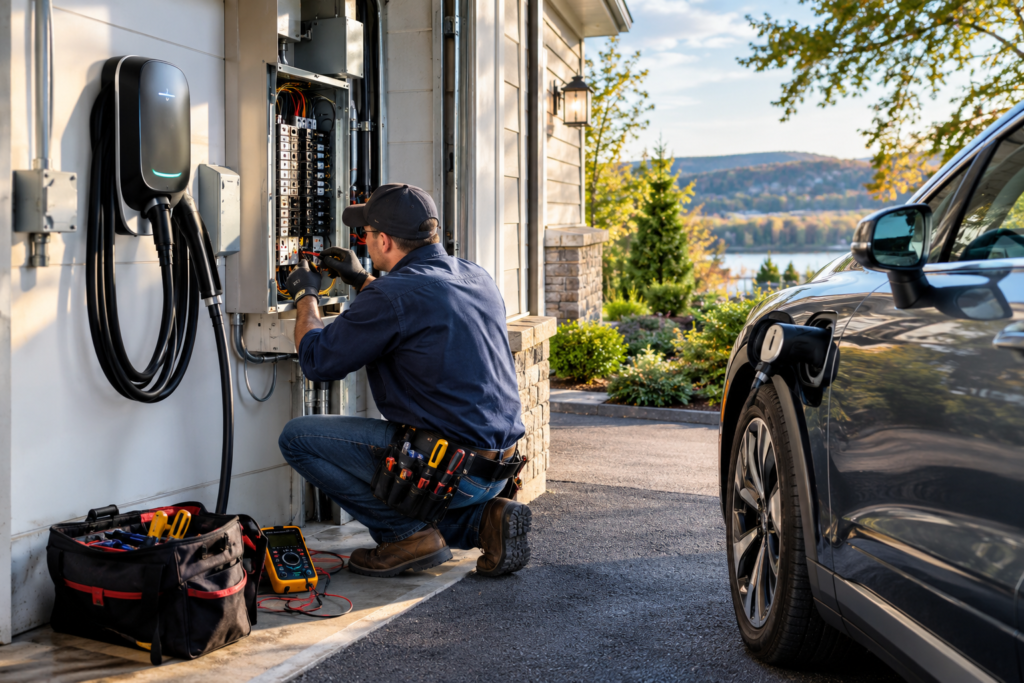
A home charger is more than a plug on the wall. The work involves electrical load calculations, panel capacity, wiring, and local permits.
Older homes often have panels that weren’t designed for modern electrical demand. Adding a fast charger can push an outdated panel past its limit. That’s why a proper assessment comes first.
A licensed electrician checks whether the existing system can handle the added load. If not, a panel upgrade may be needed before the charger goes in.
Permits and Local Codes
Electrical work in New York must follow state and local code. Permits protect homeowners by making sure the job meets safety standards.
Skipping this step can cause insurance and resale problems later. Reputable local pros handle the paperwork as part of the job, which spares homeowners the headache.
The Real Benefits Owners Notice
The most obvious perk is convenience. A car that charges at home fits neatly into everyday routines instead of disrupting them.
Cost is another factor. Charging at home during off-peak hours usually costs far less than public stations. Over months and years, those savings add up.
There’s also the value angle. A properly installed Level 2 charger can make a home more attractive to future buyers, especially as electric vehicles keep gaining ground across the region.
A Look at Real-World Situations
Consider a family in Middletown, NY that recently bought two electric vehicles. Relying on public chargers meant juggling schedules and burning free time. A single home charging point solved the problem almost overnight.
Then there are older homes where wiring simply isn’t ready. In these cases, the charger install is only half the story. The electrical system itself often needs attention first.
This overlap is why many electrical contractors treat charging setups as part of a bigger picture. Companies such as Lightsmith Electric are known in the area for handling both the charger work and the wiring issues that surface along the way.
That connection matters. A charger is only as reliable as the system behind it. When something acts up, homeowners often turn to Electrical Troubleshooting Services in Nyack, NY and nearby communities to find the root cause before it grows into a bigger problem.
When Troubleshooting Comes First
Flickering lights, tripped breakers, or warm outlets are warning signs. These issues can point to an overloaded or aging system.
Addressing them early keeps a new charger running safely. In many projects, Electrical Troubleshooting Services in Nyack, NY and the surrounding Hudson Valley reveal problems that would have caused trouble down the road.
Making a Confident Choice
Home charging is one of the smartest upgrades an EV owner can make. The key is treating it as an electrical project, not a simple gadget install.
A quality setup considers the whole system: the panel, the wiring, the permits, and the charger itself. Done right, it delivers years of quiet, reliable service.
For anyone weighing EV Charger Installation in Middletown, NY, the best next step is a professional assessment of the home’s electrical capacity. That single conversation prevents most of the surprises that trip up unprepared owners.
Frequently Asked Questions
How long does a home EV charger installation take?
Most standard installations take a few hours once the equipment and permits are ready. Jobs that require a panel upgrade or extra wiring can take a full day or longer.
Do I need a permit to install an EV charger at home?
Yes, in New York most home charger installations require an electrical permit. This ensures the work meets safety codes and protects your home’s insurance and resale value.
Can any home support a Level 2 charger?
Not always. Older electrical panels may lack the capacity for a fast charger. An electrician can assess your system and recommend an upgrade if needed.
How much does home EV charging cost compared to public stations?
Charging at home is usually cheaper, especially during off-peak hours. Public stations often charge premium rates, so home charging saves money over time.
What are common signs my home needs electrical work before a charger?
Frequent tripped breakers, flickering lights, or warm outlets are red flags. These often mean the system needs attention before adding a high-demand charger.