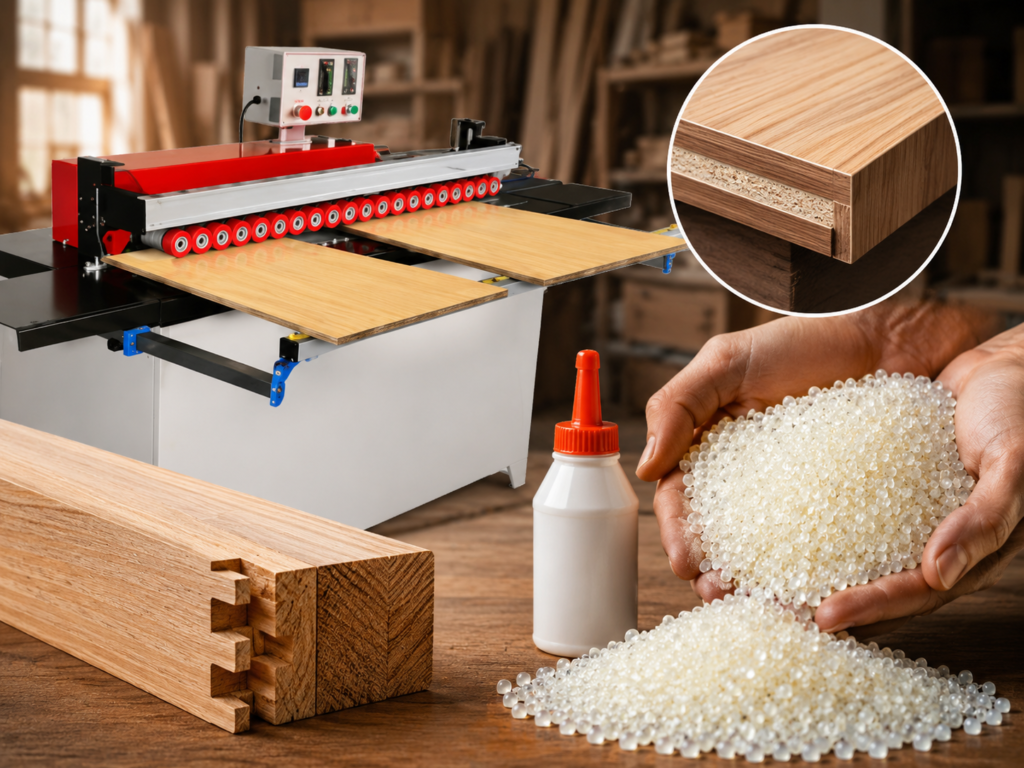
Discover how wood furniture adhesive supports strong, durable bonds in furniture making while meeting quality, safety, application, and relevant industry standards.
Wood Furniture Adhesive: Building Stronger Furniture Bonds
Furniture manufacturing requires more than attractive designs and quality wood. A strong and reliable bonding solution is equally important for producing furniture that can withstand everyday use. This is where Wood Furniture Adhesive plays an important role.
From chairs and tables to cabinets, wardrobes, doors, wooden panels, and decorative furniture, adhesives are used to join different wooden components efficiently. The right adhesive can improve bond strength, appearance, production efficiency, and the overall durability of finished furniture.
What Is Wood Furniture Adhesive?
Wood Furniture Adhesive is a bonding material specially selected for joining wood and wood-based materials. Depending on the application, manufacturers may use different adhesive technologies, including water-based, hot melt, rubber-based, and synthetic resin systems.
The appropriate adhesive depends on factors such as the type of wood, surface condition, production process, required bond strength, environmental exposure, and application method.
A suitable adhesive should provide consistent bonding while allowing manufacturers to maintain an efficient production process.
Why Is Wood Furniture Adhesive Important?
Furniture components are exposed to repeated handling, loading, temperature changes, and changes in moisture. A weak or unsuitable bond can affect the service life and appearance of the finished product.
A properly selected adhesive can provide:
- Strong adhesion between compatible wood surfaces
- Consistent bonding during production
- Clean and professional-looking joints
- Efficient assembly and manufacturing
- Good resistance appropriate to the intended application
- Better production consistency
- Compatibility with different woodworking processes
For this reason, adhesive selection should be considered an important part of furniture manufacturing rather than simply an additional production material.
Applications of Wood Furniture Adhesive
Wood Furniture Adhesive can be used across many furniture-making processes. Common applications include:
1. Furniture Assembly
Adhesives can be used to join wooden components during the assembly of tables, chairs, cabinets, shelves, and other furniture products.
2. Wood Panels and Boards
Furniture manufacturers often work with plywood, MDF, particle board, laminates, veneers, and other wood-based materials. The adhesive must be compatible with the specific substrate and production process.
3. Veneer Bonding
Adhesives can help attach decorative or functional veneer layers to suitable substrates. Bond performance depends on adhesive selection, surface preparation, pressure, temperature, and processing conditions.
4. Edge and Profile Bonding
In suitable applications, adhesives can be used for edge-related bonding and profile assembly, helping manufacturers achieve clean and consistent finished products.
5. Decorative Furniture
For decorative furniture, adhesive selection is especially important because excessive adhesive, poor spreading, or unsuitable curing can affect the final appearance.
Choosing the Right Wood Furniture Adhesive
There is no single adhesive that is ideal for every furniture application. Manufacturers should evaluate the complete bonding process before selecting a product.
Important factors include:
Substrate Compatibility
The adhesive should be suitable for the materials being joined. Different woods and engineered boards can have different surface characteristics and absorption behavior.
Required Bond Strength
The required strength depends on the furniture design and the stress placed on the joint. Structural or load-bearing applications may require different performance characteristics from decorative bonding.
Setting and Curing Time
Production speed is another important consideration. The adhesive should provide an appropriate open time, setting time, and final bond development for the manufacturing process.
Moisture and Temperature Conditions
Furniture used in different environments may experience varying humidity and temperature conditions. Adhesive selection should therefore consider the expected service environment.
Application Method
Adhesives may be applied manually or through automated equipment. Viscosity, application temperature, spreading characteristics, and equipment compatibility should be evaluated before production.
Rules and Regulations for Wood Furniture Adhesive
Adhesive compliance should be considered together with the specific product, substrate, end use, and applicable Indian standards. BIS provides a Know Your Standard system through which standards can be searched by Indian Standard number or product keyword.
For wood and wood-based products, relevant Indian Standards can address areas such as adhesive performance, bonding, moisture resistance, and formaldehyde-related testing. For example, BIS laboratory information for IS 303:2024 includes testing related to plywood, including glue adhesion and formaldehyde testing.
BIS documentation also identifies IS 4835:1979 as a standard concerning polyvinyl acetate dispersion-based adhesives for wood. Other standards apply to particular wood products and applications, so manufacturers should verify the current standard applicable to their specific product rather than assuming that one adhesive standard covers every furniture application.
Practical Compliance Points
Furniture and adhesive manufacturers should consider:
- Applicable BIS standards: Identify the Indian Standards relevant to the adhesive, substrate, or finished wood product.
- Product testing: Where applicable, verify bonding performance, moisture resistance, formaldehyde-related requirements, or other specified characteristics through suitable testing.
- Chemical safety information: Maintain appropriate technical and safety documentation for adhesive products and communicate safe handling, storage, and application requirements.
- Correct labeling: Product labels and technical documentation should accurately communicate relevant product information, application instructions, precautions, and storage requirements.
- Worker safety: Manufacturing facilities should provide appropriate workplace controls and personal protective measures according to the chemicals and processes involved.
- Application instructions: Follow the manufacturer’s recommended application temperature, spread rate, open time, pressure, and curing conditions.
- End-use requirements: Adhesives intended for indoor furniture, moisture-exposed furniture, panels, or specialized applications may have different performance requirements.
These requirements can differ depending on the adhesive chemistry, furniture product, substrate, and intended market. Therefore, compliance should be verified against the current applicable standards and regulations before making specific compliance claims.
Quality Control in Furniture Bonding
Consistent quality control is essential for achieving reliable adhesive performance. Manufacturers can monitor important production parameters such as surface preparation, adhesive quantity, application temperature, pressing pressure, assembly time, and curing conditions.
Regular testing can also help identify problems before they affect large production batches.
A well-controlled bonding process can reduce issues such as:
- Weak joints
- Adhesive squeeze-out
- Uneven bonding
- Delamination
- Surface defects
- Production rework
- Inconsistent finished products
Role of Adhesive Manufacturers
An experienced adhesive manufacturer can support furniture producers by developing products for different substrates and production requirements. Technical support can also help manufacturers determine suitable application conditions and troubleshoot bonding problems.
Companies operating in India’s woodworking and furniture sector increasingly need adhesive solutions that balance performance, production efficiency, safety, and application requirements.
Wood Furniture Adhesive and Modern Furniture Manufacturing
Modern furniture production is continuously evolving, with manufacturers looking for faster processes, dependable bonding, improved finishing, and suitable solutions for engineered wood materials.
Wood Furniture Adhesive can contribute to these goals when the product is correctly selected and applied. Whether the process involves furniture assembly, panel bonding, veneer work, or other woodworking applications, adhesive performance should be evaluated according to the actual production conditions.
Conclusion
Wood Furniture Adhesive is an important component of modern furniture manufacturing. The right adhesive can help create strong and consistent bonds while supporting efficient production and high-quality finishing.
However, choosing an adhesive should involve more than comparing bond strength alone. Manufacturers should consider substrate compatibility, curing requirements, moisture and temperature conditions, application methods, safety information, quality control, and applicable Indian Standards.
By combining appropriate adhesive selection with controlled application and relevant compliance practices, furniture manufacturers can build reliable bonding processes that support durable and professional-quality furniture.