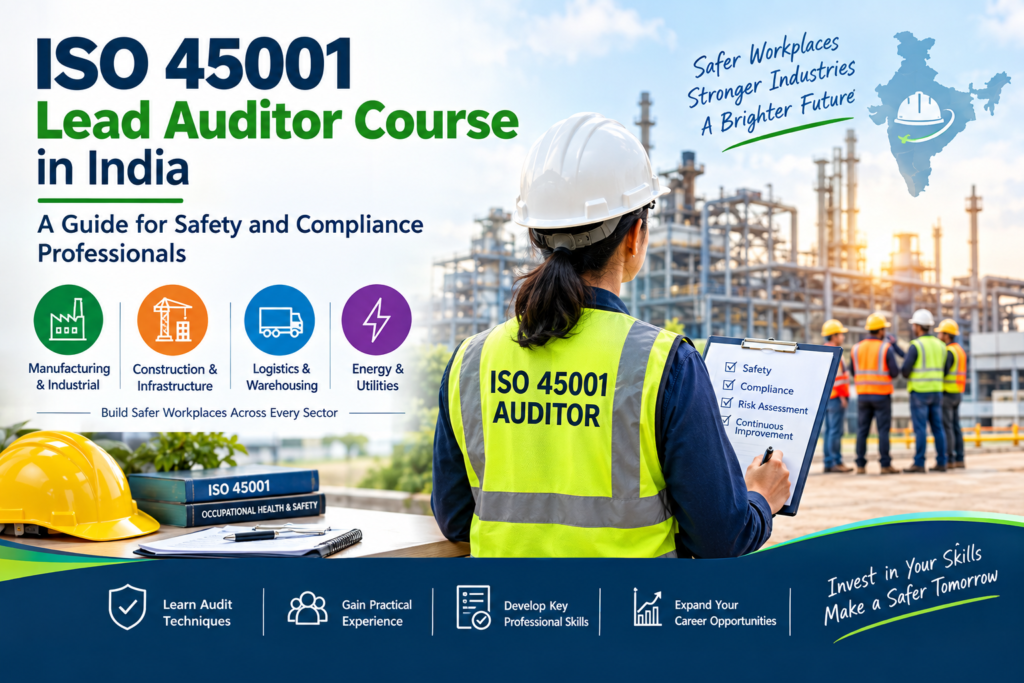
India’s industrial and manufacturing sectors have expanded rapidly over the past decade, bringing with it a stronger focus on workplace safety. As more organisations across construction, manufacturing, and infrastructure work to strengthen their safety practices, professionals with structured audit skills are increasingly sought after. This has made the ISO 45001 lead auditor course a relevant choice for safety and compliance professionals across the country.
Why This Course Is Gaining Relevance in India
India’s diverse industrial landscape includes sectors such as manufacturing, construction, logistics, and energy, each carrying distinct occupational hazards. As safety expectations continue to evolve, organisations are placing greater importance on having employees who understand how to systematically evaluate safety practices.
This shift has increased interest in structured lead auditor training among professionals working in EHS, quality, and compliance roles across Indian industries.
Industries That Benefit From Trained Auditors
Manufacturing and Industrial Units
Factories and industrial units often involve machinery, chemical handling, and repetitive processes, all of which carry inherent risks. Trained auditors help these organisations identify gaps in their safety procedures before they lead to incidents.
Construction and Infrastructure
Given the physical nature of construction work, safety auditing plays a critical role in reducing on-site hazards. Professionals trained in lead auditing bring a structured approach to assessing site safety practices.
Logistics and Warehousing
With the growth of e-commerce and logistics networks across India, warehousing operations have also seen increased focus on safety, particularly around material handling and equipment use.
What the Course Typically Covers
Participants in an iso 45001 lead auditor course in india learn the same core audit principles applied globally, while also gaining insight into how these principles apply within local industrial contexts. This includes understanding common workplace hazards seen across Indian industries and how safety documentation is typically structured within local organisations.
The training usually blends theoretical modules with practical exercises, including mock audits that reflect realistic workplace scenarios relevant to the Indian industrial context.
Skills Developed Through the Training
Beyond audit techniques, participants strengthen their ability to communicate findings clearly, an important skill given the diverse workforce found across many Indian organisations. Auditors also learn to approach safety evaluations objectively, setting aside personal assumptions and focusing on evidence gathered during the audit.
Time management and structured documentation are additional skills reinforced throughout the course, both of which are essential when managing audits across large industrial sites.
Balancing Classroom Learning With Site Realities
One aspect that participants often find valuable is connecting classroom concepts with the realities of Indian worksites, where conditions can vary considerably between a modern facility and an older industrial unit. Understanding how to apply the same audit principles consistently, regardless of the setting, is an important part of becoming an effective auditor.
Trainers often use examples drawn from a range of site types during discussions, helping participants see how core audit techniques remain consistent even when the physical environment or workforce composition changes significantly.
Career Opportunities for Trained Professionals
As safety expectations rise across Indian industries, professionals with structured auditing skills often find opportunities in compliance monitoring, safety management, and internal audit functions. This training can also support professionals looking to expand their responsibilities within existing EHS or quality roles.
Given India’s ongoing industrial growth, the demand for professionals capable of evaluating safety systems is expected to remain steady across multiple sectors.
Choosing the Right Learning Approach
Many professionals prefer training formats that combine flexibility with practical learning, given the demands of full-time roles. Whether attending in-person sessions or joining virtually, it helps to choose a format that allows sufficient time for hands-on exercises such as mock audits.
Reviewing case studies relevant to Indian industries during training can also make the learning experience more applicable to real workplace situations. Group discussions with fellow participants from different sectors often add further value, since they expose learners to hazards and safety practices outside their own immediate field of work.
Understanding Local Workplace Culture
Auditing effectively in an Indian context also involves understanding the workplace culture in which the audit takes place. Many organisations operate with layered supervisory structures, and auditors benefit from understanding how information typically flows between workers, supervisors, and management before drawing conclusions about how well safety procedures are followed.
Training that acknowledges this context helps participants approach interviews and observations with greater sensitivity, which in turn leads to more accurate and constructive audit outcomes. It also helps auditors recognise when reluctance to speak openly stems from hierarchy rather than a genuine absence of concerns.
Common Misconceptions Among First-Time Participants
Some first-time participants assume that this training is only useful for those working in heavy industry. In practice, the audit principles taught apply just as well to service-based organisations, warehousing operations, and even administrative environments where safety considerations, while less visible, still matter.
Others assume the course is purely theoretical. Most programmes are designed with a strong practical component, including mock audits and case discussions, so that participants leave with skills they can apply immediately rather than knowledge they must first translate into practice.
Preparing for the Course
Before beginning training, it helps to have a general understanding of workplace safety practices and how they are typically documented. Familiarity with common hazards in your specific industry can also make it easier to relate theoretical concepts to real situations during the course. Speaking with colleagues who have already completed similar training can also offer useful perspective on what to expect.
As safety continues to shape the way Indian industries operate, professionals equipped with structured audit skills play an important role in building safer workplaces. This training offers a practical pathway for those looking to strengthen their expertise and contribute meaningfully to occupational health and safety across their organisations.