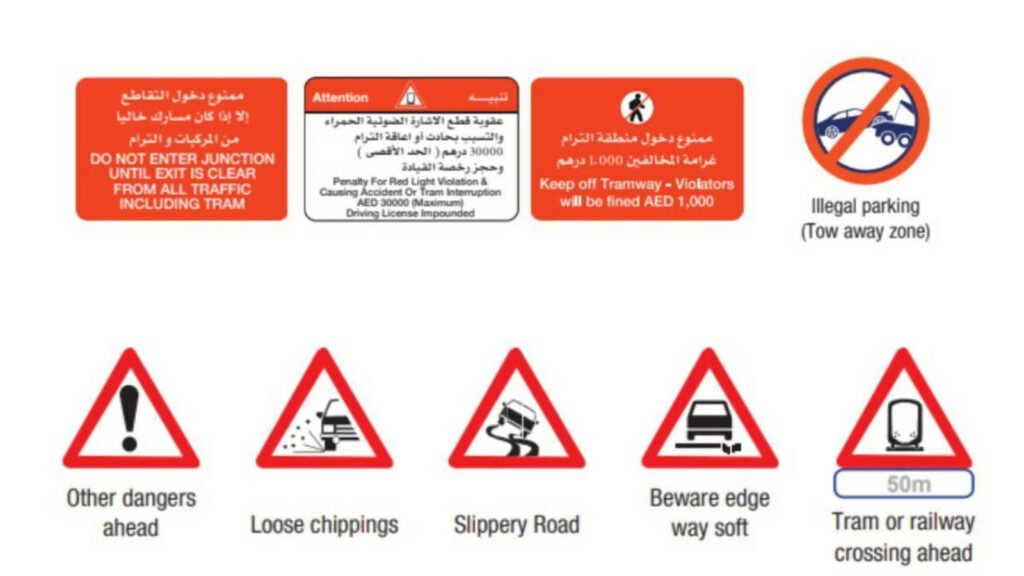
Driving in the UAE requires more than following speed limits. A safe journey starts with a roadworthy vehicle, proper occupant protection, attentive driving, and adjustments for weather and traffic conditions. This checklist brings together practical guidance from UAE authorities, particularly the Roads and Transport Authority (RTA), Dubai Police, and the UAE Ministry of Interior (MOI), so drivers can check the main safety requirements before and during a journey.
UAE Road Safety Checklist at a Glance
Before starting a journey, check these essential areas:
- Seat belts are secured for every occupant.
- Children use the appropriate restraint system.
- Tyres have suitable pressure and condition.
- Brakes, lights, indicators, and other essential systems work properly.
- Mirrors and windows provide clear visibility.
- The driver avoids mobile-phone distractions.
- The driver follows posted speed limits.
- The driver maintains a safe following distance.
- The driver adjusts speed for weather and road conditions.
- The driver takes breaks during long journeys.
- Loads and luggage remain properly secured.
- The vehicle moves to a safe location if a serious fault develops.
1. Check the Vehicle Before Driving
UAE traffic regulations require drivers to ensure that their vehicles are safe and serviceable before starting a journey. The federal traffic regulations specifically require drivers to check the safety and serviceability of vehicle components before driving.
A quick pre-drive inspection should cover:
| Vehicle item | What to check |
| Tyres | Pressure, visible damage, and general condition |
| Brakes | Normal braking response and warning indicators |
| Lights | Headlights, brake lights, indicators, and hazard lights |
| Mirrors | Correct adjustment and clear visibility |
| Windscreen | Clean surface and unobstructed view |
| Wipers | Proper operation, especially during rain |
| Fluids | Visible leaks and relevant fluid levels |
| Safety equipment | Emergency equipment appropriate for the vehicle |
RTA guidance also recommends checking the brakes, tyres, and headlights before starting a journey.
For vehicles used regularly in Dubai’s hot climate, a visual inspection should become routine. RTA has specifically advised drivers to check tyre pressure, engine oil, cooling-system condition, and signs of water or oil leakage.
2. Make Seat Belts Non-Negotiable
Every person inside the vehicle should use the available seat belt while the vehicle is moving. UAE traffic regulations require the driver and front-seat passenger to wear safety belts, while UAE road-safety awareness guidance also promotes seat-belt use for rear passengers.
Before moving:
- Fasten the driver’s seat belt.
- Ask every passenger to buckle up.
- Keep the belt positioned correctly across the body.
- Do not allow passengers to travel without the required restraint.
Seat belts remain one of the simplest safety measures available because they help restrain occupants during sudden braking or a collision.
3. Use the Correct Child Restraint
Children require age- and size-appropriate protection rather than an adult simply holding them in the vehicle.
RTA guidance states that children should use an appropriate child seat based on age and/or weight, while the UAE traffic regulations require dedicated protection seats for children aged four years or younger when rear seats are available.
RTA’s current guidance also recommends checking that the child seat:
- Matches the child’s age and weight.
- Meets recognized safety standards.
- Fits the vehicle’s anchoring system or seat belt.
- Follows the manufacturer’s installation instructions.
- Remains properly secured after installation.
RTA also advises placing child seats in the rear of the vehicle and never holding a child while driving.
If a family is using a rental vehicle, checking child-seat availability with the car rental provider before collection can help ensure the correct restraint is available for the journey.
4. Keep Children Out of the Front Seat When Required
UAE rules also place restrictions on children travelling in the front seat. The federal regulations allow a child to sit in the front only when the child is over 10 years old or at least 145 cm tall.
Dubai Police and RTA have also highlighted the importance of keeping younger children properly restrained in the rear seats.
Parents should therefore check both the child’s size and the applicable traffic requirements before allowing a child to travel in the front.
5. Follow Speed Limits and Adjust Your Speed
A posted speed limit provides an upper limit for the road conditions; it does not mean the same speed is appropriate in every situation.
RTA advises drivers to follow traffic signs, maintain vehicle control, and adjust driving behaviour according to conditions. Its bad-weather guidance specifically recommends reducing speed when roads become wet and visibility or braking conditions deteriorate.
Reduce speed when:
- Rain affects road grip.
- Visibility becomes limited.
- Traffic becomes dense.
- Pedestrians are present.
- You approach school zones.
- Roadworks change normal traffic movement.
- Debris or hazards appear on the road.
RTA’s September 2026 school-safety guidance also tells drivers to follow designated speed limits and exercise additional caution around schools and pedestrian crossings.
6. Maintain a Safe Following Distance
Do not follow the vehicle ahead so closely that you cannot stop safely.
RTA recommends increasing the safety distance between vehicles, particularly during rain and other unfavorable conditions. Wet roads can increase stopping difficulty and the possibility of skidding.
A practical checklist is simple:
See a hazard → ease off the accelerator → create more space → brake smoothly when necessary.
This approach gives the driver additional reaction time without relying on sudden braking.
7. Remove Mobile-Phone Distractions
Mobile-phone use can take a driver’s attention away from traffic, road signs, pedestrians, and surrounding vehicles.
RTA’s current road-safety awareness work specifically reminds parents and drivers to refrain from using mobile phones while driving.
Before starting:
- Set navigation before moving.
- Select music or audio in advance.
- Put the phone somewhere that does not require handling.
- Stop safely before dealing with a message or call.
Using a phone hands-free does not remove the need for attentive driving, so the safest practice remains keeping attention on the road.
8. Check Tyres Carefully
Tyres form the vehicle’s contact with the road, making their condition particularly important in UAE driving conditions.
Check:
- Correct tyre pressure.
- Visible cuts, cracks, or damage.
- Unusual bulges.
- Excessive or uneven wear.
- The condition of the spare tyre where applicable.
RTA has specifically promoted tyre-safety awareness and recommends making tyre-pressure checks part of a regular vehicle inspection routine.
For a rental vehicle, drivers should inspect the tyres before leaving the collection point and report any visible concern to the rental provider rather than continuing with a potentially unsafe vehicle.
9. Prepare for Rain and Reduced Visibility
Although rainfall varies considerably across the UAE, drivers should change their driving behaviour when rain occurs.
RTA recommends checking brakes, tyres, headlights, and windscreen-washer fluid before driving in rain. It also advises ensuring that wipers, windows, and mirrors provide adequate visibility.
During rain:
- Reduce speed gradually.
- Increase following distance.
- Use appropriate lights.
- Keep windows and mirrors clear.
- Avoid sudden lane changes.
- Avoid aggressive overtaking.
Do not assume that a short journey eliminates the need for these precautions.
10. Manage Fatigue on Long UAE Drives
Fatigue can reduce alertness and reaction time, especially during long-distance driving.
RTA’s 2026 traffic-safety campaign for truck drivers specifically recommends regular breaks to reduce fatigue and drowsiness. The same safety principle applies to drivers undertaking long private journeys.
For longer trips:
- Plan rest stops before departure.
- Take breaks instead of continuing when tired.
- Change drivers when another licensed and alert driver is available.
- Avoid starting a long journey when already exhausted.
- Do not rely on caffeine as a substitute for adequate rest.
Choosing a weekly car rental or monthly car rental for an extended stay does not change the driver’s responsibility to take regular breaks and operate the vehicle safely.
11. Keep Luggage and Loads Secure
Loose objects can become dangerous during sudden braking or a collision.
Place luggage in the boot or another designated storage area where possible. Secure larger loads so they cannot shift during normal driving or emergency maneuvers.
For commercial vehicles and trucks, RTA specifically advises securing loads properly to prevent movement during transportation.
The same principle is useful for private vehicles: keep the passenger area clear of heavy or unsecured objects.
12. Drive Carefully Around Pedestrians and Schools
Drivers should give additional attention to pedestrians, crossings, schools, and school buses.
RTA’s 2026 guidance calls on drivers to:
- Use designated drop-off and pick-up areas.
- Avoid double parking.
- Follow school-zone speed limits.
- Watch pedestrian crossings.
- Exercise caution around school buses.
- Avoid unsafe overtaking near schools.
The safest approach is to expect pedestrians to behave unpredictably and maintain enough space to stop.
13. Know What to Do During a Vehicle Breakdown
A mechanical problem can become a road-safety issue if the vehicle remains in a dangerous position.
If a serious fault occurs:
- Reduce speed gradually.
- Move the vehicle to a safe location when possible.
- Activate the hazard lights.
- Keep occupants away from moving traffic.
- Use warning equipment where appropriate.
- Contact the relevant assistance or emergency service.
RTA’s breakdown guidance for commercial vehicles recommends moving the vehicle away from the road, switching on hazard lights, using warning triangles, and staying away from traffic.
For rental vehicles, contact the rental provider’s roadside-assistance or support service after reaching a safe position.
14. Use a Simple Pre-Drive Checklist
Before leaving, run through this quick checklist:
Vehicle
- ☐ Tyres checked
- ☐ Brakes working normally
- ☐ Lights and indicators working
- ☐ Mirrors adjusted
- ☐ Windscreen and windows clear
- ☐ No obvious fluid leaks
Occupants
- ☐ Everyone has a seat belt
- ☐ Children use suitable restraints
- ☐ Children meet front-seat requirements
- ☐ Luggage is secured
Driver
- ☐ Route planned
- ☐ Phone put away
- ☐ Driver is alert
- ☐ Adequate following distance planned
- ☐ Speed adjusted to conditions
Road conditions
- ☐ Weather checked
- ☐ School zones identified where relevant
- ☐ Heavy traffic considered
- ☐ Rest stops planned for long journeys
Final Takeaway
A UAE road safety checklist should cover the vehicle, driver, passengers, road conditions, and journey planning. Official UAE and Dubai guidance consistently emphasises vehicle condition, seat belts, child restraints, safe speeds, adequate following distance, distraction-free driving, tyre safety, and appropriate behaviour around pedestrians and schools.
The most effective checklist is the one drivers actually use. A brief inspection before departure can identify tyre, brake, lighting, visibility, or safety-equipment problems before they become hazards on the road.