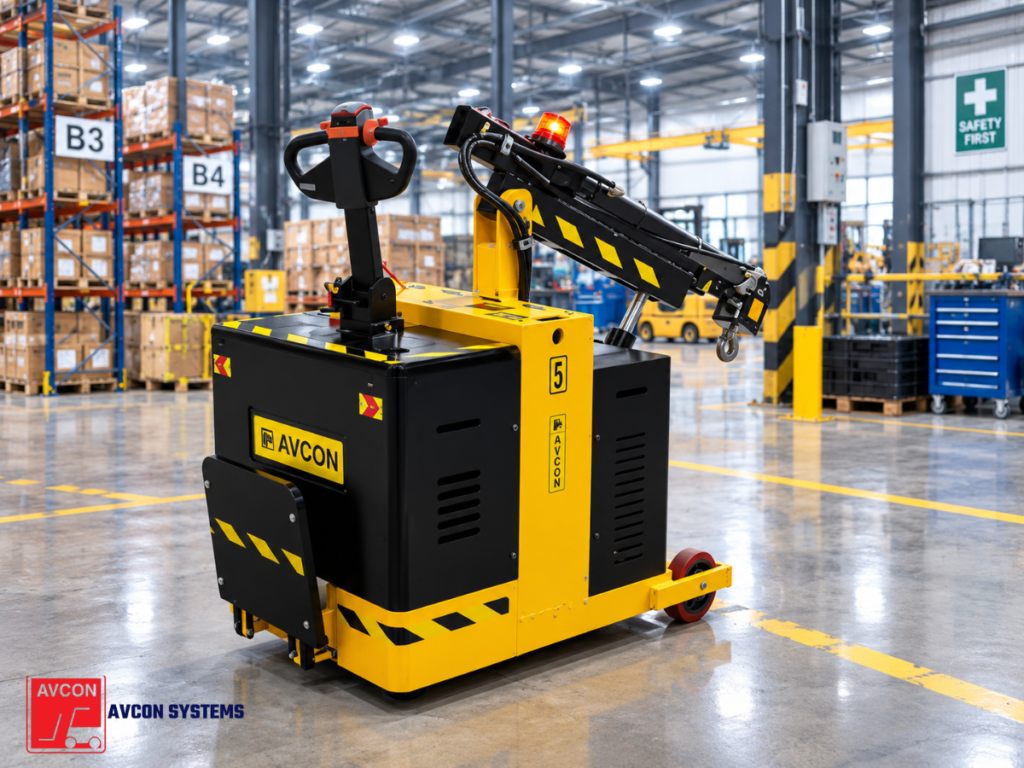
Industries across India are increasingly adopting efficient material handling equipment to improve productivity, reduce manual effort, and create safer working environments. Among the various lifting solutions available today, floor cranes in India have become useful equipment for workshops, manufacturing facilities, warehouses, maintenance departments, engineering plants, and other industrial environments.
Moving heavy machinery, components, motors, tools, and equipment manually can be challenging and may increase the risk of workplace injuries or product damage. A suitable floor crane provides mechanical assistance for lifting and positioning loads while offering flexibility in areas where installing a permanent overhead crane may not be practical.
Understanding the different types, applications, advantages, and selection factors can help businesses identify the right floor crane for their operational requirements.
What Is a Floor Crane?
A floor crane is a lifting device designed to operate at ground level. Unlike overhead cranes, which typically require a permanent supporting structure or runway, floor cranes can be positioned directly on the facility floor.
Depending on the design, a floor crane may use hydraulic, electric, or manual mechanisms to raise and lower loads. Many models are also designed with wheels or casters, allowing them to be moved between different workstations.
The basic components may include:
- Structural frame
- Lifting boom
- Hydraulic or mechanical lifting mechanism
- Hook or lifting attachment
- Wheels or casters
- Control mechanism
- Supporting legs or stabilizing structure
The configuration varies according to the lifting capacity, reach, working height, and intended application.
Why Are Floor Cranes Important for Indian Industries?
India has a diverse industrial sector covering automobile manufacturing, engineering, fabrication, logistics, warehousing, pharmaceuticals, construction, power generation, and many other industries. These sectors often need to move heavy loads within restricted or changing work areas.
A floor crane can provide a practical alternative when a facility does not have an overhead crane system or when loads need to be handled at multiple locations.
For example, maintenance teams may need to remove a motor from industrial machinery, position a gearbox, or move a heavy component into an assembly area. A mobile floor crane can assist with these activities without requiring permanent overhead infrastructure.
This flexibility is particularly useful for workshops and facilities where equipment layouts change regularly.
Types of Floor Cranes
Different industrial applications require different crane configurations. Some commonly used types include the following.
Hydraulic Floor Crane
A hydraulic floor crane uses hydraulic pressure to lift and lower loads. Hydraulic systems can provide controlled movement and are commonly used for material handling and maintenance applications.
These cranes can be useful for lifting machinery, engines, industrial components, and other heavy objects where controlled positioning is required.
Manual Floor Crane
Manual floor cranes are operated through mechanical or hydraulic manual controls. They can be suitable for applications where lifting frequency is relatively low and a straightforward lifting solution is required.
Electric Floor Crane
Electric floor cranes use an electric-powered lifting mechanism. They can be suitable for facilities requiring frequent lifting operations and reduced manual effort.
Mobile Floor Crane
Mobile floor cranes are designed to be moved around a facility. Their mobility makes them useful for maintenance departments, workshops, warehouses, and production areas where loads need to be handled at different locations.
Heavy-Duty Floor Crane
Heavy-duty floor cranes are designed for applications involving larger and heavier loads. Their structural capacity, boom configuration, and lifting mechanism are selected according to the required working conditions.
Common Applications of Floor Cranes
The versatility of floor cranes makes them useful across multiple industries.
Manufacturing
Manufacturing facilities frequently handle heavy components during production, assembly, maintenance, and equipment installation. Floor cranes can help position components accurately while reducing manual lifting.
Automotive Industry
Automotive workshops and manufacturing facilities may use floor cranes to handle engines, transmissions, motors, and other heavy components.
Engineering Workshops
Engineering and fabrication workshops often work with heavy machinery and fabricated components. A floor crane can assist in moving and positioning these items during production or maintenance.
Warehousing
Warehouses may require lifting equipment for handling heavy materials and equipment. Depending on the application, a mobile floor crane can provide additional lifting capability in specific work areas.
Maintenance Operations
Maintenance departments often need to remove, repair, replace, or reinstall heavy machine components. Floor cranes can make these activities more manageable when appropriately selected and operated.
Construction and Installation
Suitable lifting equipment can also support certain construction, installation, and equipment positioning tasks where ground-level lifting is required.
Benefits of Floor Cranes
There are several reasons businesses consider floor cranes for industrial lifting applications.
1. Reduced Manual Handling
Heavy components can be lifted mechanically instead of relying entirely on physical labour. This can reduce manual handling requirements.
2. Flexible Operation
Mobile models can be moved between suitable work areas, providing flexibility when multiple locations require lifting assistance.
3. Efficient Maintenance
Maintenance teams can use floor cranes to assist with the removal and installation of heavy components, potentially making maintenance activities more organized.
4. Space Flexibility
Because floor cranes operate at ground level, they can be considered in facilities where installing an overhead crane system is difficult or unnecessary.
5. Controlled Load Positioning
A suitable crane can provide controlled lifting and positioning, which is particularly important when working with expensive machinery or precision components.
Factors to Consider When Selecting a Floor Crane
Choosing a floor crane should be based on the actual requirements of the workplace. Several factors deserve attention before purchasing or installing equipment.
Lifting Capacity
The first consideration should be the maximum load the crane is expected to handle. The rated capacity must be appropriate for the intended application.
Lifting Height
Determine how high the load needs to be lifted. The required lifting height may vary depending on whether the crane is being used for machinery maintenance, assembly, loading, or positioning.
Boom Reach
The boom reach determines how far the crane can extend to position a load. The required reach should be considered alongside the available workspace.
Mobility
If the crane needs to be used at multiple locations, mobility becomes an important consideration. Floor conditions, aisle widths, turning space, and access points should be evaluated.
Working Environment
Consider whether the crane will be used indoors or outdoors and whether it will operate in a dusty, humid, temperature-controlled, or otherwise specialized environment.
Safety Features
Safety should remain a primary consideration. Depending on the equipment, relevant features may include overload protection, emergency lowering mechanisms, stable support structures, suitable hooks, limit systems, and secure controls.
Safe Operation and Maintenance
Even high-quality lifting equipment requires appropriate operation and maintenance. Operators should follow the manufacturer’s instructions and established workplace safety procedures.
Before use, equipment should be inspected for visible damage, hydraulic leakage, unusual wear, loose connections, damaged hooks, or other problems. The rated lifting capacity should never be exceeded.
Regular maintenance should cover critical components such as hydraulic systems, wheels, lifting mechanisms, hooks, structural members, and control systems. Inspection intervals should be determined according to the manufacturer’s recommendations and the frequency and conditions of use.
Operators should also ensure that loads are properly secured and balanced before lifting.
Why Work With an Experienced Manufacturer?
Selecting the equipment is only one part of implementing an effective lifting solution. The manufacturer’s technical experience can also be important, particularly when an application involves unusual load dimensions, specific lifting heights, restricted workspace, or customized requirements.
An experienced material handling equipment manufacturer can evaluate the application and help identify a suitable crane configuration. Businesses should consider factors such as manufacturing experience, product specifications, customization capabilities, technical support, maintenance guidance, and after-sales service.
For businesses researching floor cranes in India, comparing equipment based on application requirements rather than simply focusing on purchase price can help create a more suitable long-term material handling solution.
Conclusion
Floor cranes in India are useful material handling solutions for industries that need flexible ground-level lifting and positioning capabilities. From manufacturing plants and automotive workshops to engineering facilities, warehouses, and maintenance departments, these cranes can assist with a wide variety of lifting tasks.
The right choice depends on several factors, including lifting capacity, lifting height, boom reach, mobility, workspace, operating environment, and safety requirements. Proper operation, regular inspection, and preventive maintenance are equally important for maintaining reliable performance.
As industrial operations continue to evolve, businesses can benefit from evaluating their material handling processes and selecting lifting equipment that matches their actual operational needs. A properly chosen floor crane can become an important part of an organized and efficient industrial material handling system.