Modern diesel-powered equipment requires more than a reliable engine. Operators and equipment manufacturers also need dependable systems for monitoring engine performance, accessing important operating data, managing alarms, and coordinating control functions. This is where a properly designed diesel engine control panel and integrated engine control system can make a significant difference.
The Role of a Diesel Engine Control Panel
A diesel engine control panel provides operators with a centralized interface for managing and monitoring engine functions. Depending on the application, a panel may provide access to engine data, diagnostic information, alarms, throttle or speed controls, and other operating functions.
For industrial and mobile equipment, the panel needs to be designed around the engine and the environment in which the equipment operates. Factors such as available space, communication requirements, wiring configuration, enclosure requirements, and operator visibility can all influence the final panel design.
A well-configured diesel engine control panel can help bring these functions together in a practical interface while supporting easier equipment integration and service.
Understanding Engine Control Systems
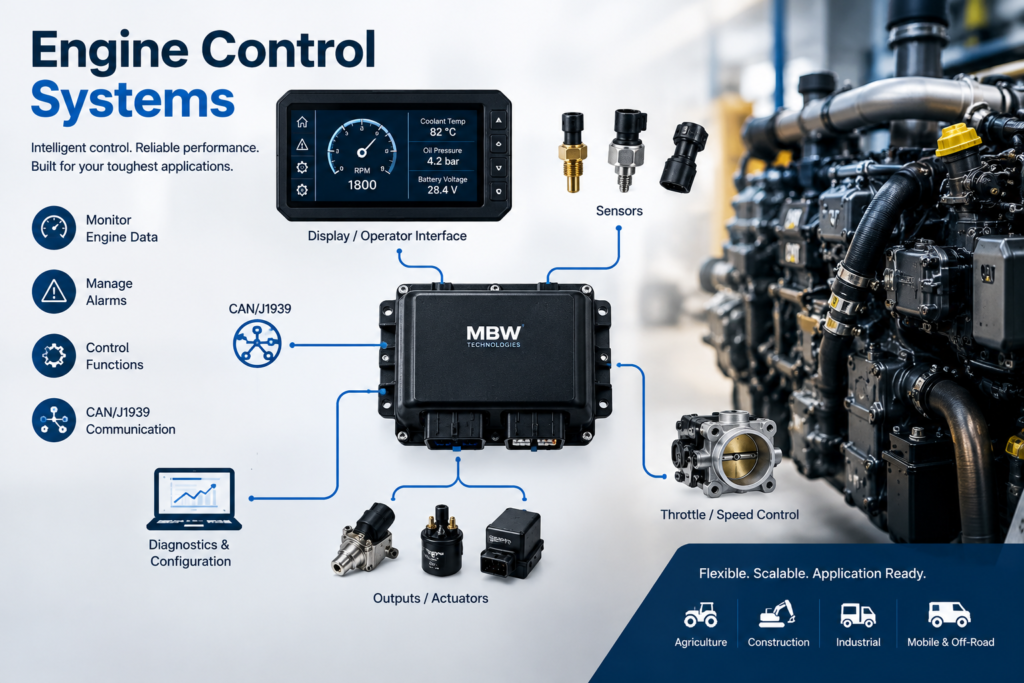
Modern engine control systems coordinate several components involved in diesel engine operation. These may include an engine controller, operator display, sensors, alarms, wiring harnesses, communication interfaces, and configurable inputs and outputs.
For electronically controlled diesel engines, CAN and J1939 communication can provide access to important engine information. This allows operators and technicians to view relevant data, identify fault messages, and monitor operating conditions through compatible control and display equipment.
For equipment manufacturers, choosing the right control architecture is particularly important when integrating an engine into specialized machinery. The system needs to work with the engine platform while also fitting the equipment’s electrical and operational requirements.
Why Integration Matters
A control panel should not be considered an isolated component. Its effectiveness depends on how well the controller, engine, wiring, sensors, display, alarms, and other components work together.
Application-specific wiring and configuration can simplify installation and help equipment builders create more consistent control-panel layouts. It can also reduce unnecessary wiring complexity and make service and troubleshooting more straightforward.
MBW Technologies supports digital CAN-based control as well as mechanical diesel engine control applications. Its product range is designed for industrial, agricultural, mobile, off-road, and OEM equipment applications.
Selecting the Right Control Solution
When evaluating an engine control solution, manufacturers should consider the engine make and model, communication protocol, emissions requirements, operator interface, display requirements, alarms, throttle or speed control, enclosure requirements, and available expansion options.
A solution such as the M154B Basic Series can be considered when a project requires digital engine control and monitoring capabilities. The broader control architecture can then be configured around the specific equipment requirements.
The right combination of controller, panel, wiring, communication, and monitoring components can help OEMs and equipment builders develop systems that are easier to integrate and maintain.
Supporting Modern Diesel Equipment
As diesel equipment becomes increasingly connected and electronically controlled, reliable engine control systems are becoming an essential part of equipment design. From industrial machinery and agricultural equipment to mobile and off-road platforms, the control system needs to provide useful information while supporting dependable operation.
By selecting a control solution designed around the engine and application, equipment manufacturers can improve visibility into engine operation and create a more practical interface for operators and service technicians.