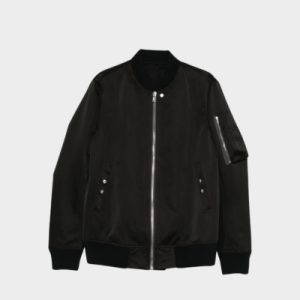
Rick-Owens-Classic-Flight-Jacket-Tech-Duchesse-Black
Most fashion plays it safe eventually. Even brands that start out weird tend to smooth themselves out once real money’s on the table — sales numbers push everyone toward the middle. Owens never really did that. Three decades in, the jackets are still as uncompromising as they were when nobody outside a small crowd cared.Point up front — Rick Owens jackets prove fashion can stay fearless because the brand never softened its core silhouette to chase broader commercial appeal, even as it grew into a full luxury label. Dropped shoulders that confuse people. Hems that don’t match up. Colors that refuse to brighten just because brighter sells better. None of it got sanded down.
What “Fearless” Actually Looks Like in Construction
Talk is cheap in fashion. Anyone can call something bold in a press release. What matters is whether the actual garment backs that up — does the silhouette risk rick owens to a lot of people, or is it just safely unconventional in a way that still photographs well for everyone?Owens jackets land in the first category. The dropped shoulder genuinely divides opinion. Some people think it looks broken. That’s not an accident the brand is trying to fix. It’s the whole point holding steady.
Most Brands Cave Eventually. This One Hasn’t.
Watch what usually happens to a designer who starts out experimental. Commercial pressure creeps in. The silhouette gets tamed a little each season, made slightly more wearable, slightly less confusing, until five years later the “avant-garde” label barely applies anymore. It’s a predictable pattern across fashion.Owens sidestepped that almost entirely. The core shape from earlier decades still shows up today, basically unchanged in its fundamental logic. Refined, sure. Not softened.
Does Staying Uncompromising Cost the Brand Sales
Probably, yes — a jacket this divisive in silhouette isn’t going to convert every potential buyer the way a safer, more universally flattering cut would, and that’s a trade Owens seems to have made deliberately rather than by accident. Plenty of buyers walk away from the brand specifically because the fit feels too extreme for their comfort. That’s not a flaw in the strategy. It’s the cost of actually meaning it when a brand calls itself fearless instead of just marketing itself that way.
The Color Restraint Is Its Own Kind of Risk
Bright, varied color sells easier. Most brands know this and lean into it, at least somewhat. Owens has stayed almost entirely within black, charcoal, and muted earth tones for decades, refusing the easier commercial move of introducing color variety that would obviously broaden appeal.That’s a quieter kind of fearlessness than the silhouette, but it’s still a real one. Turning down an easy sales lever because it doesn’t fit the design philosophy takes actual conviction, not just aesthetic preference.
A Comparison: Brands That Softened vs. Brands That Didn’t
| Brand | Started Experimental | Stayed That Way? |
| Rick Owens | Yes | Largely yes, core silhouette intact |
| Many streetwear-turned-luxury labels | Yes | Often diluted for broader appeal |
| Comme des Garçons | Yes | Mostly yes, though output varies widely by line |
| Most fast-fashion “edgy” collections | No (borrowed the look) | Never had the original conviction to soften |
Owens sits in pretty rare company here. Staying uncompromising for this long, at this scale, isn’t the norm.
What This Costs Compared to What It Protects
There’s a real trade-off worth naming honestly. Staying fearless probably means slower growth than a brand willing to compromise. Fewer casual buyers. More returns from people who order without understanding what they’re getting into. But it also protects something harder to rebuild once lost — the trust of buyers who specifically want a brand that hasn’t been focus-grouped into blandness.
Lose that trust chasing broader appeal and it doesn’t really come back. Owens seems to understand that trade clearly.
Why This Matters Beyond Just This One Brand
Fashion as an industry leans heavily toward safety once money’s involved, and it’s rare to watch a brand actively resist that pull for this long. Most experimental labels either fade into obscurity because they never found commercial traction, or they find success and slowly become unrecognizable from where they started. Owens found a third path — real commercial success without giving up the thing that made the brand distinctive in the first place.
That’s a harder balance to strike than either extreme.
My Honest Take
I think “fearless” gets used so loosely in fashion marketing that it’s basically meaningless most of the time. Everyone claims it. Almost nobody actually demonstrates it once real revenue is on the line. Owens is one of the few cases where the claim holds up under actual scrutiny — the silhouette still confuses people, the colors are still restrained by choice, and none of that changed once the brand had every commercial reason to change it. That’s not a marketing story. That’s just what happened, consistently, for three decades.
Bottom Line
Rick Owens jackets prove fashion can stay fearless because the brand refused the usual pattern of softening once success arrived — the silhouette, the color restraint, all of it stayed uncompromising by choice rather than necessity. That consistency, held for this long, is rarer in fashion than the word “fearless” usually gets credit for meaning.