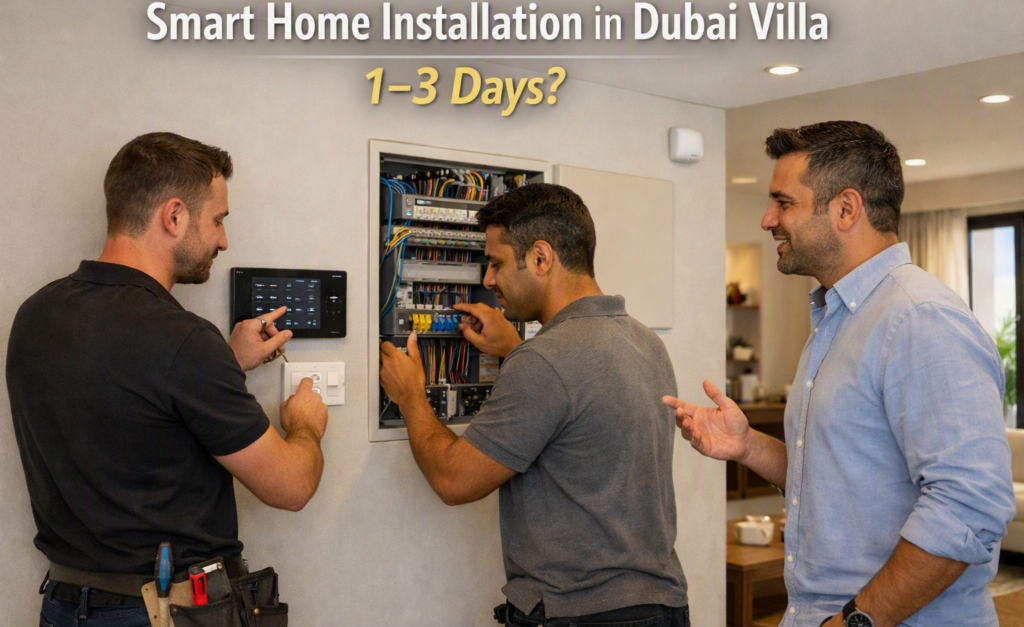
Planning a Smart home Dubai installation can raise an important question: how much time will the work take? The answer depends on the size of the property, the number of devices, the type of system, and whether wiring is already available. A small apartment may need only a few days, while a larger villa with several connected systems can take longer.
What Affects Smart Home Installation Time?
There is no fixed installation time for every home. Each property has different requirements. Before work begins, installers usually check the floor plan, electrical points, network setup, and locations where smart devices will be placed.
The main factors that affect the schedule include:
- Property size
- Number of rooms
- Number of smart devices
- Existing electrical wiring
- Internet and network setup
- Type of automation system
- Need for new cables
- Testing and device configuration
A simple setup with smart lights, sensors, and a few control devices can usually be completed faster than a system covering lighting, climate control, security, entertainment, and other areas.
How Long Does a Small Installation Take?
A small apartment or limited smart home setup may take around one to three days. This type of installation may include smart lighting, motion sensors, smart switches, curtains, and a central control system.
If the electrical and network systems are already prepared, the work can move faster. The installer mainly needs to fit the devices, connect them, configure the software, and test each function.
The actual time can also depend on whether the selected devices work together easily. Compatible devices can make setup and testing more straightforward.
How Long Does a Villa Installation Take?
A villa usually requires more planning because there are more rooms and systems to manage. A complete installation may take several days or longer, depending on the level of automation.
For example, a larger system may connect lighting, air conditioning, curtains, door access, security cameras, sensors, audio, and other equipment. Each part needs to be installed and tested.
If new wiring is required, the project can take additional time. Work may also need to be coordinated with electrical or interior work already taking place at the property.
New Construction vs Existing Homes
The condition of the property has a major effect on installation time.
In a new home, wiring can often be planned before walls and ceilings are finished. This gives the installation team more flexibility and can reduce the need for later changes.
Existing homes may require more preparation. If additional cables are needed, some areas may need minor electrical or building work. Wireless devices can sometimes reduce this requirement, but the choice depends on the system and property.
Installation of Different Smart Devices
Not every smart device takes the same amount of time to install. A smart plug or simple sensor can be installed quickly, while a smart thermostat, motorised curtain, security device, or integrated lighting system may require more work.
Some devices also need software configuration after physical installation. This can include connecting the device to the home network, creating user controls, setting schedules, and checking communication between different devices.
Testing and Final Setup
Testing is an important part of the installation process. Once the devices are fitted, each system should be checked separately and then tested as part of the wider setup.
For example, a lighting scene may need to be tested from a wall switch, mobile application, or central control panel. Sensors, cameras, climate controls, and other connected devices should also be checked.
This final stage can take several hours or more depending on the size of the system. Rushing this part can lead to problems later, so proper testing should be included in the project schedule.
How to Make the Installation Smoother
Good planning can help reduce delays. Property owners should decide which rooms and functions they want to automate before installation begins.
It is also useful to check the internet connection and electrical points in advance. A clear list of devices can help installers understand the scope of work and prepare the required equipment.
For larger properties, completing electrical, network, and interior work in the correct order can also prevent unnecessary changes.
What Is a Realistic Installation Schedule?
For a basic apartment setup, one to three days may be enough. A medium-sized home can take several days, while a larger villa with many connected systems may require a week or more. These are general estimates, not fixed timelines.
The final schedule should be based on the property, system design, number of devices, wiring requirements, and testing needs. Asking for a clear installation plan before work starts can help set realistic expectations.
Understanding these factors makes it easier to plan a Smart home Dubai project and allow enough time for installation, configuration, and testing.