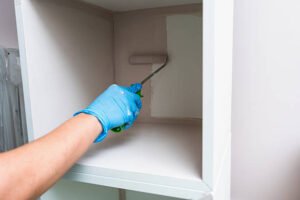
1. Start With the Cabinet Condition
We first look at the existing condition of the cabinets. Doors and drawer fronts may have scratches, worn areas, grease buildup, dents, or previous coatings that need attention.
Cabinets that are structurally sound can often be candidates for repainting, while damaged components may require additional repair or replacement before a coating is applied. Assessing the condition early helps us determine what preparation the project will require.
For homeowners comparing cabinet painting contractors in Austin, TX, asking how the existing cabinet surfaces will be evaluated can provide useful insight into the expected process.
2. Identify the Cabinet Material
Not every cabinet surface responds to paint in exactly the same way. Wood, engineered materials, laminate, and previously painted cabinets can have different preparation and coating requirements.
We consider the cabinet material before deciding how the surfaces should be prepared. The goal is to create a suitable foundation for the new coating without treating every cabinet as though it has the same surface characteristics.
This assessment can also help identify whether certain areas require additional preparation before painting begins.
3. Thorough Preparation Makes a Difference
Kitchen cabinets are exposed to cooking oils, food particles, fingerprints, and regular handling. These contaminants can interfere with paint adhesion if the surfaces are not properly cleaned.
We focus on removing buildup and preparing the surfaces before application. Depending on the condition of the cabinets, preparation may include cleaning, sanding, repairing minor imperfections, and addressing existing loose or damaged coatings.
The preparation stage may not be the most visible part of the project, but it has a direct relationship with how the finished cabinets look and perform.
4. Choose a Color That Works With the Kitchen
Changing cabinet color can alter the entire visual balance of a kitchen. We consider the countertops, backsplash, flooring, walls, appliances, hardware, and available natural light when discussing color options.
White and other light shades can create a clean, open appearance, while deeper colors can provide stronger contrast. Neutral colors can also work well when homeowners want flexibility with future décor changes.
We recommend evaluating samples within the kitchen rather than relying solely on how a color appears on a screen or small sample card.
5. Select the Right Paint and Finish
Cabinet surfaces need a coating appropriate for the demands of a kitchen. Frequent opening and closing, cleaning, moisture, and everyday contact can place more demands on cabinet finishes than on many ordinary interior surfaces.
We consider the existing cabinet material, desired appearance, cleaning expectations, and product requirements when discussing paint and finish options.
The sheen also affects the visual result. A different level of gloss can change how light reflects from the cabinet surfaces and how noticeable certain imperfections may become.
6. Pay Attention to Doors, Drawers, and Hardware
Cabinet doors and drawer fronts contain multiple edges, corners, and detailed areas that require careful handling. Hardware also needs to be removed or protected as appropriate so the finished result remains clean.
We pay attention to these components individually rather than treating the entire cabinet system as one flat surface. Consistent preparation and application across doors, drawers, frames, and other painted areas can create a more unified appearance.
Hardware can also provide an opportunity to change the kitchen’s overall style. New or existing handles and pulls should complement the selected cabinet color and finish.
7. Allow Adequate Drying and Curing Time
Paint may feel dry before it has fully cured. Cabinet doors and drawers are handled frequently, so allowing appropriate drying and curing time is particularly important.
We take product requirements into account when organizing the project. Rushing the process can create unnecessary problems, especially when freshly coated surfaces are exposed to regular contact before the coating has had sufficient time to harden.
Giving each stage the required time supports a more controlled finish.
8. Consider How the Finished Cabinets Will Be Maintained
A newly painted kitchen can continue looking its best when the cabinet surfaces are maintained appropriately. We recommend following the paint manufacturer’s care instructions and using suitable cleaning methods.
Harsh cleaning products, abrasive materials, or excessive scrubbing can affect some finishes. Routine attention to spills and buildup can also reduce the amount of aggressive cleaning required later.
Maintenance should be considered when choosing both the paint and the desired finish.
Key Takeaways
We assess cabinet condition and material before determining the preparation process.
Thorough cleaning and surface preparation support proper paint adhesion.
Color and finish should complement the kitchen’s existing features.
Doors, drawers, frames, and hardware require careful attention.
Adequate drying and curing time should be allowed before regular use.
How Cabinet Painting Can Change a Kitchen
Cabinet painting can make a noticeable visual difference because cabinets typically occupy a substantial portion of the kitchen. Instead of changing every component, homeowners can focus on the existing cabinetry and update its color and finish.
We look at the entire kitchen before discussing the project. This helps us consider whether the proposed cabinet color will work with the countertops, backsplash, flooring, walls, and fixtures.
The objective is to create a finish that feels intentional rather than simply placing a new color over an existing surface.
Choosing the Right Painting Professional
When comparing kitchen cabinet painters in Austin, TX, we recommend looking beyond the color selection and quoted price. Homeowners should understand how the cabinets will be cleaned, prepared, painted, and inspected.
Questions about surface preparation, paint products, application methods, drying time, and protection of surrounding areas can help clarify what is included in the work.
At Color Stars Painting LLC, we discuss the cabinet condition, material, color preferences, preparation requirements, and desired finish before beginning the work. We want homeowners to understand what the project involves and what factors can influence the final appearance.
A Fresh Finish for Your Austin Kitchen
Kitchen cabinets can influence the appearance of an entire room, which makes preparation and product selection especially important. We approach each project by considering the existing surfaces, the homeowner’s goals, and the practical demands of the kitchen.
Contact Color Stars Painting LLC at (512) 815-0310 or Servando033087@gmail.com for Kitchen Cabinet Painting in Austin, TX. We can discuss your cabinets, preferred colors, surface condition, and the painting approach that fits your kitchen.
Frequently Asked Questions
Can all kitchen cabinets be painted?
Many cabinets can be painted, but suitability depends on their material, condition, existing coating, and the preparation required. We assess the surfaces before determining the appropriate approach.
Do kitchen cabinets need to be cleaned before painting?
Yes. Kitchen cabinets can accumulate grease, dust, and other residue that may interfere with paint adhesion. Thorough surface preparation is an important part of the process.
Should cabinet doors be removed before painting?
Removing doors and drawers can allow better access to their surfaces and edges. The specific approach depends on the cabinet design and project requirements.
What cabinet color should we choose?
We consider the kitchen’s existing countertops, backsplash, flooring, walls, lighting, and hardware. Testing samples in the actual kitchen can make color selection easier.
How long should painted cabinets cure?
Curing time varies according to the paint product, environmental conditions, and application. We follow the product’s recommended drying and curing requirements.
How should freshly painted cabinets be cleaned?
Use the care instructions recommended for the specific coating. Gentle cleaning methods are generally preferable to abrasive materials or harsh products that could affect the finish.