Installing solar panels is a major investment, so getting the details right before work begins can make a significant difference. A system that is poorly designed, installed in a shaded location or matched with unsuitable equipment may not deliver the electricity generation you expected.
The good news is that most problems can be avoided by choosing a suitable installer and asking the right questions before agreeing to the work.
From rushing the choice of installer to overlooking battery storage, here are some common solar panel installation mistakes UK homeowners should avoid.
Choosing An Installer Based Only On Price
A cheap quotation can be tempting, but the lowest price does not necessarily represent the best value.
Different installers may be proposing different panel specifications, inverter models, system sizes, warranties or installation arrangements. One quotation might also exclude work that another company has included.
Energy Saving Trust recommends getting quotes from at least three MCS-certified installers so homeowners can compare the systems and services being offered.
When comparing a solar panel installation service, look beyond the headline price. Check exactly what equipment, labour, scaffolding, electrical work, testing, certification and aftercare are included.
Failing To Check The Installer’s Credentials
Solar PV involves electrical work as well as work on your roof, so installer competence matters.
MCS certification is an important check for UK homeowners. It provides a way to identify installers working under recognised standards for renewable energy installations. Energy Saving Trust specifically recommends using MCS-certified installers for domestic solar installations.
Do not simply rely on a company’s website claiming that it is certified. Check the relevant certification and make sure it applies to the type of installation you are buying.
It is also worth checking reviews, warranties, previous projects and how the company handles customer support after installation.
Installing Panels Without Assessing Shading
A roof may look ideal from the ground but still have areas affected by shade.
Trees, chimneys, neighbouring buildings and other structures can reduce the amount of sunlight reaching the panels. Importantly, shading can vary throughout the day and across different seasons.
Energy Saving Trust notes that shading can have an even greater effect on generation than roof orientation in some situations. Where shading cannot be avoided, technologies such as microinverters or power optimisers may help reduce its impact.
Ask your installer to explain how shading has been considered in the proposed system design rather than accepting a simple panel-count calculation.
Assuming Every Roof Is Suitable
Solar panels do not perform identically on every roof.
Orientation, pitch, available space, structural condition and shading all need to be considered. A south-facing roof can be productive, but east- and west-facing roofs can also work well depending on the property and household’s electricity use. Energy Saving Trust advises against installing panels on north-facing roofs where generation is unlikely to justify the investment.
A proper assessment should establish where panels can realistically be installed and whether the roof is suitable for the additional equipment.
If a company recommends a system without carrying out an adequate property assessment, ask how its design was calculated.
Installing Too Many Or Too Few Panels
More panels do not automatically mean better financial results.
The appropriate system size depends on available roof space, electricity consumption, expected generation and what you intend to do with surplus electricity.
Installing substantially more capacity than your household can use may result in more electricity being exported, while a system that is too small may leave you buying more electricity from the grid than necessary.
A good proposal should explain the expected generation and how much electricity you are likely to use yourself.
Ignoring Battery Storage
Another common mistake is treating the solar panels as the entire system and never considering what happens to surplus electricity.
Solar panels generally generate most of their electricity during daylight hours, while household demand can continue into the evening. Without storage, unused generation may be exported to the grid.
This is where solar battery storage can become useful. A battery can store surplus solar electricity and make it available later, potentially allowing you to use more of your own generation.
That does not mean every home needs a battery. Battery size, electricity consumption, tariffs, installation costs and expected solar generation should all be considered before deciding.
Energy Saving Trust currently recommends asking for battery storage to be included as an option when comparing solar quotations.
Choosing Equipment Without Comparing Specifications
Solar panels may look similar from a distance, but their specifications can differ considerably. The same applies to inverters and batteries.
Rather than choosing equipment based solely on brand recognition or a salesperson’s recommendation, ask for the exact models being proposed.
Consider factors such as:
- Panel output and efficiency
- Inverter capacity
- Product warranties
- Battery capacity and warranty, if applicable
- Monitoring features
- Manufacturer support
- Compatibility between system components
You do not necessarily need the most expensive equipment. The important point is that the components should be appropriate for the system and property.
Overlooking The Roof’s Condition
Solar panels can remain on a property for many years. Installing them on a roof that is already approaching the end of its useful life can create an avoidable problem.
If the roof needs major repairs or replacement, it may make sense to address that work before installing the panels. Otherwise, removing and reinstalling the system later could add unnecessary expense.
Ask the installer whether the roof has been assessed and whether its condition could affect the proposed installation.
Forgetting About Planning Requirements
Many domestic solar installations do not require planning permission, but this should not be assumed in every situation.
Listed buildings, conservation areas and particular property circumstances can require additional checks. Energy Saving Trust recommends checking with the local planning authority if you are unsure.
Your installer should be able to explain whether planning considerations apply to the proposed installation.
Not Understanding The Installation Process
Some homeowners focus heavily on panel specifications but do not ask what will actually happen during installation.
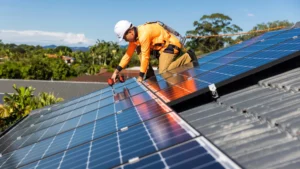
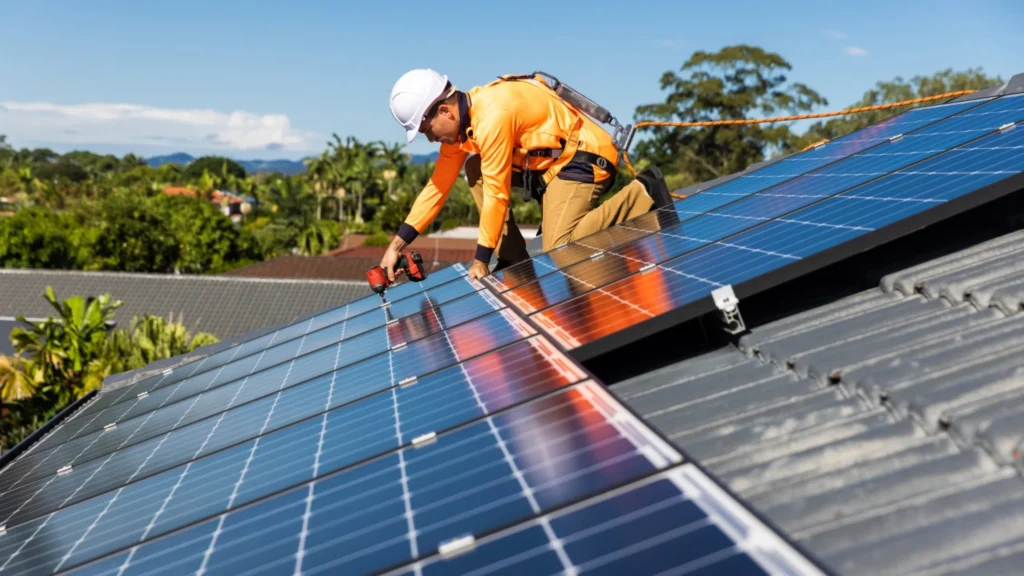
A typical installation can involve scaffolding, roof mounting brackets, panel installation, inverter connections and testing. Energy Saving Trust says the installation itself will often take around one to two days, although the exact timeframe depends on the property and system.
Before work starts, establish:
- When scaffolding will be installed
- How long the work should take
- Whether your electricity supply needs to be switched off
- Where the inverter will be located
- Where a battery will be positioned
- What electrical work is included
- Who handles system registration
Knowing this in advance makes it easier to spot unexpected costs or changes.
Failing To Check The Warranty
Solar panels are designed for long-term use, so warranties should be part of your comparison.
Do not assume there is one warranty covering everything. Panel products, inverters, batteries and installation workmanship can have separate warranty terms.
Ask how long each warranty lasts and, importantly, who you contact if something fails.
You should also find out whether the warranty remains valid if the installer stops trading and whether the manufacturer deals directly with customers.
Forgetting About Aftercare And Monitoring
The installation is not the end of the process.
Your installer should test the system and explain how to monitor its performance. Energy Saving Trust also recommends that homeowners receive written information about maintenance checks, inverter fault signals and troubleshooting.
Keep the manuals, warranties, certificates and installation information somewhere safe. These documents can become particularly useful if you later need repairs, make an insurance claim or sell the property.
Not Considering Export Payments
A solar system may generate more electricity than your home needs at certain times.
If you are eligible, an export tariff can provide payment for electricity sent back to the grid. In Great Britain, the Smart Export Guarantee provides a framework for payments from participating suppliers. Energy Saving Trust recommends considering export tariffs after installation.
When comparing installer projections, ask whether their savings calculations assume that surplus electricity will be exported and what rate they have used.
Rushing The Decision
Perhaps the biggest mistake is agreeing to an installation before properly comparing your options.
A reputable installer should be prepared to explain the system design, expected generation, equipment, warranties and total costs without putting you under unnecessary pressure.
Take time to compare at least three detailed quotations, ask questions about anything you do not understand and make sure important promises appear in writing.
Solar panels can be a worthwhile long-term investment, but the quality of the decision starts well before the panels reach your roof. A careful assessment, appropriately sized system, qualified installer and sensible approach to battery storage can help you avoid expensive problems later.