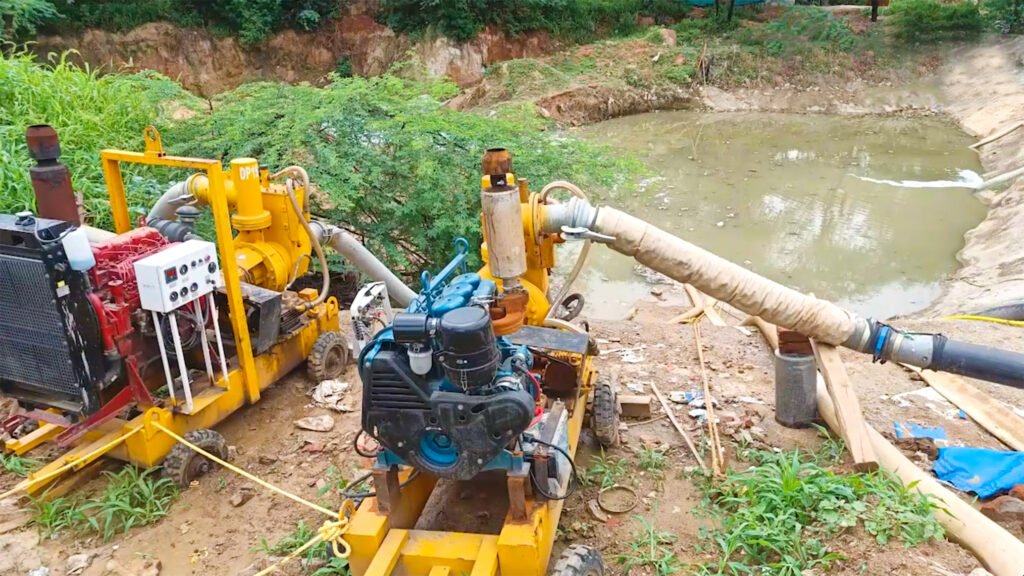
Water accumulation can create problems at construction sites, mines, quarries and infrastructure projects. A dewatering pump helps remove unwanted water from excavated or low-lying areas, allowing work to continue under more manageable site conditions. Depending on the application, different pump designs can handle groundwater, rainwater, sludge and liquids containing solid particles. The right option depends largely on the water characteristics and pumping requirements.
What Is a Dewatering Pump?
A dewatering pump is used to remove or transfer accumulated water from an area where its presence could interfere with construction, mining or other operations. The equipment may be placed directly inside the water or installed above ground with a suction arrangement.
Submersible models operate while submerged and can be positioned directly in a sump or excavation. Surface-mounted centrifugal pumps, on the other hand, remain outside the water and draw liquid through a suction line. The choice depends on factors such as excavation depth, site access, water level and available power.
Where Are They Used for?
Construction is one of the most common applications. Excavation work can expose groundwater or collect rainwater, particularly during deeper foundation and basement work. Removing this water can help maintain workable conditions and prevent accumulated water from interfering with construction activities.
Mining and quarrying operations also require regular water management. Water can enter open pits, underground workings and quarries through groundwater, rainfall or surrounding drainage. Pumping systems can help move this water away from working areas and maintain the required water levels.
Another common application is trench dewatering. Trenches used for pipelines, cables, drainage systems and utilities can collect groundwater or rainwater during excavation. A suitable pump can remove the accumulated water and help keep the trench accessible while installation work continues.
What Types Are Available?
Different pumping arrangements are available for different site conditions:
- Submersible pumps: These are placed directly in the water and are widely used for groundwater control, construction, mining and emergency drainage.
- Self-priming centrifugal pumps: These are positioned above the water and can draw water through a suction line, making them suitable for surface dewatering.
- Wellpoint systems: These use a series of closely spaced wellpoints connected to a pump to lower groundwater around an excavation.
- Sludge and slurry pumps: These are designed for liquids containing greater amounts of mud, sludge or abrasive solids.
Submersible pumps can also be divided according to the type of liquid they handle. Drainage models are generally suited to clean or dirty water with smaller solids, while sludge and slurry models are designed for liquids containing larger or more abrasive particles.
How Do You Choose the Right Pump?
Choosing this pump starts with understanding how much water needs to be moved and where it needs to go. Flow rate indicates the volume of water the pump can move over a given period, while head represents the height and resistance the pump must overcome.
The discharge pipe or hose also matters. Its length, diameter and layout can create friction losses that affect the actual flow delivered by the pump. Static lift, the distance between the water level and discharge point, should also be considered when determining the total head requirement.
The type of liquid is another important consideration. Clean groundwater requires different handling capabilities from water containing sand, mud or other solids. Pump selection should therefore take account of particle size, concentration, density and the potential for abrasion or clogging.
Power availability can influence the choice as well. Electric submersible pumps can be convenient where a suitable electrical supply is available, while diesel-driven surface pumps may be useful at remote locations without mains electricity. Operating duration, site accessibility, portability and environmental requirements can also affect the selection.
Why Is Proper Dewatering Important?
Effective water management can help prevent accumulated water from delaying excavation, construction or mining work. It can also help control groundwater levels and reduce the difficulties associated with working in waterlogged areas.
For trench dewatering, excavation depth, groundwater inflow and discharge distance are particularly important. Similar considerations apply to mining and large construction sites, where water volumes and pumping distances can vary significantly during a project.
Conclusion
A dewatering pump can play an important role in managing groundwater, rainwater and other accumulated liquids across construction, mining and infrastructure sites. The suitable pump depends on flow, head, liquid characteristics, solids content, power availability and site conditions. Considering these factors before installation helps ensure the equipment matches the actual water-removal requirement and performs effectively throughout the project.