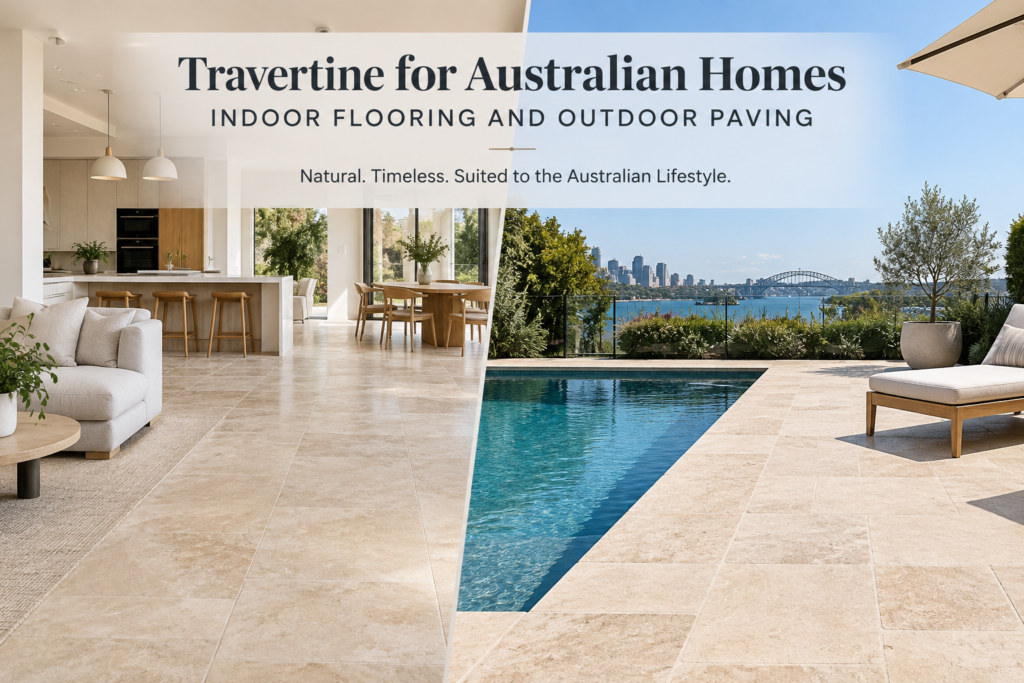
Travertine is a natural stone that can work well across different parts of a home. In Sydney, it is often considered for both indoor flooring and outdoor areas because of its natural appearance, range of colours and ability to suit different design styles.
But choosing travertine is not just about finding a colour you like. Indoor floors and outdoor paving have different requirements, so the right product, thickness and finish depend on where the stone will be installed.
If you’re planning a renovation or landscaping project in Sydney, understanding these differences can help you make a more practical choice.
What Makes Travertine Popular?
Travertine is a natural stone formed around mineral springs. It has a distinctive appearance with natural variations in colour, texture and pattern.
Common shades include beige, ivory, silver and darker tones. These colours can work with both modern and traditional Sydney homes.
One of the attractions of natural stone is that each piece has its own variation. For a larger project, it is worth viewing a physical sample before ordering so you can see the actual colour and texture.
Travertine for Indoor Flooring
Travertine can be used for indoor floors in areas such as living rooms, hallways, kitchens and other interior spaces.
When choosing a travertine flooring tile, consider the thickness, finish, size and condition of the surface underneath.
Indoor tiles are generally thinner than outdoor pavers because they are installed over a suitable solid base. The installation system also needs to be appropriate for natural stone.
A honed finish can provide a relatively smooth and understated appearance while retaining the natural character of the stone.
For Sydney homeowners, the choice will often come down to the style of the room as well as practical factors such as foot traffic and maintenance.
Travertine for Outdoor Areas
Outdoor spaces have different requirements from indoor rooms. Paving may be exposed to rain, sunlight, dirt and regular foot traffic.
Outdoor Travertine Pavers can be considered for areas such as:
- Pool surrounds
- Patios
- Alfresco areas
- Courtyards
- Garden paths
- Outdoor entertaining spaces
The thickness of the paver is important, as is the installation method. A product intended for indoor flooring should not automatically be used as ground-level outdoor paving.
For outdoor projects, also consider the surface finish and how the stone will perform when wet.
Choosing Travertine for a Sydney Pool Area
Pool surrounds deserve extra attention because the paving will regularly come into contact with water, and people may walk across the surface with wet or bare feet.
For this reason, surface texture and slip resistance should be considered alongside appearance.
Ask the supplier for the relevant specifications of the exact product and finish you are considering. Avoid assuming that every travertine paver will have the same slip performance.
Drainage is also important. Proper falls and installation can help prevent water from sitting on the surface.
Travertine for Patios and Alfresco Areas
For patios and alfresco areas, appearance and everyday usability are both important.
Travertine’s natural colours can work well with timber, brick, rendered walls, gardens and contemporary outdoor furniture. Lighter shades can create a brighter feel, while silver and darker tones can give an outdoor area a more contemporary appearance.
Before choosing the stone, compare samples with your home’s exterior, garden and existing materials.
What About Sydney’s Climate?
Sydney’s outdoor areas can experience strong sun, rain and changing weather throughout the year. Coastal properties may also have additional exposure to salt and moisture.
This does not mean that travertine is unsuitable for Sydney. It means that the specific stone, finish, installation and maintenance requirements should be considered for the location.
A supplier should be able to explain where the particular product is recommended and what care it requires.
Does Travertine Need Sealing?
Travertine is a porous natural stone, so sealing is an important consideration for many applications.
A suitable sealer can help reduce the risk of staining and make routine maintenance easier. The exact sealing requirements depend on the stone, finish and location.
It is also important to use cleaning products that are suitable for natural stone. Acidic cleaners can damage calcium-based stones such as travertine, so harsh household cleaners should generally be avoided.
Always follow the care instructions provided for the specific product.
Tiles or Pavers: Which Should You Choose?
The choice mainly depends on where the stone will be installed.
For indoor areas:
A suitable travertine tile can provide a natural stone floor over an appropriate solid substrate.
For outdoor ground-level areas:
A thicker travertine paver is generally the more relevant product to investigate.
For balconies or raised areas:
The appropriate product depends on the existing structure and installation system. A thinner tile may be suitable in some situations, but this should be confirmed with the installer.
The important thing is not to select a product based solely on its appearance. Thickness and application should be checked first.
What to Check Before Buying Travertine
Before ordering travertine for your Sydney property, consider:
- Where will it be installed?
- What thickness is appropriate?
- Which finish suits the application?
- Is the surface suitable for wet areas?
- What slip-resistance information is available?
- Does the stone require sealing?
- How should it be cleaned?
- Is enough stock available?
- Can you see a physical sample?
These questions can help you avoid choosing a product that looks right but is not appropriate for the intended use.
Choosing a Travertine Supplier in Sydney
The supplier you choose is another important part of the buying process.
A reliable natural stone supplier should be able to provide information about the stone’s origin, thickness, available sizes, finishes, applications, maintenance and current stock.
For a large project, it is also worth checking delivery times and whether enough matching material is available. Natural stone can vary between batches, so planning the full quantity in advance can be helpful.
Stone Planet is an Australian natural stone supplier with a range of travertine products for indoor and outdoor applications. Its range includes tiles and thicker pavers in several natural colours and finishes.
Stone Planet has Sydney warehouse locations in Smithfield and Wetherill Park and supplies natural stone across Australia.
If you’re planning a Sydney project, Stone Planet is one supplier you can consider when comparing travertine options. Before ordering, confirm the current specifications, availability, finish and recommended application for your chosen product.
Final Thoughts
Travertine can be a practical option for both indoor flooring and outdoor paving, but the right product depends on how the space will be used.
For indoor areas, focus on the appropriate travertine flooring tile, finish and installation method. For outdoor spaces, pay closer attention to paver thickness, surface texture, slip resistance, drainage and exposure to weather.
When comparing Outdoor Travertine Pavers, don’t make the decision based only on appearance or price. Check the product specifications and make sure the selected stone is suitable for your particular outdoor area.
If you’re renovating a Sydney home or updating an outdoor space, taking time to compare samples and product specifications can help you choose a natural stone that suits both the appearance of your home and the practical demands of the space.