Introduction
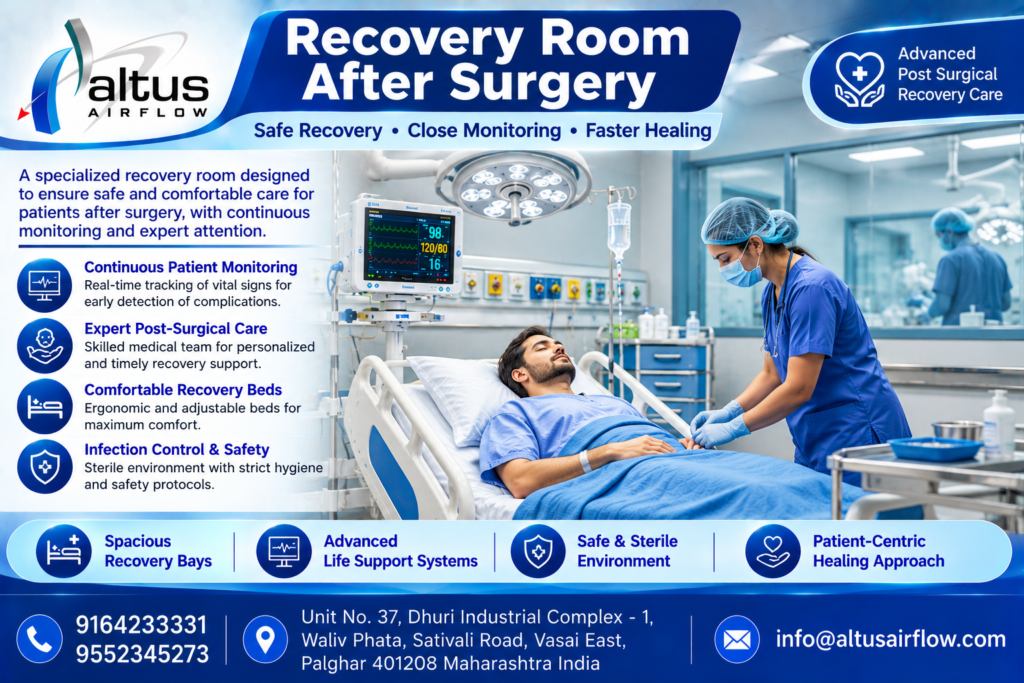
A Recovery Room After Surgery is designed for close observation while a patient recovers from anesthesia and the immediate effects of a procedure. Whether family members can enter during this period depends on the hospital’s visitation policy, the patient’s condition, available space, and the clinical team’s judgment. DGHS guidance states that patients receiving anesthesia should be cared for in a post-anesthesia care unit or equivalent recovery area.
Why Visits May Be Restricted
Immediately after anesthesia, patients require focused monitoring. Healthcare professionals may need to continuously assess oxygenation, ventilation, circulation, consciousness, and temperature. Limiting visitors can help staff maintain an organized and controlled environment during this important period.
Patient Condition Comes First
If a patient is unstable, experiencing complications, or requires urgent intervention, visitors may need to wait outside until the clinical team considers a visit appropriate. Recovery-room staff need sufficient space to assess patients and respond quickly when their condition changes.
Hospital Policies Differ
There is no single visitation rule that applies to every hospital. Some facilities may allow a family member to visit briefly once the patient is sufficiently stable, while others may restrict access until the patient is transferred to another ward or recovery area. Hospitals may also apply different rules based on the type of procedure, anesthesia, infection-control requirements, and available space.
Privacy and Infection Control
Recovery areas often contain several patients receiving care simultaneously. Restricting unnecessary visitors can help protect patient privacy and support infection-control practices. It also allows healthcare professionals to perform assessments and procedures without unnecessary interruptions.
When Family Members May Be Allowed
If the patient is stable and the hospital permits visitation, staff may allow a family member to visit for a limited period. The visitor may be asked to follow instructions regarding hand hygiene, protective equipment, noise, photography, and the number of people permitted near the patient.
Communication With the Healthcare Team
If family members cannot enter immediately, staff can generally provide appropriate updates according to hospital policy and patient-consent requirements. Family members should follow the instructions of the nursing or medical team rather than entering the recovery area without permission.
Special Circumstances
Children, elderly patients, patients with communication difficulties, or individuals requiring additional emotional support may have different visitation considerations. Hospitals may make appropriate arrangements while still prioritizing patient safety, privacy, and clinical workflow.
Conclusion
Whether family can enter a Recovery Room After Surgery depends primarily on the patient’s condition and the hospital’s visitation policy. Recovery areas prioritize continuous clinical monitoring and timely intervention, so visitors may be restricted until the patient is stable. Once the healthcare team considers it appropriate, a brief and supervised visit may be possible depending on facility rules.
FAQs
1. Can family members enter immediately after surgery?
Not necessarily. Access depends on the patient’s condition and the hospital’s visitation policy.
2. Why are visitors sometimes restricted?
Restrictions can help staff maintain continuous monitoring, protect patient privacy, support infection control, and respond quickly to emergencies.
3. When can a family member usually visit?
A visit may be considered once the patient is sufficiently stable and the clinical team determines that visitation is appropriate under hospital policy.
4. Can family receive updates while waiting?
Hospitals may provide updates through authorized healthcare staff according to their communication and patient-consent procedures.
5. Should visitors enter the recovery area without permission?
No. Visitors should wait for instructions from the healthcare team and follow the facility’s visitation and safety requirements.