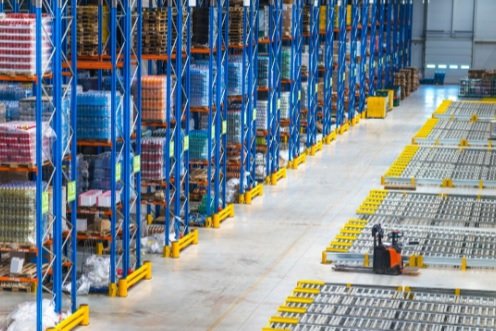
automated material handling system
Current warehouse operations require speed with accuracy, safety and visibility. As volumes increase, automation becomes essential in material handling processes. The question now becomes one of integrating different technologies such that every process contributes to the overall process.
An automated material handling system is an integration of hardware, software, and controls that ensure efficient handling, storing and retrieval of goods. It requires a level of communication between the various components and their continuous performance at the levels of inbound, storage, picking and outbound.
Intelligent Warehouse Control
At the core of an automation process lies the software layer which dictates the material to be moved, its destination and the timing of the move. The systems which control warehouse management, execution and control collaborate with machinery, enabling organisations to coordinate operations rather than having to deal with each piece of machinery individually.
The control system of a good organisation will offer:
- Real time task assignment and machinery coordination
- Visibility of inventory and movements
- Flexible reactions to workload variations
- Performance analysis data
This linked approach produces predictable material flow and lessens isolated decision-making.
Autonomous Mobile Equipment
Mobile automation becomes important in cases where pallets and other loads move continuously from one workstation to another. Autonomous vehicles can perform their movement on predetermined paths and react to obstacles in the path without requiring constant manual intervention.
An autonomous robotic forklift can help with transportation, loading, and unloading of pallets while eliminating tedious driving tasks. Such autonomous vehicles become useful in situations where there is a continuous movement required in high-throughput environments.
Movements can be coordinated with storage, picking, and dispatch needs when autonomous equipment is connected to warehouse software.
Sensing, Navigation and Safety
Autonomous machines require the ability to understand the environment around them. The use of sensors, cameras, and navigation technology allows them to obtain the information needed for detecting obstacles, locating loads, and moving safely.
Technologies like LiDAR, computer vision, and safety sensors can enable mobile equipment to:
- Navigate effectively in a changing warehouse environment
- Detect and avoid obstacles
- Identify and locate pallets accurately
- Interact more safely with people and autonomous machines
These capabilities are important because the operating environment can be changed by people, cars, pallets, and transient obstacles.
Conveyors and Storage Automation
Automation becomes more efficient where transport systems interface with storage facilities. Automated conveyor systems may provide consistent transport paths between processes, and automated storage and retrieval systems may help in improving space efficiency and systematising movements.
Factors that influence this include:
- Nature and size of the load
- Throughput needs and distances to be travelled
- Storage density and floor area available
- Existing interfacing capabilities
Instead, companies can design material flows that take into account the flow of goods through the building.
How Addverb Connects Automation for Material Handling
Addverb specialises in robotics, warehouse automation systems, and software-based intralogistics services such as material handling, storage, picking, and sortation solutions. The company’s product range comprises AMRs, automated storage systems, robotic sorters, conveyors, and warehouse software that can be used in connected warehouse settings.
The FlowT, which is its autonomous forklift, is intended to load and unload pallets inside warehouses and distribution centres. The robot makes use of LiDAR-based navigation and camera-based pallet detection and safety systems, and it can also be integrated with the Fleet Management System. Because of this, the robotic forklift is applicable to tasks involving the controlled movement, storage, and retrieval of pallets.
Conclusion
Instead of starting with individual machines, strong automation projects start with process requirements. Businesses should evaluate repetitive motion, locate bottlenecks, and decide which technologies can solve them.
Scalability is still important to consider. The tools, programs, and facilities should be able to adapt to fluctuating loads, product types, and layouts. With the correct technology combination, an automated material handling system will produce a responsive, repeatable, and measurable flow of products throughout the whole warehouse. This way, people can monitor the throughput, avoid delays and make decisions depending on the demand.