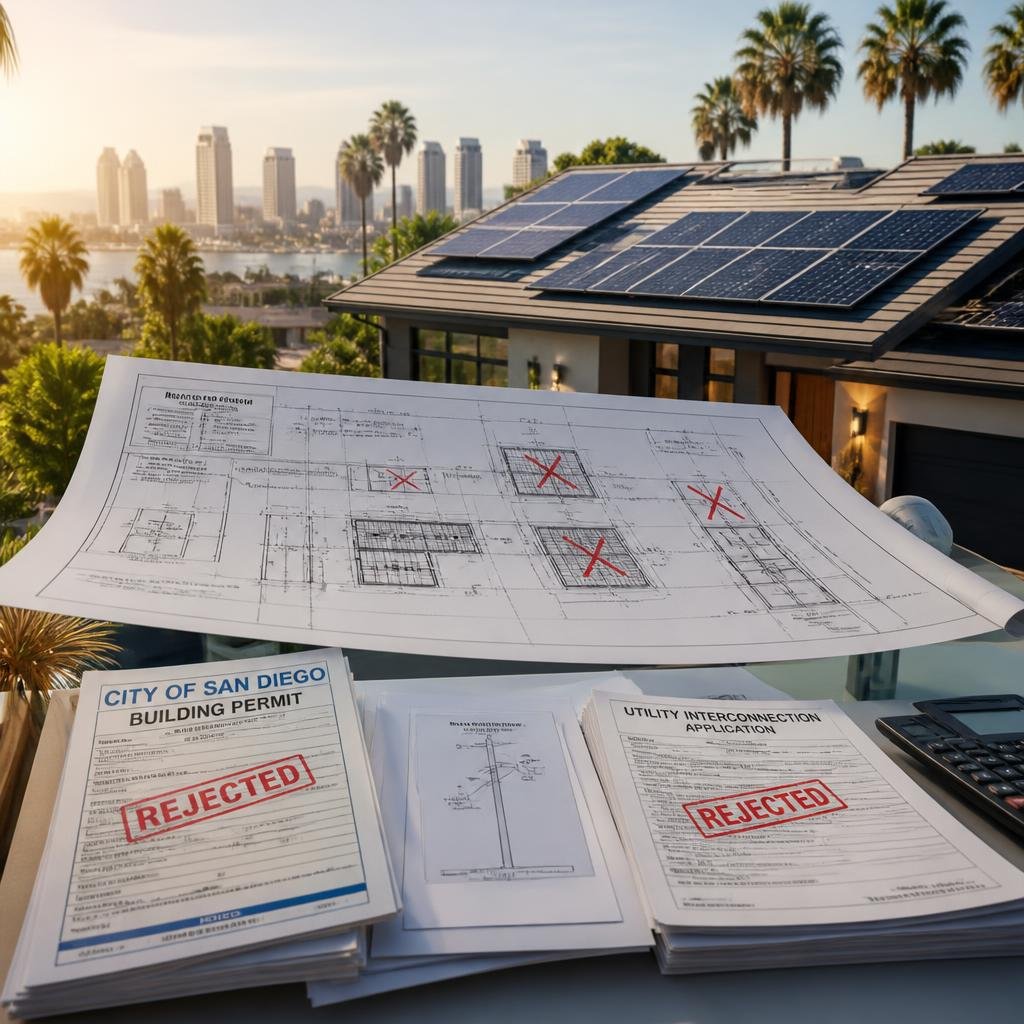
For homeowners in managed communities, going solar involves an extra layer most standalone properties never encounter: hoa solar panel guidelines. These rules govern everything from panel visibility to equipment placement, and ignoring them can lead to disputes even after a city permit has already been approved. Because navigating both municipal and community requirements at once adds real complexity, PTOEdge helps installers coordinate documentation that satisfies both layers of approval from the start.
Many homeowners assume that once a city permit clears, their solar project is fully approved, only to discover their HOA has its own separate say in the matter. Consequently, understanding what these community-level rules typically cover helps avoid the kind of late-stage conflict that can force expensive redesigns. Furthermore, since HOA requirements vary considerably from one community to the next, assuming a neighbor’s approved layout will work identically for another property often leads to disappointment.
Why HOAs Regulate Solar Installations at All
It might seem unusual that a community association has any say over a homeowner’s roof, but most HOAs justify these rules through aesthetic consistency and property value considerations outlined in their governing documents. Because visible equipment can affect a neighborhood’s overall appearance, many associations require review before installation begins, separate entirely from city permitting. This dual-layer approval process catches homeowners off guard who assume a building permit is the only clearance needed.
This is exactly why understanding hoa solar panel guidelines early in the planning process matters so much, since retrofitting a system to satisfy an association’s aesthetic requirements after installation is far more expensive than planning for them upfront. Associations typically focus on street-facing visibility, equipment screening, and sometimes even specific panel colors or frame finishes.
What Typical HOA Solar Panel Guidelines Actually Cover
Most hoa solar panel guidelines address a fairly consistent set of concerns, even though the specific requirements differ by community. Panel placement relative to street-facing roof sections often receives the most scrutiny, since visibility from the front of a property tends to matter most to associations focused on curb appeal. Because these rules can restrict optimal panel placement for energy production, homeowners sometimes need to balance HOA compliance against maximum system efficiency.
Where HOA Approval Fits Into the Broader Project Timeline
Every solar project begins with a solar sales proposal that outlines expected system size and savings, and in HOA communities, this proposal should account for likely placement restrictions from the outset. Because retrofitting a design after HOA rejection wastes both time and money, experienced installers build community guidelines into their initial planning rather than treating them as an afterthought.
Once a homeowner signs off, the project moves into design, where pv plan sets get drafted to reflect exact equipment placement alongside both city code and HOA aesthetic requirements simultaneously. Accurate pv plan sets matter enormously here, since a design that satisfies the city but violates HOA placement rules still won’t move forward without significant rework. Many projects also require a licensed engineer’s sign-off through a solar stamping service, confirming structural calculations hold up regardless of the aesthetic constraints layered on top.
Why Solar Plan Sets Need to Account for HOA Solar Panel Guidelines Early
Solar plan sets that ignore community-specific placement rules often need significant revision once an HOA review board weighs in, adding weeks to an otherwise straightforward timeline. Because HOA boards typically meet on their own schedule, sometimes monthly rather than on-demand, delays here can compound in ways that city permitting delays usually don’t. Teams that research a community’s specific guidelines before finalizing plan sets tend to avoid this particular source of frustration entirely.
Every City and Community Applies Its Own Standards
Beyond HOA-specific rules, standard city permitting still applies on top of community requirements, and these standards vary just as much from one jurisdiction to the next. Homeowners researching solar permit services san diego, for instance, will find the city applies its own structural review standards that layer on top of whatever their specific HOA requires separately. Since mistakes at either stage can delay an entire project by weeks, careful attention to both sets of rules simultaneously is essential.
Alongside these dual requirements, Permit Design & AHJ Compliance work has become increasingly important as code cycles update, since plans need to satisfy evolving municipal standards on top of static or slowly-changing HOA aesthetic rules. Reviewers on both sides increasingly expect submissions that reflect current requirements rather than generic templates.
Curious how to navigate HOA approval without slowing down your permitting timeline? Get an HOA-aware project plan from PTOEdge’s team before you submit anything.
After Approval: Permitting, PTO, and Net Metering
Once both city and HOA approval clear, the project can move toward installation and eventually permission to operate services, since utilities require their own separate review beyond either local approval. Understanding the PTO application process helps installers manage customer expectations, especially in HOA communities where the overall timeline already includes extra steps. Similarly, homeowners researching pto services and pto solar timelines in managed communities should factor in the added HOA review period from the start.
Once activated, solar panels net metering determines how excess energy sent back to the grid gets credited, regardless of whether the property sits within an HOA or not. Since solar net metering policies vary by state and utility, this financial piece remains separate from any community-level aesthetic requirements.
Storage and Other Layers Worth Planning For
Projects that include battery storage face their own additional consideration in HOA communities, since battery energy storage permitting often requires separate fire code review, and associations may have their own opinions about visible battery enclosures too. Because these standards continue evolving, plans that include storage in HOA communities benefit from extra scrutiny on both the code and aesthetic fronts.
Meanwhile, homeowners just starting their research often ask the more basic question of whether do you need a permit to install solar panels at all, and the answer is almost always yes, with HOA communities simply adding a second layer of approval on top.
Supporting Installers Working Across HOA Communities
For installation companies serving neighborhoods with active associations, HOA review timelines are often the hidden variable that makes project scheduling genuinely difficult to predict. Sales teams can close contracts steadily, yet if HOA approval stalls due to unfamiliarity with a specific community’s requirements, installation crews end up waiting on approvals outside their direct control. Solar Installer Growth in HOA-heavy markets increasingly depends on installers who’ve already mapped out common association requirements rather than researching each one from scratch.
In the same way, companies exploring pv permit services for HOA-inclusive projects are usually trying to solve a familiar problem: too much internal time spent navigating both municipal and community-level requirements without a coordinated approach.
Ready to make sure your next HOA community project doesn’t stall on a preventable technicality? Talk to PTOEdge about coordinating HOA and permitting approval together today.
Frequently Asked Questions
What do HOA solar panel guidelines typically restrict?
They usually govern panel visibility, placement on street-facing roof sections, and sometimes equipment screening.
Does HOA approval happen before or after city permitting?
It varies, but many installers pursue both simultaneously to avoid unnecessary delays in either process.
Can HOA rules affect how much energy a system produces?
Yes, placement restrictions for aesthetic reasons can sometimes limit optimal panel positioning for maximum output.
Do HOA rules apply to battery storage as well as panels?
Sometimes, particularly regarding visible battery enclosures, so it’s worth checking community-specific guidelines.
What happens if a system doesn’t meet HOA guidelines after installation?
The homeowner may be required to modify or relocate equipment, which is far costlier than planning ahead.