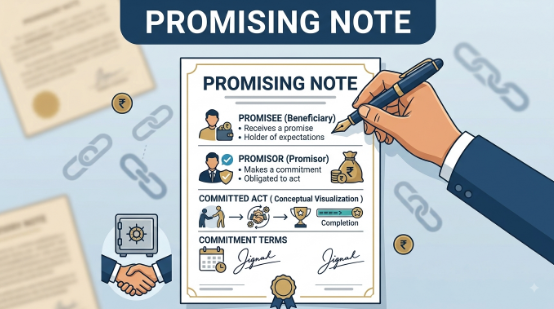
promising note
In today’s financial landscape, individuals and institutions alike often require various forms of written agreements to ensure that their transactions are secure and legally recognized. Among these instruments is the “promising note,” a document that holds significant implications in personal lending. This article will explore the meaning of a promising note, its common format, its legal standing in India, and how it is related to personal loans.
What is a Promising Note?
A promising note, commonly referred to as a promissory note, is a financial instrument in which one party (the maker) promises in writing to pay a specified sum of money to another party (the payee) under defined terms. These terms usually include the amount to be paid, the interest rate if applicable, the repayment schedule, and any required signatures.
Promising notes are typically used in various situations, including personal loans, business transactions, and informal loans between friends and family. They serve as a legally enforceable promise that offers protection to the lender while demonstrating the borrower’s commitment to repay.
The Format of a Promising Note
A well-structured promising note should include several essential components to ensure it is both clear and legally valid. Below is a basic template outlining the typical format of a promising note in India:
1. Title
The document should begin with the title “Promissory Note” prominently displayed at the top.
2. Date
The date on which the note is executed should be clearly stated, as it establishes the timeline for repayment.
3. Parties Involved
The note should clearly identify the parties involved. This includes:
- The name, address, and identification details (like PAN or Aadhaar number) of the borrower (maker).
- The name and address of the lender (payee).
4. Amount
The specific amount being borrowed must be mentioned clearly in both words and digits to avoid any ambiguity.
5. Interest Rate
If applicable, the interest rate should be stated clearly, as well as whether it is simple or compound interest.
6. Repayment Terms
Details on repayment should be articulated, including:
- The due date(s) for repayment.
- Installment amounts (if there are any).
- Any grace periods or conditions under which the repayment might be extended.
7. Signature
Both parties should sign the document to validate it. The signature signifies agreement to the terms specified in the note.
8. Witness
It is advisable to have one or two witnesses sign the note. Their details, including names and addresses, should also be included.
Legal Value of a Promising Note in India
In India, a promissory note is governed by the Negotiable Instruments Act of 1881. It is recognized as a legal document that holds considerable weight in a court of law, provided it meets the requirements of a valid contract as laid out under the Indian Contract Act of 1872.
Enforceability
A promising note is enforceable, meaning that if the borrower defaults or fails to repay as per the agreed terms, the lender has the right to take legal action to recover the amount due. This makes it an important instrument for lenders as it offers a level of security and assurance.
Legal Framework
The Indian legal framework upholds the principles of free consent and the intention to create a lawful relationship, which must be present for a promissory note to be enforceable. Key factors include:
- Capacity: Both parties must have the legal competence to enter into a contract.
- Consideration: There must be some consideration or benefit exchanged, which in the case of loans is typically the money lent.
Stamp Duty
In India, a promissory note may require the payment of stamp duty depending on the value of the transaction and the state in which it is executed. Failure to pay the requisite stamp duty can lead to penalties and may affect the enforceability of the document in court.
Promising Note and Personal Loan Eligibility
When it comes to personal loans, many lenders may require a promissory note as part of the documentation to secure the loan. This document ensures that both the lender and borrower agree on the terms, thus streamlining the process and minimizing the risk of disputes.
Personal Loan Eligibility
Promising notes play a crucial role in establishing the eligibility criteria for personal loans. Borrowers are typically assessed based on their creditworthiness, income stability, and repayment capacity. Lenders may require:
- Documentation of income, such as pay slips or tax returns.
- A formal application stating the loan amount needed and the purpose.
- A promissory note to formalize the agreement once a loan is approved.
A clear and well-structured promising note can enhance a borrower’s chances of obtaining a personal loan, as it shows responsibility and willingness to adhere to loan terms. Understanding personal loan eligibility can also help borrowers prepare the necessary information and documentation before entering into the loan agreement.
Conclusion
A promising note serves as a vital mechanism in the lending process, protecting both borrowers and lenders through its legally binding nature. Understanding its meaning, format, and legal value in India is essential for individuals considering loans in any capacity. By adhering to the components of a well-crafted promissory note, parties can ensure that their agreements are clear, enforceable, and recognized under Indian law.
In a financial environment where disputes can arise easily, having a formal agreement in the form of a promising note provides peace of mind and clarity to all parties involved. Whether you are a lender or a borrower, it is crucial to understand the significance of this instrument and its implications in your financial transactions.