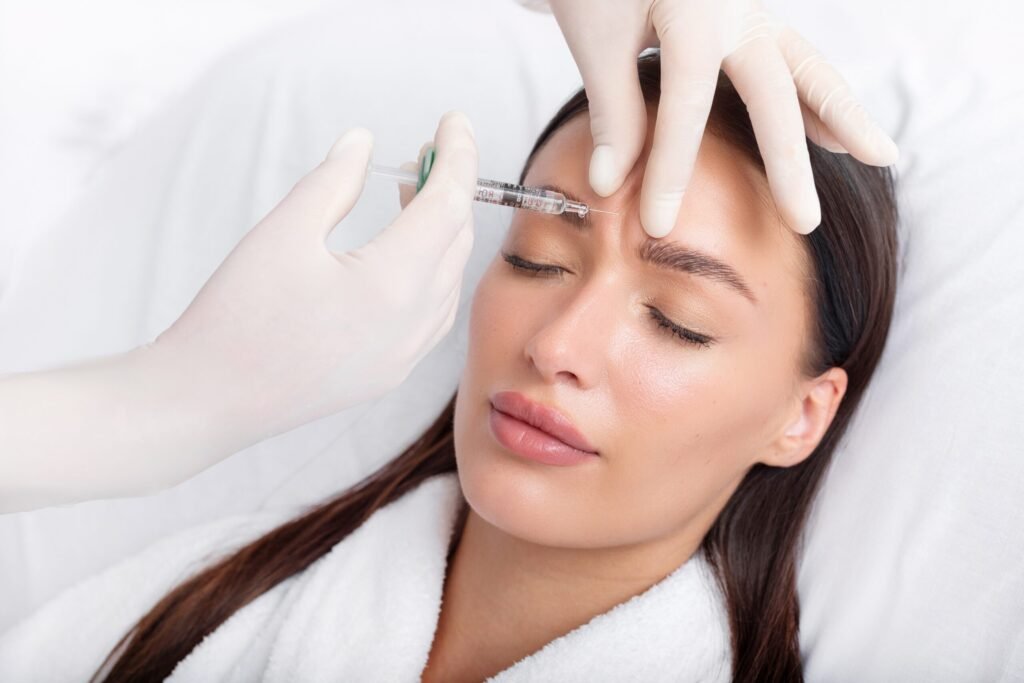
Young woman recieving injection of anti-aging botox filler to forehead from professional cosmetologist in beauty salon
Facial expressions are an important part of how people communicate. Smiling, frowning, raising the eyebrows and squinting all involve coordinated movement of facial muscles. Over time, repeated muscle activity can contribute to the development of dynamic lines, which is why understanding facial movement is an important part of planning anti-wrinkle treatment.
Botox in London is commonly used to temporarily reduce the appearance of dynamic facial lines by relaxing selected muscles. However, treatment planning involves more than simply identifying visible wrinkles. Practitioners assess how the face moves, where muscles contract and how those movements affect the skin.
During a consultation for Botox Injections In London, the practitioner may ask you to make several natural facial expressions. This allows them to observe muscle activity and understand how your individual facial anatomy contributes to the appearance of lines.
At a Best Botox Clinic London, a detailed facial assessment can help create a treatment plan that is tailored to the individual’s features and aesthetic objectives.
Why Is Facial Movement Assessed Before Botox?
Facial movement varies considerably from one person to another. Some people have stronger muscle activity in the forehead, while others may have more noticeable movement between the eyebrows or around the eyes.
Because Botox works by temporarily reducing activity in targeted muscles, understanding those muscles is an important part of treatment planning.
The practitioner assesses which muscles are active and how their movement affects the appearance of facial lines.
This allows the proposed treatment to focus on specific areas rather than following a standard injection pattern.
What Happens During the Initial Facial Assessment?
The assessment generally begins while the face is relaxed. The practitioner observes the natural appearance of the forehead, eyebrows, eyes and other areas being considered for treatment.
They may then ask you to make several expressions.
For example, you might be asked to:
- Raise your eyebrows
- Frown
- Smile
- Squint
- Relax your face between expressions
The practitioner observes the movement produced by each expression.
This gives them a better understanding of your individual muscle activity and how it influences the skin.
How Is the Forehead Movement Examined?
The forehead contains muscles that contribute to eyebrow elevation and forehead movement.
During a Botox in London consultation, the practitioner may ask you to raise your eyebrows.
As you do this, they observe how the forehead moves and where horizontal lines become visible.
They may also examine whether the movement appears stronger in one part of the forehead than another.
This information helps determine whether the forehead is an appropriate treatment area and how treatment may be planned.
How Is Movement Between the Eyebrows Assessed?
The area between the eyebrows is another important part of facial movement assessment.
The practitioner may ask you to frown or bring your eyebrows together.
This allows them to observe the muscles responsible for creating movement in this area.
They can assess the strength and pattern of contraction and see how the movement affects the skin.
This is particularly useful when discussing vertical expression lines between the eyebrows.
How Are the Muscles Around the Eyes Assessed?
The muscles surrounding the eyes become active during expressions such as smiling and squinting.
The practitioner may ask you to smile naturally to observe how the skin around the outer corners of the eyes moves.
They can examine where lines appear and how strongly the surrounding muscles contract.
This assessment helps determine whether the outer eye area may be suitable for Botox Injections In London.
Why Does the Practitioner Ask You to Relax Your Face?
Observing the face at rest is just as important as observing it during movement.
When the face is relaxed, the practitioner can examine the natural position of the eyebrows, eyelids and other facial features.
They can compare this appearance with the face during different expressions.
This provides a more complete understanding of how muscle activity contributes to visible lines.
How Is Muscle Strength Considered?
Not everyone’s facial muscles have the same strength or activity.
Some people may have strong contractions in particular areas, while others may have relatively subtle movement.
The practitioner observes these differences during the consultation.
Muscle strength can influence how treatment is planned because Botox is intended to temporarily reduce activity in selected muscles.
The goal is to identify the muscles contributing to the specific concerns being discussed.
Does Facial Symmetry Affect the Assessment?
Facial symmetry is another factor considered during treatment planning.
Although most faces have some natural asymmetry, one eyebrow or side of the face may move differently from the other.
The practitioner can observe these differences while the patient makes facial expressions.
This information may influence how Botox in London is planned for individual areas.
Rather than assuming that both sides of the face require exactly the same approach, the practitioner considers the patient’s natural movement pattern.
How Does Brow Position Relate to Facial Movement?
The position of the eyebrows is influenced by several facial muscles.
During an assessment, the practitioner observes the natural brow position and how it changes when the patient raises their eyebrows or frowns.
They may also consider how the forehead and muscles between the eyebrows interact.
Understanding these relationships is important when developing an individual treatment plan.
How Are Dynamic Lines Different From Static Lines?
Dynamic lines are associated with repeated facial muscle movement. They may become more visible when a person smiles, frowns or raises their eyebrows.
Static lines can remain visible even when the face is relaxed.
During the consultation, the practitioner can observe both the relaxed and expressive appearance of the face.
This helps them understand whether the patient’s main concern is related primarily to muscle movement or whether other aspects of skin appearance may also contribute.
Can Facial Movement Change With Different Expressions?
Yes. Different expressions activate different muscle groups.
For example, raising the eyebrows involves different movement from frowning, while smiling activates muscles around the eyes and mouth.
The practitioner may therefore ask the patient to make several expressions rather than relying on a single movement.
Observing these different patterns provides a more complete picture of facial activity.
How Does Facial Anatomy Influence Botox Planning?
Individual facial anatomy plays an important role in treatment planning.
The position and strength of facial muscles, eyebrow shape and facial proportions can vary significantly.
The practitioner considers these characteristics when identifying potential treatment areas.
This means Botox Injections In London are not necessarily performed according to one standard pattern.
Instead, the injection plan can be adapted according to the patient’s individual facial anatomy.
How Are Treatment Goals Discussed?
The patient’s aesthetic goals are an important part of the consultation.
Some people may want to reduce the appearance of forehead lines, while others may be more concerned about frown lines or expression lines around the eyes.
The practitioner discusses these concerns and combines them with the facial movement assessment.
This helps determine which areas should be prioritised.
A clear discussion of expectations also allows the practitioner to explain what Botox is designed to address.
What Happens During a Botox Consultation?
A typical consultation may involve several stages.
First, the practitioner discusses your concerns and treatment goals.
Next, they examine your face while it is relaxed.
They may then ask you to make different facial expressions so they can observe muscle activity.
The practitioner considers facial symmetry, muscle strength, brow position and the location of dynamic lines.
Finally, they discuss whether Botox may be appropriate and explain the proposed treatment plan.
What Questions Should You Ask Your Practitioner?
A consultation is an opportunity to understand how your facial movement has been assessed.
Useful questions include:
- Which muscles are contributing to my facial lines?
- Which areas would you recommend treating?
- How does my natural facial movement influence treatment?
- Does my facial symmetry affect the treatment plan?
- How will my brow position be considered?
- What type of result can Botox provide for my concerns?
- How many areas are being considered?
- What should I expect during the treatment appointment?
These questions can help you understand the reasoning behind the proposed approach.
How Is the Botox Treatment Plan Created?
After completing the facial movement assessment, the practitioner creates an individual treatment plan.
This may identify the muscles and facial areas that are contributing to the patient’s concerns.
The plan takes into account facial movement, anatomy, symmetry and aesthetic objectives.
The practitioner can then explain the proposed injection areas and how the treatment is intended to address the selected concerns.
This personalised planning process is an important part of receiving Botox in London.
Why Is an Individual Approach Important?
Facial expressions are unique to each person.
Two individuals may have similar forehead lines but different muscle activity, eyebrow positions and facial proportions.
As a result, the same treatment pattern may not be appropriate for everyone.
An individual assessment allows the practitioner to consider these differences before planning Botox Injections In London.
This approach keeps treatment focused on the patient’s specific facial characteristics.
Choosing a Botox Clinic in London
When considering Botox treatment, selecting an appropriate clinic is an important step.
A Best Botox Clinic London should provide a consultation that includes an assessment of facial movement and individual treatment goals.
Patients should have the opportunity to discuss their concerns and understand why particular areas have been selected.
Bodyvie Clinic provides consultations where patients can discuss their aesthetic goals and learn more about available treatment options.
A detailed assessment can help ensure that treatment planning is based on the individual’s facial movement rather than a standardised approach.
What Should You Expect From Your Consultation?
The consultation should provide a clear understanding of your facial movement and proposed treatment plan.
You may be asked to make different expressions so the practitioner can observe muscle activity.
Your facial structure, symmetry and areas of concern can then be considered when discussing treatment.
You should also have an opportunity to ask questions and understand what the proposed Botox treatment is intended to achieve.
Conclusion
Assessing facial movement is an important part of planning Botox in London. Practitioners observe the face at rest and during different expressions to understand how individual muscles contribute to the appearance of dynamic facial lines.
During a consultation for Botox Injections In London, factors such as muscle activity, strength, facial symmetry, brow position and individual anatomy can all contribute to treatment planning.
For anyone considering Botox, consulting a Best Botox Clinic London provides an opportunity to receive an individual facial assessment, discuss aesthetic goals and understand how a personalised treatment plan may be developed.
FAQs
Why do practitioners assess facial movement before Botox?
Facial movement helps practitioners identify which muscles contribute to dynamic facial lines. This information allows them to develop a treatment plan based on individual muscle activity.
What facial expressions might I be asked to make?
You may be asked to raise your eyebrows, frown, smile, squint and then relax your face so the practitioner can observe different patterns of muscle movement.
How is forehead movement assessed?
The practitioner may ask you to raise your eyebrows and observe how the forehead muscles contract and where horizontal lines appear during movement.
How are frown lines assessed?
You may be asked to bring your eyebrows together or frown. The practitioner observes the muscle activity between the eyebrows and how it affects the skin.
Are the muscles around the eyes assessed?
Yes. You may be asked to smile or squint so the practitioner can observe movement around the outer corners of the eyes.
Does facial symmetry affect Botox treatment planning?
It can. Natural differences in muscle movement or facial structure may influence how the treatment plan is developed for each side of the face.
Why does the practitioner examine my face when it is relaxed?
Examining the face at rest allows the practitioner to understand your natural facial features and compare them with how your face changes during expressions.
Does muscle strength affect Botox planning?
Yes. The strength and activity of individual facial muscles can vary, so practitioners consider these differences when planning treatment.
Can Botox treatment be personalised?
Yes. Botox treatment can be planned according to facial movement, muscle activity, anatomy, symmetry and the patient’s specific aesthetic goals.
What should I discuss during a Botox consultation?
You should explain which facial areas concern you, what you would like to improve and any questions you have about the proposed treatment.
Where can I have a Botox consultation in London?
If you are considering Botox in London, you can arrange a consultation at a specialist Best Botox Clinic London, such as Bodyvie Clinic, to discuss your concerns and receive an individual facial assessment.