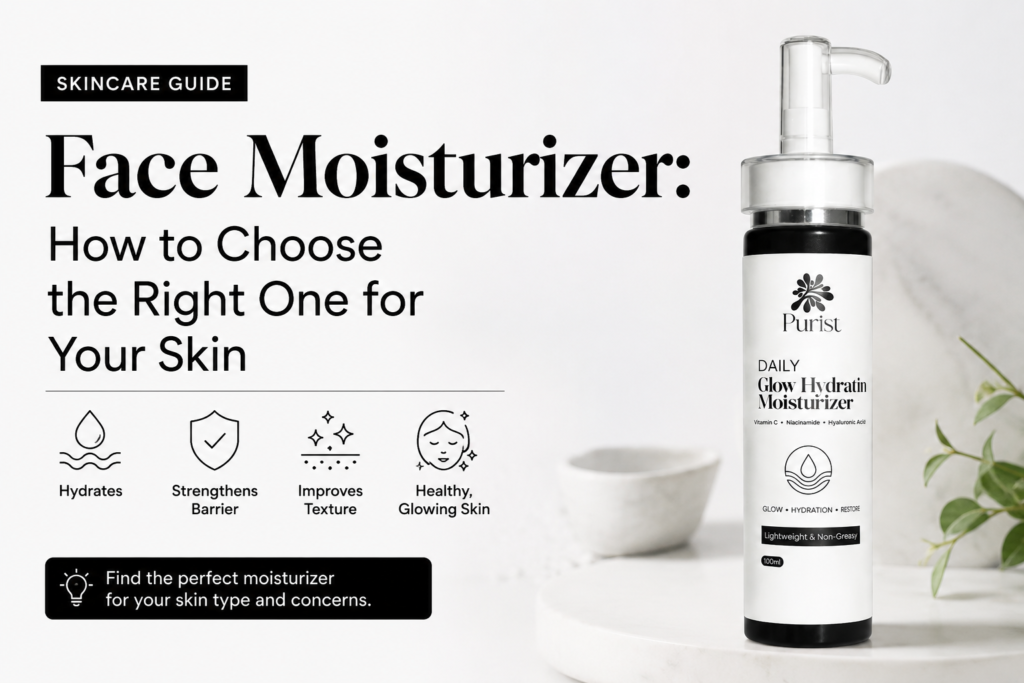
Keeping skin hydrated is one of the simplest ways to support a healthy-looking complexion, but choosing the right product can be surprisingly confusing. Gels, creams, lotions, and lightweight formulas all serve slightly different purposes, and the best choice depends largely on your skin type and daily routine.
A good face moisturizer does more than make the skin feel soft. It can help reduce water loss, support the skin barrier, and make skin feel more comfortable after cleansing. Dermatologists commonly recommend applying moisturizer while the skin is still slightly damp because this helps retain existing moisture.
Why Does Your Skin Need Face Moisturizer?
The skin naturally loses water throughout the day. Environmental conditions, frequent washing, air conditioning, hot weather, and certain skincare ingredients can make this more noticeable.
When the skin becomes dehydrated, it may feel tight, rough, flaky, or uncomfortable. Maintaining hydration helps the outer layer of the skin function as a protective barrier.
Moisturizers generally work by helping add or retain moisture. Some ingredients attract water, while others form a protective layer that slows water loss. This is why ingredients such as glycerin, hyaluronic acid, ceramides, and certain occlusive ingredients are frequently found in moisturizing formulas.
Choosing a Face Moisturizer Based on Your Skin Type
There isn’t one moisturizer that works perfectly for everyone. Skin type should be one of the first things considered when selecting a product.
Dry Skin
Dry skin usually benefits from richer creams or ointments because these formulas can provide more moisture and reduce water loss. Look for ingredients such as glycerin, hyaluronic acid, ceramides, shea butter, or petrolatum.
People with very dry skin may find that a cream provides longer-lasting comfort than a lightweight lotion. Dermatologists also recommend fragrance-free products for people whose dry skin is easily irritated.
Oily Skin
Having oily skin doesn’t necessarily mean you should completely avoid moisturizer. In fact, excessive dryness can sometimes make skincare routines more difficult to manage.
A lightweight gel or non-comedogenic formula may be more comfortable for oily skin. The term “non-comedogenic” generally indicates that a product is formulated to be less likely to clog pores.
Combination Skin
Combination skin can be challenging because different areas of the face may have different needs. The forehead, nose, and chin may become oily while the cheeks feel dry.
A lightweight moisturizer can work well for the entire face, while slightly richer products can be applied selectively to areas that need additional hydration.
Sensitive Skin
For sensitive skin, keeping the ingredient list simple can be helpful. Fragrance-free products are often preferable when irritation is a concern. If a product causes persistent burning, stinging, redness, or discomfort, discontinue it and consider speaking with a dermatologist.
Important Ingredients to Look For
Reading a skincare label can feel like studying a chemistry textbook, but a few ingredients are particularly useful to understand.
Hyaluronic acid is a humectant commonly used to attract and retain water in the skin.
Glycerin is another well-established humectant frequently found in moisturizing products.
Ceramides are lipids that help support the skin barrier and are commonly included in products designed for dry or compromised skin.
Shea butter and petrolatum can provide a more protective, occlusive effect and may be particularly useful when the skin is very dry. The American Academy of Dermatology lists several of these ingredients among options to look for when choosing products for dry skin.
When Should You Apply Moisturizer?
Timing can make a difference.
One of the easiest habits is to apply moisturizer shortly after cleansing while the skin is still slightly damp. This helps trap water on the skin rather than allowing it to evaporate immediately.
A simple routine can look like:
- Cleanse gently.
- Pat the face dry without aggressively rubbing.
- Apply hydrating treatments if needed.
- Apply moisturizer while the skin is still slightly damp.
- Apply sunscreen during the daytime.
The American Academy of Dermatology specifically recommends moisturizing after washing because it helps trap water in the skin.
Can Oily or Acne-Prone Skin Use Moisturizer?
Yes. This is one of the most common skincare misconceptions.
People with acne-prone skin may avoid moisturizer because they associate hydration with greasy skin or clogged pores. However, some acne treatments—including salicylic acid, benzoyl peroxide, and topical retinoids—can cause dryness and irritation. Dermatologists may therefore recommend an appropriate moisturizer as part of an acne skincare routine.
For acne-prone skin, look for lightweight, oil-free, or non-comedogenic options when appropriate.
Common Mistakes to Avoid
Buying the most expensive product isn’t necessarily the answer. A few basic mistakes can undermine an otherwise good skincare routine.
Using too much product: More isn’t automatically better. Start with a reasonable amount and adjust according to how your skin feels.
Ignoring your skin type: A rich cream may feel wonderful on dry skin but unnecessarily heavy on very oily skin.
Applying moisturizer only when skin feels dry: Consistent skincare is generally more useful than waiting until discomfort appears.
Choosing heavily fragranced products when your skin is sensitive: Fragrance can irritate some people, particularly those with sensitive or very dry skin.
Forgetting sunscreen: Moisturizer and sunscreen have different jobs. A moisturizing product does not automatically replace dedicated sun protection.
Build a Simple Skincare Routine
A complicated routine isn’t required to maintain healthy-looking skin. For many people, a basic routine built around cleansing, moisturizing, and daytime sun protection is easier to maintain consistently.
The important thing is to pay attention to how your skin responds. Seasonal changes, climate, age, medications, and active skincare ingredients can all influence what your skin needs.
If dryness becomes severe, painful, cracked, persistently itchy, or doesn’t improve with basic skincare changes, it’s better to consult a qualified dermatologist rather than continuously switching products. Persistent dryness can sometimes be associated with underlying skin conditions.
Final Thoughts
Finding the right moisturizer is less about chasing the latest skincare trend and more about understanding what your skin actually needs. Dry skin may prefer a richer cream, oily skin may feel better with a lightweight gel, and sensitive skin may benefit from a simple fragrance-free formula.
The best routine is ultimately one that suits your skin, fits your lifestyle, and is easy enough to follow consistently. Good skincare doesn’t need to be complicated—it needs to be appropriate and consistent.