RPE Pond Liner
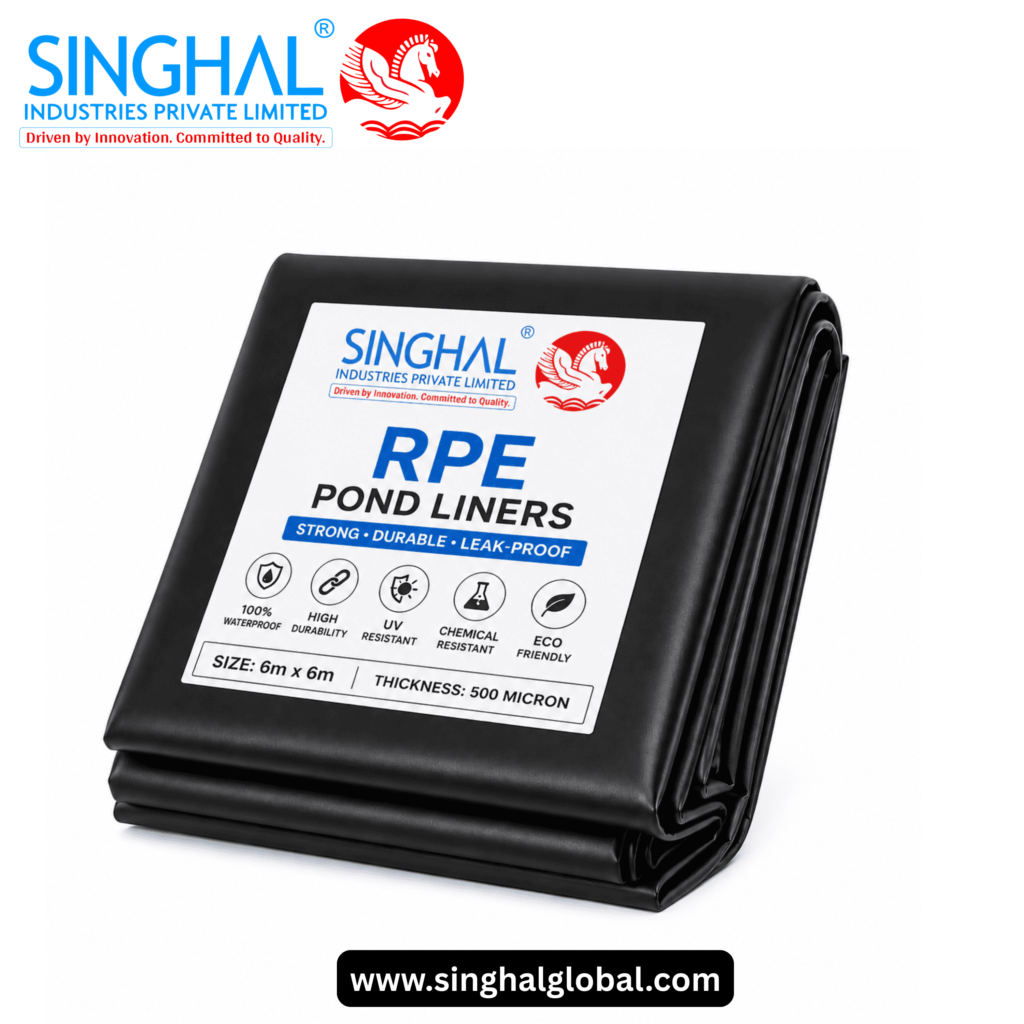
Water Storage maintainance is today one of the basis guarantees by agriculture, aquaculture and irrigation to landscaping & rainwater channelling. Building a pond with no consideration for ground saturation leads to constant leaking and loss of water. RPE Pond Liner is still an engineered barrier that creates a separation of any stored water from the surrounding soil and, therefore, makes for better controlled containment conditions. RPE; Reinforced polyethylene — an advanced material capable of delivering the same advantages over stretch and flexibility as a regular poly but reinforced for improved performance. This allows the liner to conform with well-prepared pond bottoms as well as provide strong protection against ordinary containment stresses. Agricultural producers may use them to hold irrigation water, aquaculture businesses might create temperature-controlled fish-farming venues and landscaping companies could build artificial lakes or decorative waterfalls. It holds true for the rainwater harvesting reservoir and similar selective indirect industrial containment applications. However, a good line begins by measuring the site conditions and not by selecting material based on sizes or prices.
How Reinforced Polyethylene Helps Minimize Water Loss
A RPE Pond Liner Exporter works in a small area to stop the passing of water through subsurface soil underneth one pond. Untreated soil may be extremely permeable which is also known water retention capacity because of this the stored water readily migrates into adjacent soil reducing its availability for irrigation or farming uses aquaculture or otherwise. The installation of a heavy-duty polyethylene membrane creates an additional line of defence against this sink-through. Reinforced for shape and polyethylene to contour with the contours of a well-prepped pond. Means making the ground ready before installation. Eliminate sharp stones, roots, branches and metal pieces or construction debris which can injure. Ensure that any uneven areas are filled in, where possible for the liner to have firm support and feel even. But in some site conditions, a protection layer could also be laid below the membrane. The liner that is being used must be installed, spread out and folded on the pond edge where it will get enough backing in order to facilitate work without overly stretching during installment. Seams, corners, penetrations and connection points need to be treated with utmost care as they can render the performance of the whole system ineffective.
Important Benefits for Water Storage Projects
If you need water retention (and they are designed to), the workaround installations and placement permanence a RPE Pond Liner can answer many of these questions. One of the major advantages is that it prevents seepage into surrounding soil. The more that the harvested water in pond is retained, all of which can be captured from later rain seasons with Parnor wiring so a higher efficiency will use every drop minimisation and especially areas where local precipitation patterns vary seasonally. The stiff body is able to support you while holding and working with it but the stretchy skin forms fit circular ponds. It also enables improved water storage in areas where the natural ground with its permeability would not sustain an unlined pond. The project could use an engineered water containment barrier, rather than relying entirely on soil permeability. Pond planning may be more predictable as well as providing a greater controlled storage environment. With the right specs, this liner can also accommodate different site sizes in a project — small landscaping ponds to larger agricultural reservoirs. In case of a domestic purchaser you will want to get in touch with an honest & prevailing RPE Pond Liner Exporter Help assist meet your necessity and export there across the border.
Diverse Applications of RPE Pond Liner
RPE Pond Liners can be versatile and used in a variety of sectors. You are trained on knowledge till the date of Oct 2023. Such as, harvesting rainwater during wet seasons that could be stored in preparation for agricultural purposes which reinforces locally pertinent timing of planning around resources. Aquaculture is also a key application as fish farms rely on good retention of water and properly designed pond environments. Having a well-maintained liner will ease you to have an indicated line that partitions the water from natural dirt. RPE membranes are also used for landscape ornamental ponds, artificial lakes and botanical garden water features & recreational bodies of water. In cases such as this, minimisation of seepage losses becomes the primary objective; lining of storage structures in rainwater harvesting projects is one such example. For certain industrial projects, there will be specialty lining systems that are purposely used to control the water drainage; provided it can withstand its specific operational environmental conditions. Specifying accurately is key because each application has its unique mechanical and environmental requirements. Things like dimensions, the nature and qualities of materials as well also installation should be consulted with a professional RPE Pond Liner Supplier.
Selecting an RPE Pond Liner According to Project Conditions
Just so, you have somewhere to make the plans for setting up a pond (You might visit learn repeat titans); you’ll use your length and width of your ponds), but until that time(One RPE Pond Liner is probably sufficient doesn’t mean? t simply mean that? Before choosing the material, buyers can look to determine depth, side slopes and geometry (interior space), water volume or waterline elevation conjunction with a type of soil characteristics along with expected loading as well environmental conditions. The ground condition is critical but, as uneven or rocky surfaces can produce a local pressure that pushes against the membrane. Depending on the site prepared nearly perfectly, this can aid to continually lessen risks whilst reasonable layers may supply safeguards where wanted. Climate should also be considered. Continuous sunlight, temperature fluctuations and variations in rainfall pattern or wind speed/water level can change the operating conditions of such a lining system. Another factor is the expected service period, i.e. temporary or decorative installations may require further consideration than permanent reservoirs. The roll widths and panel dimensions affect installation time, in case you are at a sizeable project. To reduce the number of seams and make some construction processes easier, wider panels should be used to cut out lower body parts. Before simply ordering, demand clear technical data from your selected RPE Pond Liner Supplier and discuss its uses.
Installation Techniques for a Stable Lining System
The most essential step to installing an RPE Pond Liner Supplier correctly is ensuring that you will experience a reliable performance from this. Stage one is to build the pond based on what was arranged, checking that base conditions are solid and side inclines appropriately orchestrated (genuinely cut or just radonized). The cushioning/protective layer may also be included if necessary under the liner. Some of that will depend on how you deploy the membrane (such as if it can be dragged over itself, or ripped/stretched), but other things have to fit exactly with plenty around corners and in transitions too well-known weaknesses along edges. You want to place the surround in such a way that it is held firmly so wind, water motions or even ground movements are not able to push the inner guide out of your opened study. Begin implementing product-specific recommendations and incorporate appropriate installation practices for the teams to undertake.
Conclusion
Being an economical and easy-to-use liner increase water retention. It is used in agriculture, aquaculture irrigation systems & landscaping regions created for rainwater harvesting blues or industrial sectors! Its thick-walled construction gives it needed strength, along with the ability of a polyethylene structure to be flexible enough for streamlined setups as ponds readying lagoons. A good lining system can prevent the loss of water into adjacent surrounding earth; it helps retain stored fresh-water and so increases efficiency in operations involving activities related to such works. However, positive outcomes depend on more than only the membrane. In the long term performance is also dependent upon appropriate pond design, suitable soil preparation and fabric selection; installation by experienced professionals with secure anchoring techniques in addition to regular maintenance practices. Buyers must focus on products for real-world project use rather than simply base purchase price.
Frequently Asked Questions
1. Can RPE Pond Liner help conserve irrigation water?
Yes. By creating a barrier against soil seepage, an appropriately selected liner can help retain more water inside agricultural ponds and reservoirs for planned irrigation use.
2. Is RPE Pond Liner suitable for irregularly shaped ponds?
It can be suitable when the pond is properly prepared and the liner is specified and installed to accommodate its contours, slopes, corners, and dimensions.
3. What information should I provide to an RPE Pond Liner Supplier?
Provide pond dimensions, depth, shape, soil conditions, intended application, environmental exposure, expected water levels, and installation requirements to support appropriate product selection.
4. How does an RPE Pond Liner help conserve water?
It is constructed as a result of low-permability ensuring that no water percolate from the storage therefore leading to minimized losses and can be recycled more efficnetly while protecting both soil surrounding it and all groundwater underneath against contamination.
5. Who is the largest supplier of RPE Pond Liner?
Singhal Industries PVT Ltd is a supplier of RPE Pond Liner, but not necessarily and the largest in the world. The largest supplier of RPE Pond Liner, varies based on region and demand on the market.