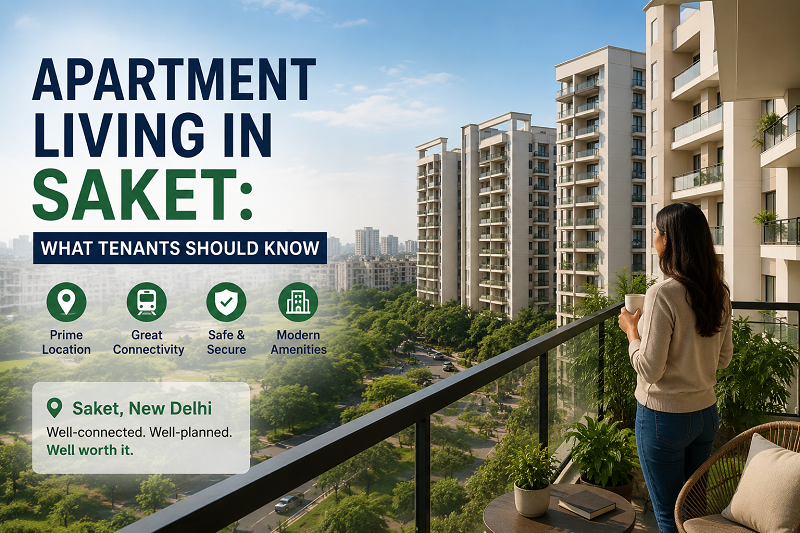
Renting an apartment in Saket means stepping into one of South Delhi’s more balanced neighborhoods — well connected, reasonably green, and stocked with everything from gated high-rises to independent builder floors. But apartment living here comes with its own set of practical realities that first-time tenants often don’t expect.
Rental terms, maintenance norms, and even neighborhood etiquette can vary quite a bit between a gated society and an independent floor. Before signing anything, it helps to understand what typically comes with a Saket flat rent agreement — from security deposits to what maintenance actually covers.
This guide walks through what tenants should realistically expect when moving into Saket, covering everything from housing types to lease terms, common challenges, and practical tips drawn from how renting actually works in this part of Delhi.
Key Takeaways
- Saket offers a mix of gated apartment complexes, independent builder floors, and smaller standalone units.
- Rental agreements typically involve an 11-month lease, a security deposit of two to three months’ rent, and separate maintenance charges.
- Tenants should verify RWA rules, parking allotment, and maintenance inclusions before finalizing a unit.
- Saket’s connectivity and social infrastructure make it a practical choice for working professionals and families alike.
- Rental demand tends to stay steady due to proximity to metro access, hospitals, and commercial hubs.
What Apartment Living in Saket Involves
Direct answer: Apartment living in Saket typically means choosing between a gated residential complex with shared amenities or an independent builder floor with more privacy but fewer shared facilities.
Gated complexes usually come with security staff, parking allocation, and sometimes a small garden or clubhouse. Builder floors, on the other hand, offer more space and independence but require tenants to manage things like water supply and maintenance more directly with the landlord.
Both options are common across Saket’s residential blocks, and the right choice usually depends on whether a tenant prioritizes community amenities or personal space and privacy.
Types of Rental Housing Available in Saket
Gated Apartment Complexes
These offer shared security, sometimes a lift, parking space, and common areas. Maintenance is usually managed by a Resident Welfare Association (RWA) and charged separately from rent.
Builder Floors
Independent floors within a residential building, often with a private entrance. These suit tenants who want more space and fewer shared-amenity rules, though maintenance responsibilities fall more directly on the landlord-tenant arrangement.
Standalone Units and PGs
Smaller units and paying-guest accommodations are also available, generally suited to students or single professionals looking for shorter-term, lower-cost stays.
Why Tenants Choose Saket
Tenants pick Saket largely for its balance of connectivity, everyday convenience, and relatively green surroundings compared to more congested parts of Delhi. Direct metro access via the Yellow Line, proximity to Max Super Speciality Hospital, and nearby retail hubs like Select Citywalk all add practical value beyond just the apartment itself.
For families, the presence of schools and parks nearby is often just as important as the unit’s interior. For working professionals, shorter commute times to South Delhi and Gurugram business hubs are usually the deciding factor.
How the Rental Process Typically Works in Saket
- Shortlist properties through brokers, online listings, or local RWA notice boards.
- Visit in person to check unit condition, water pressure, and building maintenance quality.
- Negotiate rent and deposit — most landlords expect a two to three month security deposit.
- Review the rental agreement, checking lease duration, notice period, and maintenance inclusions.
- Register the agreement, if required, and collect a signed copy along with an inventory list if furnished.
- Coordinate move-in logistics, including RWA registration where applicable and utility transfers.
Benefits of Apartment Living in Saket
- Strong connectivity via metro and arterial roads, reducing daily commute stress.
- Access to social infrastructure — hospitals, malls, and schools within short distance.
- Variety of housing types, from gated complexes to independent floors, suited to different budgets and preferences.
- Relatively green surroundings, with several public parks and tree-lined streets.
- Steady rental demand, which usually means a reasonably active market with multiple options to compare.
Challenges Tenants Should Be Aware Of
- Higher rents compared to some outer Delhi localities, given Saket’s connectivity and amenities.
- Parking constraints, especially in older buildings or during peak evening hours.
- Maintenance charge variability — not always clearly itemized, so it’s worth asking upfront what’s included.
- RWA rules, which can restrict things like guest parking, pet policies, or renovation work in gated complexes.
Saket Compared to Nearby Localities for Renters
| Locality | Housing Mix | Typical Tenant Profile | Rent Range Positioning |
| Saket | Gated complexes, builder floors, PGs | Professionals, families | Mid-to-high |
| Malviya Nagar | Builder floors, PGs | Students, young professionals | Mid |
| Hauz Khas | Mixed, including studio units | Young professionals, students | Mid-to-high |
| Panchsheel Park | Independent floors, larger units | Families, established residents | High |
This comparison shows Saket sits comfortably in the mid-to-high rental bracket, justified largely by its connectivity and amenity access rather than unit size alone.
Real-Life Considerations for Tenants
Before finalizing an apartment in Saket, it’s worth thinking through a few practical points that aren’t always obvious from a listing:
- Ask about maintenance inclusions — some complexes bundle water and common-area charges, others don’t.
- Check the notice period clause carefully, since this varies between landlords and can affect flexibility.
- Verify parking allocation in writing, especially in gated complexes with limited slots.
- Confirm furnishing details if renting a furnished unit, ideally with a written inventory.
- Understand RWA rules around guests, renovations, or pets if these matter to your lifestyle.
Future Trends in Saket’s Rental Market
As South Delhi’s rental demand continues to favor well-connected, amenity-rich localities, Rooms Available in Saket for Rent is likely to see steady interest from both professionals and families. Ongoing infrastructure upkeep and ongoing green space investment in the area add to its appeal for tenants weighing long-term stays over short-term convenience.
Landlords in the area are also increasingly offering furnished or semi-furnished options to match demand from relocating professionals who prefer move-in-ready homes over unfurnished units.
Practical Advice for First-Time Tenants in Saket
Use this quick checklist before signing a rental agreement:
- Confirm total monthly cost, including maintenance, not just base rent
- Get the rental agreement in writing with clear lease and notice period terms
- Check water supply timing and backup arrangements
- Verify parking allocation, especially for two-wheelers or additional vehicles
- Ask current or former tenants about the building’s maintenance responsiveness
- Photograph the unit’s condition at move-in for reference at move-out.
Conclusion
Apartment living in Saket offers a fairly balanced mix of connectivity, convenience, and housing variety, but the details matter. Understanding lease terms, maintenance norms, and RWA rules upfront can save tenants from avoidable friction later.
For anyone evaluating options in this saket residential area, taking time to compare gated complexes against builder floors — and asking the right questions before signing — makes for a smoother move into Saket’s rental market.
FAQs
- What is the typical security deposit for renting in Saket?
Most landlords in Saket ask for a security deposit equal to two to three months’ rent, though this can vary based on the property and furnishing level.
- Are gated complexes more expensive than builder floors in Saket?
Generally yes, since gated complexes include shared amenities and security, which often push rents slightly higher than comparable independent builder floors.
- Is Saket suitable for students looking for rental housing?
Yes, though builder floors and PG accommodations tend to be more common and budget-friendly for students compared to larger gated apartments.
- What should tenants check before signing a lease in Saket?
Key points include maintenance inclusions, notice period, parking allocation, and any RWA restrictions that might affect daily living.
- Are maintenance charges included in rent in Saket?
Not always. Many landlords charge maintenance separately, so it’s important to clarify this before finalizing the agreement.
- How does Saket’s rental market compare to Malviya Nagar?
Saket generally sits at a slightly higher rent range due to stronger connectivity and amenity access, while Malviya Nagar tends to attract more budget-conscious tenants.
- Can tenants find furnished apartments in Saket?
Yes, furnished and semi-furnished options are increasingly available, particularly aimed at relocating professionals seeking move-in-ready homes.
- Is parking a common issue for renters in Saket?
It can be, especially in older buildings or during peak hours, so it’s worth confirming parking allocation in writing before moving in.
- What documents are needed to rent an apartment in Saket?
Typically an ID proof, address proof, and a signed rental agreement are required, along with any documents the specific RWA or landlord requests.
- Is Saket a good long-term rental option for families?
Yes, particularly for families prioritizing connectivity, nearby schools, and hospitals, along with reasonably green surroundings compared to more congested localities.