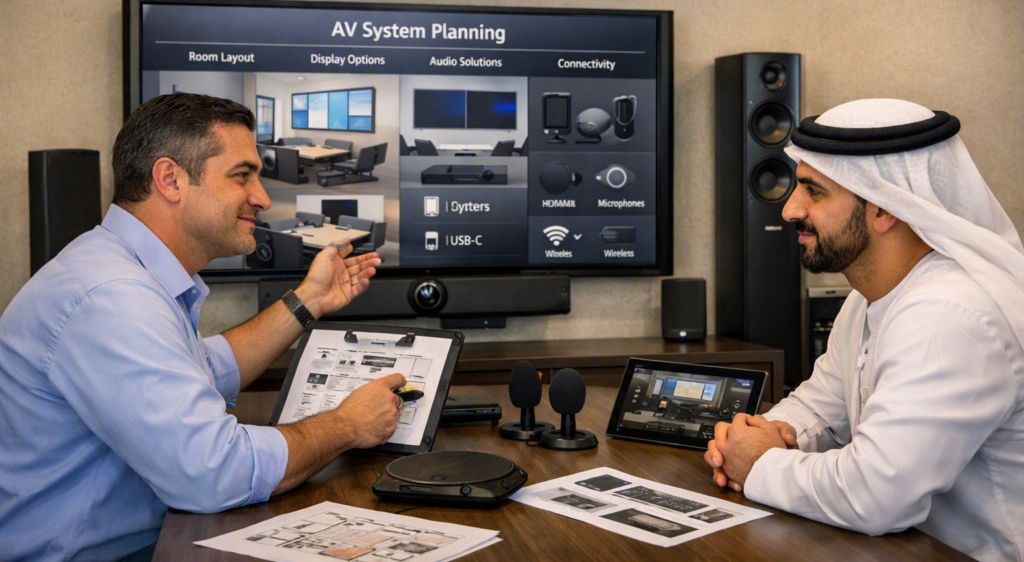
Choosing the right AV equipment is an important part of any audio and video project. av integrators in uae often need to consider the room, purpose, users, and technical needs before recommending equipment. The best choice is not always the most expensive one. Equipment should match the actual requirements of the space and the people who will use it.
Start With the Purpose of the Project
The first step is to understand how the AV system will be used. A meeting room may need video conferencing, clear microphones, speakers, and a display. A classroom may need presentation equipment, speakers, and simple controls. A large event space may require several displays, stronger sound systems, and more advanced control options.
Knowing the main purpose helps avoid buying equipment that is not needed.
Consider the Room Size and Layout
Room size has a direct effect on AV equipment selection. A small meeting room may work well with a single display and compact speakers. A larger room may need multiple displays, microphones, speakers, and signal distribution equipment.
The room layout also matters. Seating position, ceiling height, wall space, windows, and furniture can affect sound and image quality. Equipment should be selected after checking these physical conditions.
Check Display Requirements
The display is one of the most visible parts of an AV system. The choice between a display, projector, or larger screen depends on the room and its use.
Consider factors such as:
- Viewing distance
- Screen size
- Room lighting
- Resolution
- Mounting space
- Content type
For rooms with strong natural or artificial light, brightness can be especially important. The display should be easy to see from the intended seating areas.
Focus on Clear Audio
Good audio is essential for meetings, presentations, classrooms, and events. Poor sound can make it difficult for people to understand speech, even when the video looks clear.
Consider the number of people in the room, room shape, background noise, and the distance between speakers and listeners. Microphone selection also depends on how people will speak. Table microphones, ceiling microphones, wireless microphones, and other options may suit different situations.
Acoustic conditions should also be considered before selecting speakers and microphones.
Check Equipment Compatibility
AV equipment needs to work together properly. Before purchasing any device, check its connections, supported formats, network requirements, and control options.
For example, a display should support the required video sources. A microphone system should work with the audio system. Control equipment should be able to communicate with the devices it needs to operate.
Checking compatibility early can help prevent technical problems during installation.
Think About Ease of Use
A technically advanced AV system can become difficult to manage if the controls are too complicated. Users should be able to perform common tasks without needing detailed technical knowledge.
Simple controls can be useful for actions such as:
- Starting a presentation
- Adjusting volume
- Selecting a video source
- Joining a video meeting
- Turning equipment on or off
The control method should match the users and the type of space.
Consider Connectivity and Networking
Many modern AV systems depend on wired or wireless network connections. Network requirements should be reviewed before equipment is selected.
Check whether devices need internet access, local network access, PoE, wireless connectivity, or dedicated network ports. It is also useful to consider where network equipment and cables will be placed.
Proper planning can make installation and future maintenance easier.
Plan for Future Changes
An AV system may need to support new devices or changing requirements later. Selecting equipment with some flexibility can make future upgrades easier.
For example, a room may start with one presentation source but later require additional laptops, cameras, or collaboration systems. Allowing space for extra connections and equipment can reduce the need for major changes later.
Consider Maintenance and Replacement
AV equipment needs regular checking and occasional replacement. Before selecting equipment, consider how easy it will be to access, maintain, update, and replace.
Devices installed in difficult-to-reach locations can take more time to service. It is also useful to check warranty terms, replacement availability, software support, and the expected working life of important equipment.
Balance Features With the Actual Need
More features do not always mean a better AV system. Extra functions can increase cost and make operation more complicated.
The better approach is to identify the essential requirements first and then select equipment that meets those needs. This creates a system that is practical, reliable, and easier for users to operate. Careful planning with av integrators in uae can also help ensure that equipment choices match the room, technical requirements, and expected use.