Beverage Formulation
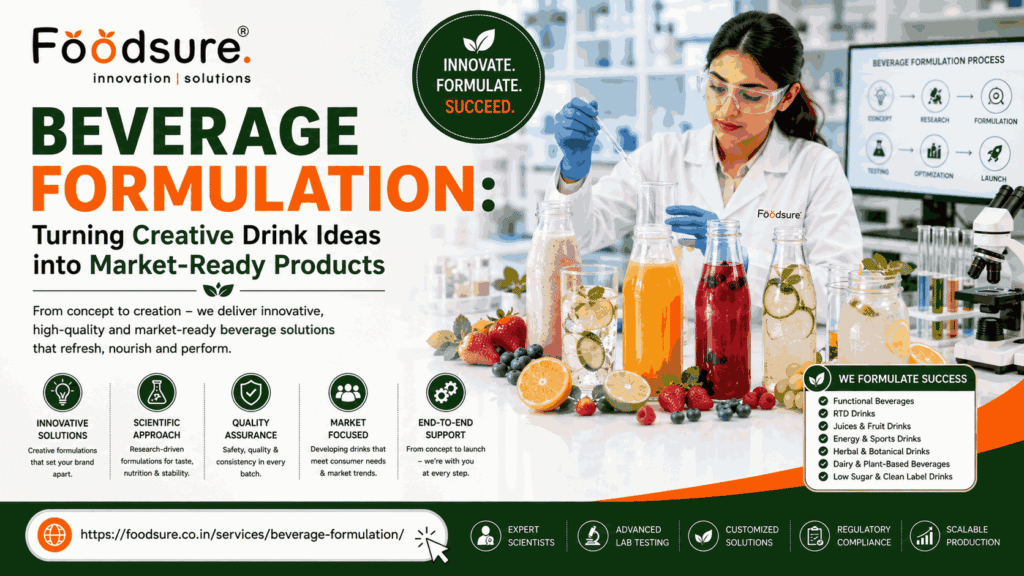
The beverage industry is rapidly advancing, with consumers demanding drinks that are tasty, convenient, nutritious, and provide health benefits. From fruit drinks and energy beverages to wellness beverages and ready-to-drink beverages, there are numerous possibilities for developing new drinks. But a brilliant concept requires a strong technical base for its commercial success. The formulation of the beverage includes understanding of ingredients, food science, sensory development, stability, and manufacture of the idea into a product. foodsure assists startups, entrepreneurs, and beverage companies in this process of development of their products.
Why Beverage Development Needs a Scientific Approach
A formulation of a beverage is not a simple choice of ingredients and their combination. Ingredients can have impact on the flavor of the drink, its color, texture, stability, nutrition, and shelf-life. Processing and packaging can have impact on performance of the product.
Professional beverage formulation will help to study these relationships and solve any problems before commercial production. Developed beverage should have all its features maintained from production to retailing of the product.
It will also save the time and efforts for trial production and increase production efficiency.
From Beverage Concept to Commercial Product
A successful beverage generally passes through several development stages before reaching consumers.
1. Market and Consumer Research
The first step is to know your consumer. The consumer’s taste preference, competitor’s product, price, trends, and market gaps provide information that helps you define the product opportunity.
For instance, in case of an athletic product, the opportunity could be in areas such as protein, electrolytes or functional ingredients, whereas in case of lifestyle beverage, it could be natural flavor and taste.
2. Product Concept Development
Once the opportunity is identified, product concept is developed. The following elements would be part of the concept development: intended consumer, flavor profile, nutritional positioning, package form, serving size, and market positioning.
3. Ingredient Selection
Ingredients should be selected based on functionality, quality, compatibility, availability, and cost. Developers may work with fruit extracts, natural flavors, sweeteners, vitamins, minerals, proteins, botanicals, or other functional components.
4. Prototype Creation
Several prototypes may be developed to find the right combination of ingredients. Taste, aroma, color, mouthfeel, and overall drinking experience are evaluated during this stage.
5. Testing and Optimization
The preferred prototype is refined through sensory evaluation, stability testing, and shelf-life assessment. These checks help determine whether the product can maintain its desired quality during storage.
6. Commercial Scale-Up
A beverage that works well in lab might need some changes if it is manufactured on a commercial scale due to reasons such as processing parameters, manufacturing equipment, etc.
Proper management of the beverage formulation process makes it easier to go through the stages discussed above.
The Importance of Drink Formulation
Today’s drinks usually consist of multiple ingredients, which need to interact properly without interfering with the end result. That is when professional drink formulation comes in handy.
A carefully developed drink formulation may consider:
- Flavor balance
- Sweetness and acidity
- Ingredient compatibility
- Mouthfeel
- Nutritional requirements
- Processing conditions
- Shelf-life stability
- Packaging compatibility
For instance, reducing sugar may change the beverage’s sweetness, body, and mouthfeel. Similarly, adding functional ingredients can sometimes introduce bitterness or an unusual aftertaste. Technical development helps address these challenges while maintaining the desired consumer experience.
Exploring New Ideas Through Beverage Research and Development
Innovations should not be neglected in a competitive beverages industry. Beverages research and development enable brands to experiment with new ingredients, flavors, technologies, and categories.
Research may focus on:
- Functional beverages
- Reduced-sugar drinks
- Plant-based beverages
- Protein drinks
- Botanical products
- Vitamin-fortified beverages
- Electrolyte drinks
- Natural ingredient systems
- Wellness beverages
- Sustainable product concepts
Through beverage research and development, businesses can also improve existing products by addressing stability, flavor, texture, ingredient compatibility, or manufacturing concerns.
Continuous research gives brands the flexibility to respond to changing consumer expectations rather than relying on the same product approach year after year.
How Foodsure Supports Beverage Brands
The Foodsure company provides beverages consulting and product development services for startups, entrepreneurs, manufacturers, and established brands. Its concept is based on the combination of food science and commercial knowledge to assist businesses in developing scientifically correct and commercially focused products.
Foodsure can support projects with:
- Customized beverage formulation
- Product concept development
- Ingredient selection
- Ingredient optimization
- Drink formulation
- Prototype preparation
- Sensory evaluation
- Shelf-life studies
- Stability assessment
- Manufacturing guidance
- Packaging recommendations
- Regulatory support
This end-to-end approach helps businesses move efficiently from an initial idea toward commercial production.
Beverage Categories for Product Innovation
Technical development can be applied to a wide range of beverage categories, including:
- Fruit beverages
- Energy drinks
- Sports drinks
- Functional beverages
- Protein beverages
- Plant-based drinks
- Herbal beverages
- Carbonated drinks
- Sparkling beverages
- Ready-to-drink tea
- Ready-to-drink coffee
- Nutritional beverages
Each category has different formulation, processing, packaging, and storage requirements. Customized development is therefore important for achieving consistent results.
Trends Shaping the Beverage Industry
The changes in consumers’ preferences are opening up new prospects for beverage brands. Today, reduced sugar content, natural ingredients, functional botanicals, plant-based nutrition, protein drinks, products for gut health, vitamin fortified drinks, sustainable packaging, and many others are gaining popularity.
However, innovation should not come at the expense of taste. Consumers still expect beverages to be enjoyable, refreshing, and convenient. The challenge for brands is to find the right balance between functionality, nutrition, sensory appeal, and commercial feasibility.
Conclusion
Developing a quality drink involves thorough planning, scientific knowledge, and an understanding of the commercial production process. Professional beverage formulation ensures the integration of all these factors through the attention to ingredient interactions, taste, stability, shelf life, and production performance. In conjunction with professional drink formulation and beverage research and development, it can assist businesses in converting their ideas into reliable products. With comprehensive technical support, foodsure assists beverage brands in developing innovative products.
Frequently Asked Questions
1. What is beverage formulation?
beverage formulation is the process of selecting, combining, and optimizing ingredients to achieve the desired taste, appearance, nutritional characteristics, stability, shelf life, and manufacturing performance of a beverage.
2. Why is drink formulation important?
Professional drink formulation helps ensure that different ingredients work effectively together while maintaining balanced flavor, mouthfeel, stability, and overall product quality.
3. How does Foodsure support beverage research and development?
foodsure supports beverage research and development through concept development, ingredient selection, prototype preparation, sensory evaluation, stability testing, shelf-life studies, manufacturing guidance, and regulatory support.