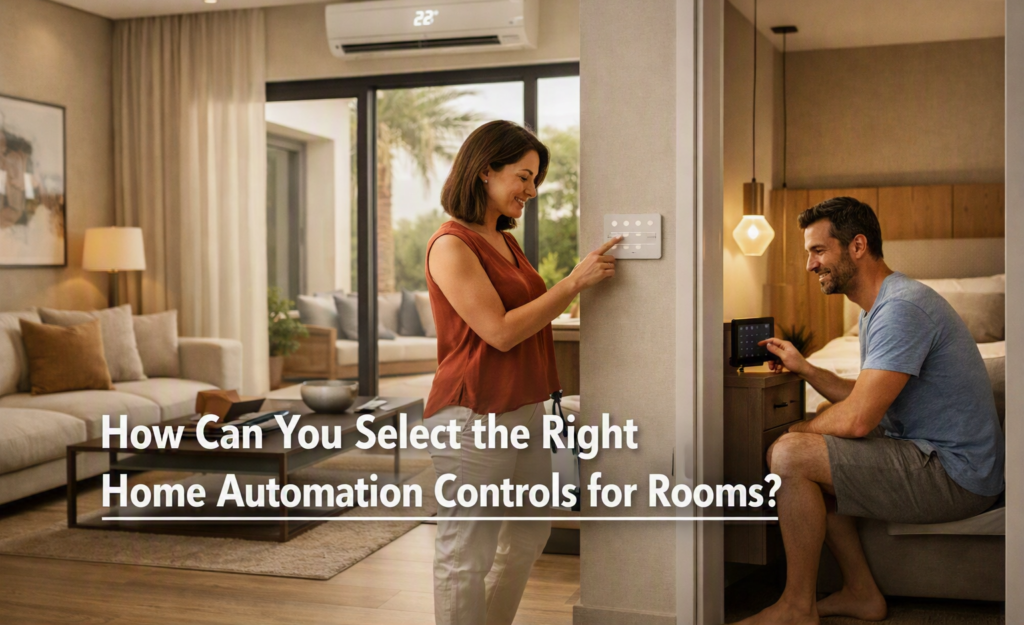
Choosing the right controls is an important part of planning a smart home. Smart home Dubai solutions can include lighting, curtains, air conditioning, security, entertainment, and other systems. However, every room has different needs. A control that works well in a living room may not be the best choice for a bedroom or kitchen. The right approach is to first understand how each room is used and then select controls that are simple, useful, and easy to operate.
Start With the Purpose of Each Room
Before selecting any control, think about what happens in the room every day. A living room may need lighting, curtains, temperature, and entertainment controls. A bedroom may need lights, curtains, and air conditioning. A kitchen may need lighting and ventilation controls.
This simple review helps prevent unnecessary controls. The goal is to make daily tasks easier without making the system difficult to understand.
Controls for the Living Room
The living room is often used for several activities, such as watching television, reading, relaxing, or spending time with family. Lighting control can be useful because different activities may need different light levels.
A wall panel, mobile control, or voice control can manage lights and curtains. If the room has a home theatre or television system, entertainment controls can also be included.
It is useful to group common actions together. For example, one setting can turn on selected lights and close the curtains when a movie starts.
Controls for the Bedroom
Bedrooms usually need simple controls that can be reached easily. Lighting is one of the main areas to consider. Users may want bright light while getting ready and softer light before sleeping.
Curtain controls can also be helpful. Air conditioning control can be placed where it is easy to access from the bed. A bedside panel can reduce the need to walk around the room to switch off lights.
The number of controls should remain limited. A bedroom should feel calm rather than filled with switches and panels.
Controls for the Kitchen
Kitchens have different requirements because people are often moving around while cooking or cleaning. Lighting control is especially useful here. Separate controls for work areas, cabinets, and general lighting can make the space more practical.
Voice control may also be useful when someone’s hands are busy. However, physical switches should still be available when needed. Controls should be placed away from areas where water or heat could cause problems.
Controls for Bathrooms
Bathrooms normally require fewer controls. Lighting is the main consideration, while ventilation may also need attention.
Motion-based lighting can be useful in some bathrooms because it can turn lights on when someone enters. Manual control should still be available if preferred.
The location and type of control should suit the room’s moisture level. Electrical equipment must always be installed according to local safety requirements.
Controls for Home Offices
A home office may need lighting, curtains, temperature, and power controls. Good lighting control can help create a comfortable working environment during different parts of the day.
A simple control panel can place frequently used functions in one location. This reduces the need to use several separate switches.
Think About Who Will Use the Controls
A smart control system should be easy for everyone in the home. Children, older family members, guests, and people who are not familiar with technology should be able to understand the basic controls.
Avoid making every function dependent on a mobile phone. Wall switches, panels, remote controls, or voice options can provide additional ways to operate important functions.
Choose Controls That Match Your Routine
The best control is not always the one with the most features. It should match the way the room is actually used.
For example, if curtains are rarely adjusted, a simple control may be enough. If lighting changes often, grouped lighting controls may be more useful. Thinking about daily habits can help create a system that feels natural rather than complicated.
Keep the Control Layout Consistent
Using similar control methods in different rooms can make the home easier to understand. For example, lights could follow a similar switching pattern throughout the house.
Clear labels and simple button layouts can also help. When controls are consistent, family members do not need to learn a completely different system in every room.
The right approach to Smart home Dubai planning is to select controls based on each room’s purpose, daily routine, users, and safety needs. Simple and well-placed controls can make lighting, temperature, curtains, entertainment, and other home functions easier to manage without making everyday living complicated.