There is nothing quite like the feeling of pulling fresh, silky strands out of the box. Whether you prefer crisp straight lace front wigs or soft, natural waves, a high-quality wig can completely transform your confidence. But after weeks of friction against your clothes, heat styling, product build-up, and outdoor humidity, even top-tier human hair lace front wigs can start looking dry, frizzy, and tangled.
If your favourite wig looks more like a tangled nest at the nape of your neck than a smooth, flowing style, do not toss it in the trash just yet.
Restoring matted lace front wigs is entirely possible right in your own bathroom. With the right tools, gentle techniques, and a little bit of patience, you can bring back the softness, body, and shine you fell in love with. In this guide, you will learn step-by-step how to detox, detangle, deep condition, and protect your front lace wigs so they stay looking salon-fresh for months to come.
Why Do Lace Front Wigs Get Frizzy and Matted?
Before jumping into the restoration process, it helps to understand why your wig is tangling in the first place.
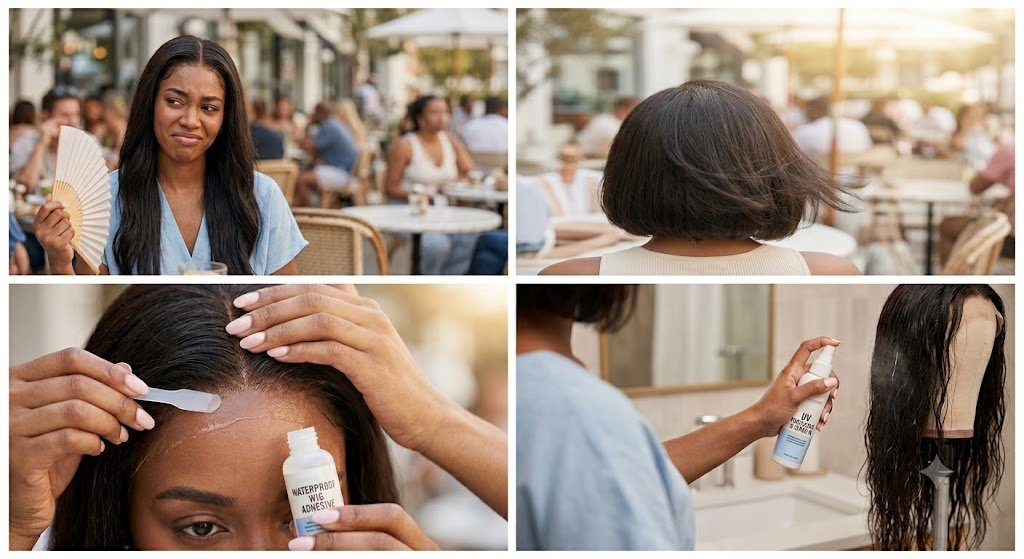
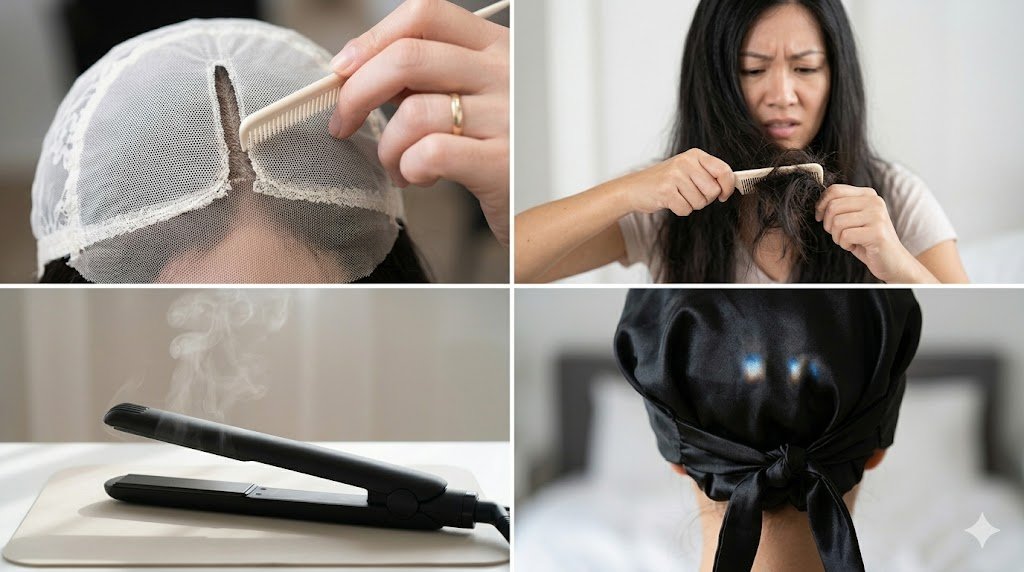
Unlike the hair growing directly from your scalp, lace frontal wigs human hair do not receive natural oils (sebum) from your body to keep the hair shaft moisturised. Every time you wear your wig, environmental factors slowly strip away moisture:
- Friction with Clothing: The hair at the nape of the neck constantly rubs against collars, scarves, jackets, and sweater fabrics, creating tiny micro-knots that quickly snowball into major mats.
- Product Build-Up: Heavy hairsprays, mousse, gels, and silicone-based edge controls leave behind a tacky residue. Over time, this residue acts like glue, attracting dirt and trapping loose hair strands together.
- Overuse of Heat Tools: Flat irons, curling wands, and hot blow dryers without thermal protection drain the hair’s natural moisture, roughing up the cuticle and leading to stubborn frizz.
- Hard Water Mineral Deposits: Washing your wig in hard tap water coats the hair in heavy minerals like calcium and magnesium, leaving the strands feeling stiff, brittle, and straw-like.
What You Need Before You Start
Before you begin the detangling process, gather these essentials to make the process smooth and safe for delicate lace bases:
| Tool / Product | Purpose |
| Wide-Tooth Comb & Loop Brush | Safely glides through knots without snapping fragile hair strands. |
| Sulfate-Free Clarifying Shampoo | Removes heavy product build-up without stripping core moisture. |
| Deep Moisturising Conditioner | Restores softness and slip to dried-out cuticles. |
| Wig Canvas Head & T-Pins | Keeps the wig securely grounded while you comb and style. |
| Heat Protectant & Lightweight Oil | Seals in hydration and guards against future heat damage. |
Step-By-Step Guide: How to Restore Matted Lace Front Wigs at Home
Follow this proven, step-by-step restoration method to revive even the driest, most tangled human hair lace front wigs.
[Step 1: Dry Detangle] ➔ [Step 2: Clarifying Wash] ➔ [Step 3: Deep Condition] ➔ [Step 4: Air Dry & Heat Style]
Step 1: Dry Detangle from Ends to Roots
Never plunge a heavily matted wig straight into hot water. Wetting tangled hair causes the knots to tighten and contract, making them nearly impossible to remove without tearing out whole clumps.
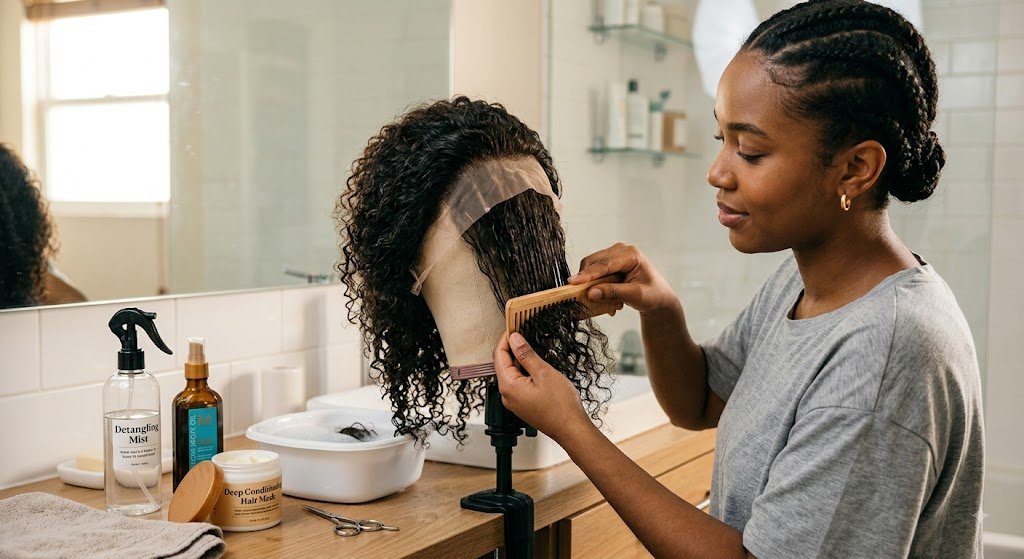
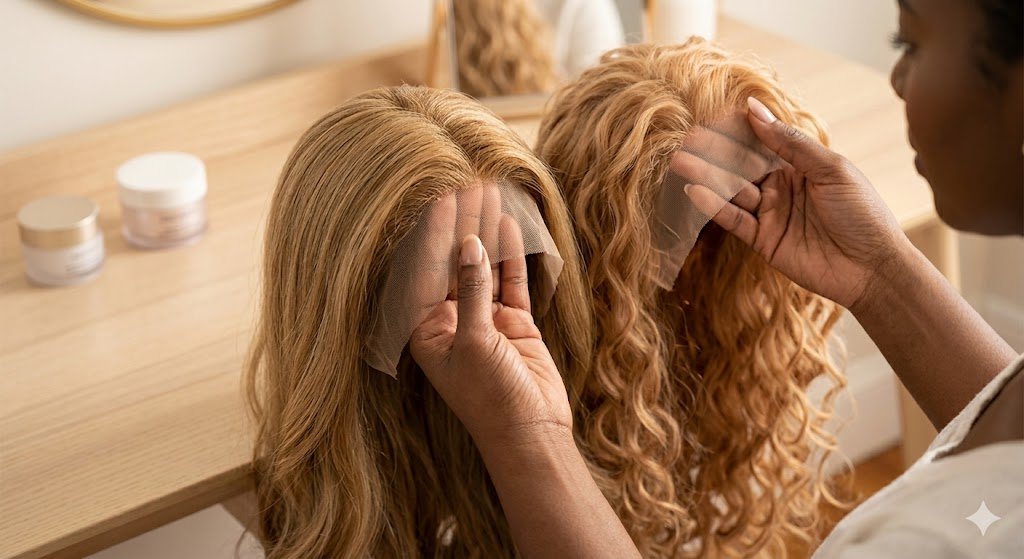
- Mount Your Wig: Secure your wig on a canvas mannequin head using T-pins. Always insert pins through the ear tabs or solid cap areas—never directly through delicate lace.
- Work in Small Sections: Divide the hair into 4 to 6 manageable sections using soft hair clips.
- Start at the Very Tips: Take a wide-tooth comb and gently detangle the bottom 2 to 3 inches. Once those are clear, move slightly higher. Slowly work your way up to the cap base.
- Support the Roots: Hold the hair tightly near the lace base with your free hand while combing below it. This takes tension off the hand-tied knots, preventing shedding and lace tearing.
Pro Tip: For extra stubborn knotting around the nape, spray a mist of water mixed with a few drops of leave-in conditioner or light hair oil directly onto the knot to give the comb immediate slip.
Step 2: The Clarifying Cleansing Bath
Once the main tangles are loosened, it is time to strip away the old buildup that causes frizz.
- Fill a Basin: Fill a clean sink or basin with cool or lukewarm water. Avoid hot water, as high heat loosens the hand-tied knots on lace frontal wigs human hair.
- Mix in Shampoo: Add a tablespoon of sulfate-free shampoo to the water and swirl it around until suds form.
- Submerge and Swish: Submerge the wig into the water. Instead of rubbing or scrubbing the hair together (which creates instant matting), gently swish the wig from side to side for 3 to 5 minutes.
- Rinse Clean: Lift the wig out and let cool water flow through it from the cap down to the ends until the water runs completely clear.
Step 3: Deep Conditioning Treatment
This step puts life back into dry, dull strands.
- Apply Conditioner Generously: Apply a rich, moisturising deep conditioner or hair mask from mid-shaft to ends.
- Keep Away from the Lace: Crucial Rule: Avoid applying thick conditioners, oils, or butter directly to the lace grid. Heavy oils coat the hand-tied knots, causing them to slip loose and shed profusely over time.
- The Plastic Bag Hack: Place the conditioned wig into a clean plastic bag or shower cap and let it sit for 30 to 45 minutes. For deeply damaged straight lace front wigs, you can let the bag sit under a warm towel to help the conditioner penetrate the hair shaft.
- Rinse with Cool Water: Rinse out all conditioner using cool water to seal the hair cuticle, locking in shine and moisture.
Step 4: Air Drying and Smooth Heat Styling
How you dry your wig determines whether it dries smooth or turns right back into a frizzy mess.
- Pat, Don’t Rub: Place the wig on a clean microfiber towel and gently press out excess water. Never twist, wring, or rub the hair vigorously.
- Air Dry First: Place the wig back on a mannequin stand and allow it to air-dry about 80% of the way in an open, well-ventilated space.
- Smooth Out with Low Heat: If you are working with straight wigs, apply a lightweight heat protectant spray once the wig is nearly dry. Use a blow dryer on a cool/low heat setting paired with a paddle brush to smooth down the cuticle. If using a flat iron to finish the look, keep the heat setting under 350°F (175°C).
Pros & Cons of Restoring Wigs at Home
While reviving your wig at home saves money, it helps to weigh the benefits against the effort required.
Pros
- Extends Wig Lifespan: Saves hundreds of dollars by delaying the need to purchase a replacement wig.
- Custom Control: You control the products used, avoiding harsh salon chemicals or excessive heat.
- Maintains Density: Gentle hand-detangling preserves hair density far better than quick, aggressive combing.
Cons
- Time-Consuming: Properly detangling and conditioning a matted wig can take 1 to 2 hours of careful labour.
- Risk of Lace Damage: Applying too much pressure or pulling roughly can tear the lace or pop the hand-tied knots.
Quick Daily Habits to Prevent Future Matting
To avoid having to do heavy restoration work every few weeks, incorporate these simple preventive care habits into your routine:
- Brush Before Storing: Always spend 60 seconds gently brushing through your hair at the end of the day before hanging it up or placing it on a stand.
- Wrap It Up at Night: If you sleep with your wig installed, always wrap the hair in a smooth silk or satin bonnet, or sleep on a satin pillowcase to eliminate overnight friction.
- Avoid Heavy Alcohol Products: Check your hairsprays and mousse labels. Products containing high amounts of short-chain alcohols strip moisture out of human hair rapidly.
- Use Lightweight Serums: Apply a tiny drop of pure argan oil or a light silicone serum to the nape area every few days to keep the hair slick enough to resist friction tangles.
Frequently Asked Questions
Can you fix a synthetic lace front wig using this same process?
The washing process is similar, but synthetic fibers cannot absorb traditional deep conditioners designed for human hair. Instead, use a synthetic-safe leave-in spray or a fabric softener soak. You can also use a low-heat steamer or a flat iron set below 240°F (115°C) on heat-friendly synthetic fibers to smooth out frayed ends.
Why does my wig keep matting specifically at the nape of my neck?
The nape of the neck is the highest-friction zone on any wig. It rubs continuously against your shoulders, clothing tags, and skin, while also absorbing sweat from your neck. Applying a light oil or detangling spray to the lower layers every morning minimises this friction.
Is it safe to boil a human hair wig to restore it?
Boiling is sometimes used for synthetic wigs to reshape melted fibres, but you should never boil human hair lace front wigs. Boiling water strips all natural moisture out of real hair, weakening the strands and destroying the delicate lace base. Stick to warm water washes and deep conditioning masks instead.
What People Ask AI About Wig Care
“How can I tell if my lace front wig is too damaged to save?”
If your wig has extensive bald patches from shed knots, or if the hair strands are snapping off in short, brittle pieces throughout the wig despite deep conditioning, the hair has reached the end of its structural lifespan. However, if the hair is simply dry, frizzy, or matted without widespread breakage, a deep conditioning treatment will almost always bring it back to life.
“Does fabric softener actually work on human hair lace front wigs?”
Fabric softener is designed for synthetic fabrics and fibers, not natural human hair. While some people use it on synthetic wigs with success, using fabric softener on human hair lace front wigs can leave a heavy chemical film that seals out moisture, causing long-term damage. Always use human-hair conditioners and hydration masks for real human hair wigs.

Conclusion
There is no need of using costly beauty salon or any special skills to fix a frizzy or tangled wig. Using a dry-detangling method and sulfate-free cleansing products can help restore the wig back to its original softness and flexibility by avoiding wearing heavy conditioner at the base and reducing friction. However, to ensure the wigs remain beautiful for a long time, you need to apply some general care techniques.