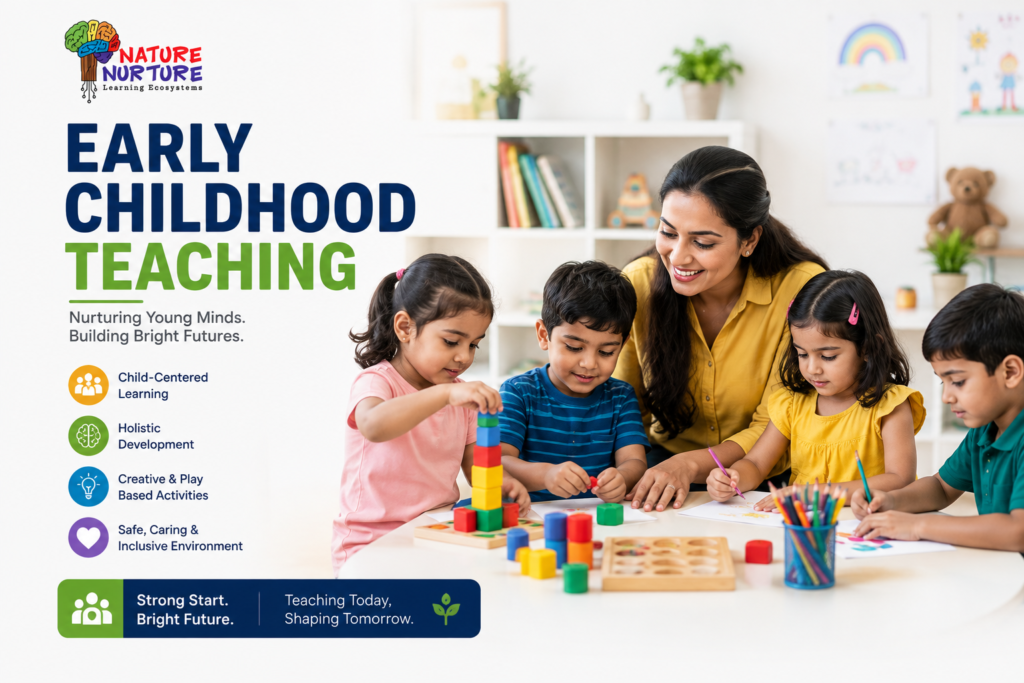
Early Childhood Teaching gives young children a strong start by helping them learn through play, conversation, creativity, and everyday experiences. The early years are an important time because children are naturally curious and eager to understand the world around them. They learn by watching, touching, asking questions, and trying things for themselves.
A good learning environment does not need to be complicated. Simple activities such as storytelling, drawing, building blocks, music, puzzles, and outdoor play can help children develop useful skills. Teachers can guide children while allowing them enough freedom to explore and make discoveries Early Childhood Teaching gives young children..
Why Early Childhood Teaching Is Important
A good learning environment does not need to be complicated. Early Childhood Teaching can use simple activities such as storytelling, drawing, building blocks, music, puzzles, and outdoor play to help children develop useful skills. Teachers can guide children while allowing them enough freedom to explore and make discoveries. When these activities are planned according to children’s interests, learning becomes more enjoyable and meaningful.
Encourage Learning Through Play
Play is one of the easiest ways for children to learn. During play, children can practice communication, decision-making, counting, sharing, and problem-solving.
For example, building a tower with blocks can teach children about shapes, balance, and planning. Pretend play can help them understand different roles and improve their speaking skills.
Teachers can plan simple games that connect play with learning goals. When children enjoy an activity, they are more likely to stay interested and remember what they have learned.
Build Strong Communication Skills
Children need regular opportunities to talk and listen. Storytelling, songs, picture books, group discussions, and simple classroom conversations can improve language development.
Teachers can ask open questions such as, “What do you see?” or “What do you think will happen next?” These questions encourage children to think and explain their ideas.
Reading stories aloud is also useful. Children hear new words, understand sentence patterns, and learn how to listen carefully. These small daily activities can make communication easier as children grow.
Support Social and Emotional Development
Learning is not limited to books and classroom activities. Children also need to understand feelings and learn how to interact with others.
Teachers can help children practice sharing, waiting for their turn, working together, and solving small disagreements. Group activities can teach children that everyone has different ideas and feelings This is an important part of Early Childhood Teaching…
A caring teacher can also help children feel safe when they make mistakes. This builds confidence and teaches them that mistakes are a normal part of learning.
Make Learning Hands-On
Children often understand concepts better when they can see and touch things. Hands-on activities allow them to become active participants instead of simply listening to a teacher.
Teachers can use everyday materials for simple experiments and activities. Children can sort leaves, count classroom objects, mix colors, plant seeds, build shapes, or create artwork.
These activities connect classroom lessons with real life. They also encourage curiosity and help children understand that learning can happen everywhere.
5. Develop Creativity and Imagination
Creative activities give children a chance to express their thoughts. Drawing, painting, music, dance, craft work, and pretend play can encourage imagination.
Teachers do not always need to tell children exactly what to create. Giving them choices can help them become more independent.
For example, instead of asking every child to draw the same picture, a teacher can provide paper, colors, and a simple topic. Each child can then create something different.
This is an important part of Early Childhood Teaching because creativity can support confidence, communication, and problem-solving.
Create a Positive Classroom Environment
A classroom should feel safe, friendly, and comfortable. Children learn better when they know that their ideas are respected.
Teachers can create simple classroom routines so children understand what happens during the day. Visual schedules, clean learning spaces, accessible materials, and clear instructions can make children feel more comfortable.
Positive encouragement is also important. Praising effort rather than only correct answers can motivate children to keep trying.
The principles of early-childhood-education also focus on creating learning experiences that support the child’s overall development rather than focusing only on academic performance.
Connect Learning With Everyday Life
Children learn many valuable lessons outside the classroom. Teachers can connect school activities with things children already see at home and in their surroundings.
Counting fruits, identifying colors, talking about weather, observing plants, or discussing community helpers can turn ordinary moments into learning opportunities.
Parents can also support these activities at home by reading with children, talking about their day, encouraging questions, and allowing them to help with simple tasks.
Nature Nurture focuses on meaningful learning experiences that encourage children to explore, communicate, and develop important skills through age-appropriate activities.
Building Skills for the Future
The purpose of early learning is not to rush children into advanced academic work. Effective Early Childhood Teaching helps them develop a strong foundation for future learning. Children who are encouraged to ask questions can become curious learners. Children who are allowed to try different activities can become more confident. Children who learn to work with others can develop stronger social skills.
Helping Every Child Learn With Confidence
Good Early Childhood Teaching combines care, play, communication, creativity, and hands-on learning. When children feel supported, they can explore new ideas without fear of making mistakes.
The goal is to create an environment where children enjoy learning and feel proud of their progress. With the right guidance, simple classroom activities can help build skills that remain useful throughout school and everyday life Good Early Childhood Teaching combines…
Nature Nurture believes that a strong beginning can help children become confident, creative, and curious learners. By giving young children meaningful experiences today, educators can help prepare them for the opportunities of tomorrow Strong Early Childhood Teaching can help .