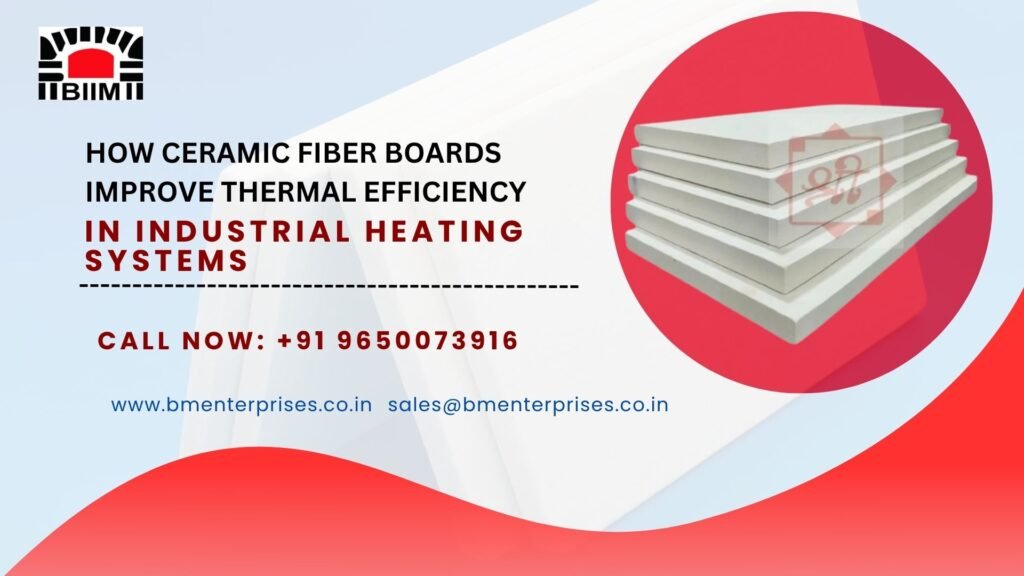
In industries, heating appliances, like furnaces, kilns, ovens, boilers, heat treating furnaces, work at extremely high temperatures. It is important to have good insulation material to minimize the loss of heat, control temperature, and enhance energy efficiency. Ceramic Fiber Board is extensively used as high-temperature insulation since it is lightweight and resistant to extreme heat.
BM Enterprises is one of the firms offering insulation products for industries. The ceramic fiber insulation offered by the firm can be used in various heating appliances.
A furnace may use dense refractory bricks as the hot-face layer and ceramic fiber boards as an insulation or backup layer.
This combination can provide both high-temperature protection and thermal insulation.
What Are Ceramic Fiber Boards?
Ceramic Fiber Boards constitute an example of rigid insulating boards formed by using high-temperature ceramic fibers. High-temperature insulation boards do not constitute fiber insulation, but they form self-supporting boards that make it possible to use them when a rigid insulating board is needed. The boards can be trimmed and fashioned as per the design of the furnace or heating equipment. The thermal conductivity of these boards is comparatively low and serves to hinder heat transfer.Key Features of Ceramic Fiber Boards
- Heat-resistant
- Low thermal conductivity
- Light thermal mass
- Lightweight
- Thermal shock resistant
- Can be easily machined or cut
- Dimensionally stable
- Used in industrial furnaces and kilns
- Available in various thicknesses and densities
- Suitable as back-up insulation and selective hot face insulation
Why Is Thermal Efficiency Important?
Energy is one thing that industrial heating machinery uses extensively. Poor insulation results in heat leakage from walls, roofs, doors, and other areas. This implies that more energy is required to achieve the desired heating temperatures. Proper insulation helps:- Some advantages of proper insulation are:
- Decreased loss of heat
- Maintenance of consistent temperatures
- Saving of energy
- Increased performance of the furnace
- Lessening of heat near equipment
- Quick heating or cooling cycles
How Ceramic Fiber Boards Reduce Heat Loss
The primary use of a ceramic board is to retard the transfer of heat. There exists a highly heated interior section of the furnace, with a relatively cooler exterior environment. Due to a lack of adequate insulation, the heat tends to move from the hotter environment to the cooler one. Insulation boards made from ceramic fibers help create a barrier for the transfer of heat. This is because of the structure, which is both porous and fibrous. Heat will stay in the furnace due to the insulator boards.Main Thermal Benefits
- Principal Advantages in Terms of Heat Transfer
- Decreased heat conductivity
- Enhanced heat insulation
- Decreased heat radiation from the outer surfaces of the furnace walls
- Stabilization of furnace temperatures
- Optimized use of energy
- Heat losses decrease
Low Thermal Mass for Faster Heating
An important benefit of the ceramic board is its low thermal mass. A denser material will hold onto more heat since it contains higher thermal mass. The ceramic fiber material is lighter weight and thus takes less energy to heat up. This would be helpful for devices that undergo many heating and cooling processes. For instance, industries that involve multiple heating cycles can benefit from insulation that consumes minimum energy to just heat the insulation material itself.Low Thermal Mass Can Help With:
- Rapid heating cycles
- Rapid cooling cycles
- Less heat retention
- More rapid temperature response
- Increased efficiency
Better Temperature Control
The regulation of temperatures is very crucial in the industrial manufacturing process. Many operations like metal heat treating, ceramics fabrication, glass handling, forging, and kiln heating have to be carried out in well-regulated temperatures. If there is too much heat escaping through the furnace walls, the heating system will need to exert more energy for the maintenance of the desired temperature. The use of ceramic boards that suit the temperature range will go a long way in solving this problem. Besides the insulation of the furnace, other things like the performance of the burners and heating elements, door integrity, among others, should not be overlooked.Ceramic Fiber Boards vs. Dense Refractory Materials
Ceramic fiber boards and dense refractory materials serve different purposes. In many industrial furnaces, they are used together rather than as direct alternatives.| Feature | Ceramic Fiber Boards | Dense Refractory Bricks |
| Weight | Lightweight | Heavy |
| Thermal mass | Low | High |
| Heat storage | Low | Higher |
| Insulation | Excellent | Moderate to good |
| Mechanical strength | Moderate | High |
| Thermal response | Fast | Slower |
| Typical use | Insulation/backup lining | Hot-face protection |
| Installation | Easy to cut and fit | Requires masonry or refractory installation |
Important Technical Specifications
Selecting the right High-temperature insulation board involves more than evaluating the temperature rating of the product. Industrial buyers should consider the following specifications:1. Maximum Service Temperature
The board must be appropriate for the intended operational temperature of the furnace. Classification or maximum temperature of any product does not necessarily mean its recommended continuous operating temperature.2. Thermal Conductivity
The lower the value of the thermal conductivity of any board, the better heat resistance it will have. The thermal conductivity of the product must be evaluated at an appropriate temperature.3. Density
Effects of the density of boards are as follows:- -Strength
- -Thermal performance
- -Weight
- -Hot face temperature
- -Ease of handling
4. Thickness
The thickness of the board has a direct impact on insulation performance. It depends on the following factors:- Furnace temperature
- Cold-face temperature
- Installation space available
- The degree of heat loss needed
- Lining system design
5. Dimensional Stability
The board must keep its form within the desired service application. This is especially true in furnace walls, roofs, and other locations subjected to temperature cycles.Common Applications of Ceramic Fiber Boards
High-temperature insulation boards are used in many high-temperature industrial applications. Common applications include:- Industrial furnaces
- Heat-treatment furnaces
- Ceramic kilns
- Industrial ovens
- Boiler insulation
- Burner surrounds
- Furnace doors
- Furnace roofs
- Furnace walls
- Kiln insulation
- Backup insulation
- Heating equipment
- High-temperature process equipment
Benefits of Ceramic Fiber Insulation Boards
Here is a list of the main reasons for the usage of ceramic insulation boards in various industries:Lightweight
Refractory insulation materials are much lighter than many traditional dense refractory materials. This can make handling and installation easier.Excellent Thermal Insulation
Their low thermal conductivity helps reduce heat transfer and improve heat retention.Low Heat Storage
Having low thermal mass makes them able to react faster to changing temperatures.Easy Fabrication
Generally, they can easily be trimmed and shaped to cover all furnace openings and additional units.Thermal Shock Resistance
The right type of this insulation will resist multiple heating/cooling cycles well.Space Efficiency
By choosing appropriate insulation boards, one will manage to have good heat insulation without making the furnace heavy.How to Select the Right Ceramic Fiber Board
Not every refractory insulation material is suitable for every application. Before purchasing, provide the supplier with basic information about your heating system.Check These Requirements:
- Operating temperature
- Maximum temperature
- Required board thickness
- Required density
- Furnace or kiln type
- Application location
- Direct or backup insulation
- Thermal cycling conditions
- Mechanical exposure
- Furnace atmosphere
- Required dimensions
- Quantity required
Why Choose a Reliable Ceramic Board Manufacturer?
Choosing a trustworthy Ceramic Fiber Board manufacturer/supplier is an essential step for industrial usage. Poor quality of insulation materials will negatively impact the efficiency and longevity of the furnace. Industrial customers should opt for suppliers capable of providing the right technical data about the product. A trustworthy supplier will be able to answer the following questions:- Product specifications
- Temperature rating
- Density
- Thickness
- Dimensions
- Application suitability
- Packaging
- Installation requirements
- Availability
- Delivery requirements
Ceramic Boards in Delhi NCR
High-temperature insulation material sources are needed for industries located in Faridabad, Delhi, Ghaziabad, Noida, Gurgaon, and other cities in the NCR region. Ceramic fiber boards in Delhi NCR find applications in several heating applications of industries like furnaces, ovens, kilns, and heat-treating equipment. Some of the occasions when availability of products locally would be advantageous are:- Furnace maintenance
- Emergencies
- Furnace modification
- Installation of new furnace equipment
- Replacement of refractories
- Insulation replacement
Installation of Ceramic Boards
Installation should be done properly to ensure adequate insulation performance. A very good board can still not function well if installation gaps, faulty joints, excess compaction, or inappropriate fixing occur.Good Installation Practices
- Proper measurement of the required areas should be undertaken.
- Careful cutting of the boards should be undertaken.
- Avoid unnecessary gaps when installing the boards.
- Adhere to the manufacturer’s installation procedures.
- Proper fixing techniques should be used.
- Thermal expansion considerations should be considered.
- Ensure that boards are not subjected to any mechanical abuse.
- Examine joints and connections after installation.
Ceramic Fiber Insulation Boards and Energy Savings
Energy efficiency becomes an essential matter for industrial manufacturing. Decreased heat losses will ensure that the heating units become energy-efficient. Ceramic fiber board materials will aid in energy efficiency by providing decreased heat transfer from the insulation. The main elements that influence the efficiency of energy utilization by the furnace are:- Insulation quality
- Furnace design
- Heating source
- Burner efficiency
- Door sealing
- Operating temperature
- Furnace cycle
- Air leakage
- Maintenance condition
Ceramic Fiber Boards vs. Ceramic Fiber Blankets
Though boards and blankets both provide insulation in high temperatures, they possess different physical characteristics. The physical characteristics of ceramic fiber boards include rigidity, while those of ceramic fiber blankets are flexibility.Ceramic Fiber Boards
Best suited for:- Flat surfaces
- Furnace walls
- Furnace roofs
- Rigid panels
- Burner areas
- Backup insulation
Ceramic Fiber Blankets
Best suited for:- Curved surfaces
- Irregular shapes
- Expansion areas
- Wrapping applications
- Flexible insulation requirements
Why Choose BM Enterprises?
BM Enterprises supplies refractory and high-temperature insulation products. The company offers different products that are used in furnaces, kilns, heating systems, and other equipment working at high temperatures. If your requirement is ceramic fiber insulation boards, BM Enterprises can help you select the right product as per your requirements. BM Enterprises can meet your needs with respect to:- Ceramic insulation boards
- High-temperature ceramic fiber boards
- Ceramic fiber blankets
- Refractory bricks
- Refractory castables
- Refractory mortars
- Calcium silicate products
- And other industrial insulating materials.