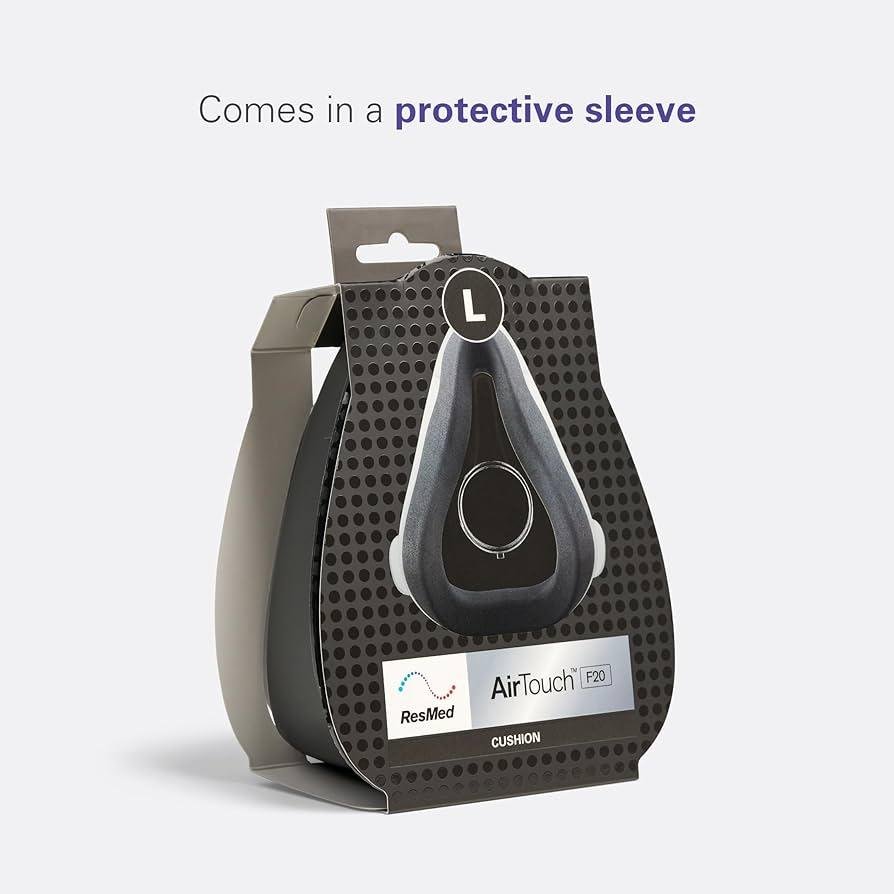
Both the ResMed AirTouch F20 cushion and the standard AirFit F20 silicone cushion fit the exact same mask frame and headgear — so the real question isn’t which mask to buy, but which cushion suits you better. Here’s a full comparison to help you decide.
The Core Difference
| Feature | AirFit F20 Cushion (Silicone) | AirTouch F20 Cushion (Memory Foam) |
|---|---|---|
| Material | InfinitySeal silicone | UltraSoft memory foam with cloth lining |
| Feel | Firm, consistent seal | Soft, moulds to facial contours |
| Cleaning | Washable daily with mild soap and water | Wipe only — cannot be washed |
| Lifespan | 1–3 months | 2–4 weeks |
| Best for | Durability, easy maintenance | Sensitive skin, pressure-mark sufferers |
| Frame compatibility | Fits standard F20 frame and headgear | Fits the same F20 frame and headgear |
Comfort Comparison
The memory foam CPAP cushion used in the AirTouch F20 gently warms with body heat and gradually moulds to the unique contours of your face — the bridge of your nose, cheeks, and mouth corners. This creates a more personalized fit than silicone typically achieves right out of the box, making it a strong option as a CPAP cushion for sensitive skin.
The AirFit F20’s silicone cushion, by contrast, relies on engineered flexion to maintain its seal. It’s firmer to the touch, but for many users this consistency is exactly what makes it reliable night after night without needing to “break in.”
Durability and Maintenance Comparison
This is where silicone clearly outperforms foam. The AirFit F20 cushion can be washed daily and typically lasts 1–3 months before replacement. The AirTouch F20 cushion can only be wiped down — never washed — and needs replacing roughly every 2–4 weeks, meaning more frequent reordering and a higher long-term cost.
Seal Quality Comparison
Both cushions are engineered to maintain a reliable seal, but they achieve it differently. Silicone flexes as a whole unit to adapt to movement, while memory foam moulds more specifically to your unique facial shape. For users with less typical facial contours, the memory foam’s moulding ability can sometimes result in a better seal; for users with average facial contours, both perform comparably well.
Cost Comparison
Because the AirTouch F20 cushion needs replacing two to three times more often than the silicone version, its ongoing cost over a year is typically higher — a factor worth considering alongside the upfront comfort benefits.
Which Should You Choose?
- Choose the AirFit F20 silicone cushion if you want durability, easy daily cleaning, and a lower long-term replacement cost.
- Choose the AirTouch F20 memory foam cushion if comfort is your top priority, especially if you’ve experienced skin irritation or pressure marks with silicone in the past.
Since both cushions fit the same frame and headgear, you can try both without committing to an entirely new mask system — many users keep both on hand and switch depending on their skin’s needs on any given week.
Where to Buy
You can order the ResMed AirTouch F20 memory foam cushion directly here:
👉 Shop the ResMed AirTouch F20 Cushion – CPAPMedTrade
Neither cushion is universally “better” — the right choice comes down to whether you prioritize long-term durability and low maintenance, or maximum comfort for sensitive skin.