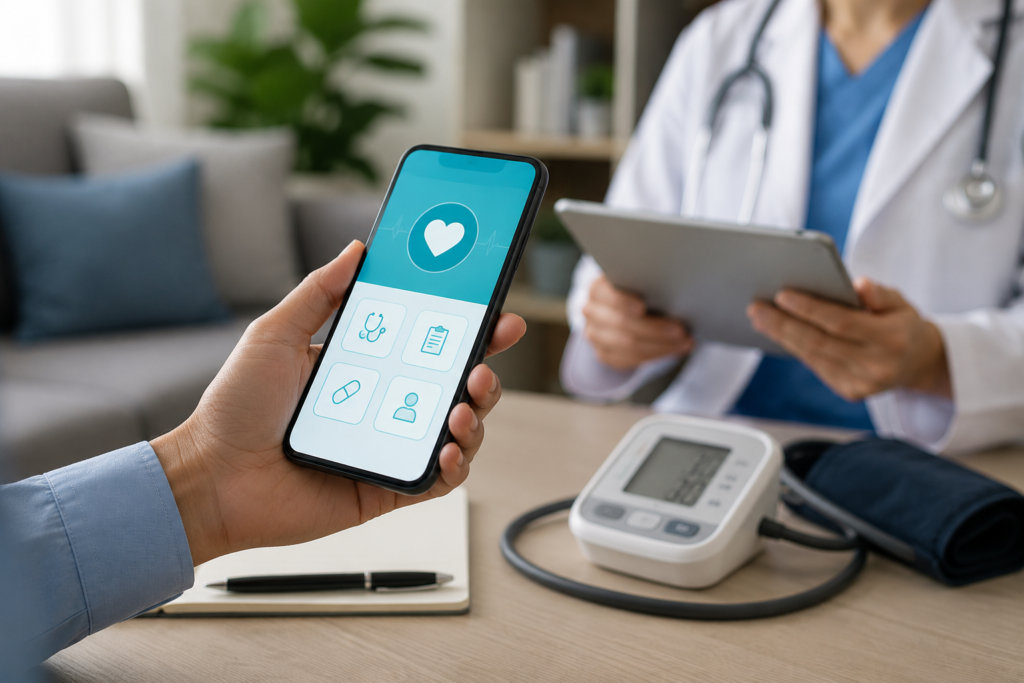
Healthcare has changed more in the last decade than in the previous fifty years combined, and much of that shift traces back to something most of us carry in our pockets.
Mobile apps for healthcare are no longer a novelty tucked away in app stores. They have become a genuine extension of how hospitals, clinics, insurers, and patients interact with one another every single day.
If you have booked a doctor’s appointment through your phone, checked lab results on an app, or had a video consultation instead of sitting in a waiting room, you have already experienced this shift firsthand.
The question for healthcare organizations today is not whether they need a mobile presence, but how to build one that actually delivers value, stays compliant, and earns patient trust.
This blog breaks down what healthcare mobile apps really do, why they matter, the different types shaping the industry, real benefits organizations are seeing, and the challenges worth planning for before you start building.
What Are Mobile Apps for Healthcare?
Mobile apps for healthcare are software applications built specifically to support medical services, patient engagement, clinical workflows, or health monitoring through smartphones and tablets.
They connect patients, doctors, hospitals, and insurers on a single digital platform, replacing paper records, phone-tag scheduling, and disconnected communication with something faster and far more accessible.
At their core, these apps exist to solve a simple problem: healthcare has traditionally been hard to access, slow to respond, and difficult to navigate. A well-designed medical app closes that gap.
It puts appointment booking, prescription refills, symptom tracking, and even virtual consultations directly into a patient’s hands, while giving providers real-time visibility into patient data.
Why Healthcare Mobile App Development Has Become a Priority
A few years ago, digital health tools were considered a nice add-on. That is no longer the case. Patients now expect the same convenience from their healthcare provider that they get from banking or food delivery apps. Hospitals and clinics that fail to offer digital touchpoints risk losing patients to competitors who do.
There is also a practical, operational reason behind this shift. Administrative overload, missed appointments, delayed diagnoses, and fragmented patient records cost healthcare systems significant time and money every year.
A well-built mobile healthcare application directly addresses these pain points by automating routine tasks and centralizing patient information.
For any organization exploring this space, partnering with an experienced mobile app development service can make the difference between an app that patients actually use and one that gets deleted within a week.
Types of Mobile Apps in Healthcare
Not all healthcare apps serve the same purpose. Understanding the different categories helps organizations figure out exactly what they need to build.
Telemedicine and Virtual Consultation Apps
These apps allow patients to consult doctors remotely through video or chat, cutting down travel time and making healthcare accessible to people in remote areas. Telehealth apps saw massive adoption during the pandemic and have remained a permanent fixture in patient care since then.
Remote Patient Monitoring Apps
These apps sync with wearables and connected devices to track vitals like heart rate, blood pressure, glucose levels, and oxygen saturation in real time. Doctors can monitor chronic conditions without requiring patients to visit in person for every check-up.
Appointment Scheduling and Practice Management Apps
These apps simplify booking, rescheduling, and managing appointments while reducing no-shows through automated reminders. They also help clinics manage staff schedules and patient flow more efficiently.
Electronic Health Records (EHR) and Medical Records Apps
These apps give patients and doctors secure, mobile access to medical history, test results, and treatment plans, reducing the friction of paper-based or siloed digital records.
Mental Health and Wellness Apps
From guided meditation to mood tracking and therapy scheduling, mental health apps have grown rapidly, addressing a need that traditional healthcare systems often struggled to meet at scale.
Medication Management Apps
These apps send reminders for prescriptions, track dosage schedules, and sometimes even flag potential drug interactions, helping improve medication adherence among patients managing long-term conditions.
Fitness and Preventive Health Apps
While not always classified as strictly medical, these apps support preventive care by tracking activity, sleep, nutrition, and overall wellness trends that feed into broader health decisions.
Key Benefits of Mobile Apps in Healthcare
Improved Patient Engagement
When patients have easy access to their health data, appointment history, and communication with providers, they naturally become more involved in managing their own care. Higher engagement often translates into better health outcomes and fewer missed follow-ups.
Faster Access to Care
Mobile apps remove geographical and time barriers. A patient in a rural area can consult a specialist without traveling hours, and someone with a minor concern can get guidance without waiting days for an in-person slot.
Reduced Administrative Burden
Automated scheduling, digital intake forms, and integrated billing reduce the manual workload on front-desk staff, freeing up time for tasks that genuinely need human attention.
Better Chronic Disease Management
Remote monitoring apps allow continuous tracking of conditions like diabetes or hypertension, giving doctors early warning signs before a situation becomes an emergency.
Cost Savings for Providers and Patients
Fewer missed appointments, reduced paperwork, and early intervention through monitoring all contribute to lower operational costs for providers and lower out-of-pocket expenses for patients.
Data-Driven Clinical Decisions
With centralized patient data, doctors can make more informed decisions faster, backed by historical trends rather than fragmented, one-time snapshots.
A Real-World Example
Consider a mid-sized cardiology practice that introduced a remote monitoring app connected to wearable ECG devices for patients recovering from cardiac procedures.
Instead of requiring patients to visit the clinic weekly, doctors received continuous heart rhythm data directly through the app.
Abnormal readings triggered instant alerts, allowing the care team to intervene early in several cases before symptoms escalated. Patients reported feeling safer during recovery, and the clinic reduced unnecessary in-person visits significantly.
This is a fairly common pattern across the healthcare industry today, where mobile technology is closing the gap between hospital visits and everyday patient monitoring.
Challenges in Building Mobile Apps for Healthcare
As promising as this space is, healthcare app development comes with hurdles that general-purpose apps simply do not face.
Data Privacy and Regulatory Compliance
Healthcare apps handle extremely sensitive information, which means strict compliance with regulations like HIPAA in the US or GDPR in Europe is non-negotiable. A single lapse in data security can lead to legal consequences and, more importantly, loss of patient trust.
Interoperability with Existing Systems
Hospitals often run on legacy EHR systems that were never designed to talk to modern mobile applications. Building an app that integrates smoothly without disrupting existing workflows requires careful architecture planning.
Ensuring Clinical Accuracy
Any app that provides health-related recommendations, reminders, or monitoring must be built with clinical accuracy in mind. Errors in medication dosage alerts or vital sign thresholds are not something that can be treated as minor bugs.
User Experience for a Diverse Audience
Healthcare apps are used by people across a wide age range, including elderly patients who may not be tech-savvy. Designing an interface that is simple, accessible, and usable across different literacy and comfort levels is essential.
Device and Platform Fragmentation
With patients using different phones, operating systems, and wearable devices, ensuring consistent performance across platforms adds another layer of complexity to development and testing.
What Makes a Healthcare App Successful
A successful mobile healthcare application usually shares a few common traits. It is designed around actual patient and provider workflows rather than assumptions. It prioritizes data security from the first line of code, not as an afterthought.
It is tested rigorously across devices and user groups, including patients who may struggle with technology. And it is built with room to scale, since healthcare needs evolve constantly, from new regulations to emerging treatment protocols.
Organizations that get this right typically work with teams who understand both mobile app development service standards and the specific regulatory, clinical, and operational realities of the healthcare industry. That combination of technical skill and domain understanding is what separates apps that genuinely improve care from apps that simply exist.
The Future of Mobile Apps in Healthcare
Looking ahead, the next wave of healthcare apps will likely lean further into predictive analytics, AI-assisted diagnostics, and deeper integration with wearable technology.
Personalized care plans generated from continuous data streams, rather than periodic check-ups, are becoming increasingly realistic. Voice-enabled interfaces and AI symptom checkers are also gaining traction, particularly for triaging patients before they even reach a doctor.
At the same time, the fundamentals will not change. Trust, security, and genuine usability will remain the deciding factors in whether a healthcare app succeeds or gets abandoned after a single use.
Final Thoughts
Mobile apps for healthcare have moved from a convenient add-on to a core part of how modern medical care is delivered.
They are reshaping patient engagement, easing administrative pressure, and giving doctors better tools to manage patient health proactively.
But building one that actually works requires more than good design. It requires deep attention to compliance, clinical accuracy, and real patient needs.
For healthcare organizations considering their next digital investment, the opportunity is significant, but so is the responsibility that comes with handling patient health data.
Getting the foundation right from day one is what determines whether a healthcare app becomes a trusted daily tool or just another download that gets forgotten.