Nobody warned us about 2021.
Well, that’s not entirely true. The weather forecasts were right there, same as always. Dry spring is coming. Warm summer on the way. But reading about heat on a weather app and then actually standing in your vineyard watching your clusters tighten up and shrink are two completely different experiences. We’d been through tough growing seasons before. Every family that farms Sonoma has. But 2021 had a particular stubbornness to it, like it was testing whether we actually meant what we always say about trusting the land.
Turns out we did mean it.
Louisa walked the rows in August and came back to the house and said something like, “The vines are stressed, but they’re not suffering.” There’s a difference, and if you’ve spent enough years farming, you eventually learn to tell them apart. Suffering means the plant is shutting down, giving up. Stress means it’s concentrating. Redirecting energy. Making fewer grapes but putting everything it has into those grapes.
By harvest, the clusters coming off our Bennett Valley block were small and tight and deeply colored. Patrick held one up and said they looked like they’d been thinking hard all summer. That’s about as accurate a description as we’ve ever heard for a stressed vintage. These grapes had been thinking hard all summer. What they thought about ended up in the bottle.
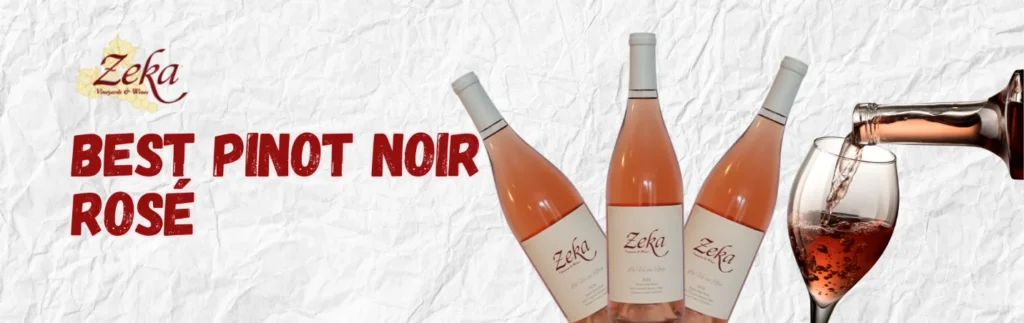
For people who find Zeka Vineyards while searching for the best pinot noir rosé, the story always begins in the vineyard. Whether it’s Pinot Noir or Rosé, everything comes back to the same careful farming, the same respect for the land, and the same belief that great wine is grown long before it’s bottled.
Sitting Down With This Wine
The first time you pour the 2021, do yourself a favor and don’t rush past the nose. A lot of people swirl and sniff for two seconds and move on to drinking, which, fair enough, but this wine rewards a little patience up front.
What comes out of the glass first is black cherry, proper black cherry with some seriousness to it, not candy, not jam, the real thing. Plum comes right behind it. And then there’s something warm underneath all that fruit that takes a moment to identify. Baking spices. Cinnamon and a little clove, the kind of thing that makes you think of a kitchen rather than a vineyard, which somehow makes complete sense once you’ve spent time with this wine.
None of it is loud. That’s probably the best way to put it. The aromas are confident without being showy, which is exactly what we were hoping for when we started farming this block.
On the palate, the dark fruit follows through as it promised on the nose. Black cherry and plum, both of them showing up right away and sticking around. Then about midway through the sip, there’s a little raspberry, almost a surprise, there for a moment, and then gone. It keeps the wine from feeling heavy. The baking spices run all the way through from front to back, quiet and consistent.
We put this in French oak for fourteen months. Some people ask why we bother saying what kind of oak, and the answer is that it matters. French oak with good Pinot Noir is a background conversation, not a takeover. The barrel added some texture and a little structure, and then let the fruit do its job. The tannins are real, but they’re not aggressive. The finish goes on longer than you expect. You put the glass down and find yourself picking it back up about thirty seconds later without really deciding to.
Why This Valley and Not Somewhere Else
Honestly, this is something we talk about a lot within the family, why Bennett Valley specifically, why this piece of ground.
The simple version is that the Pacific air comes in every afternoon and drops the temperature dramatically. We’re talking sometimes fifteen degrees between two in the afternoon and eight in the evening. For Pinot Noir, that daily temperature swing is genuinely important. It’s what keeps the grapes from ripening too fast, from losing their freshness and acidity and becoming the kind of big jammy California Pinot that tastes fine for one glass and then becomes overwhelming.
Bennett Valley Pinot Noir ripens slowly. It builds complexity over weeks rather than days. And because the nights are cool and the acidity stays alive in the grape, what you end up with in the bottle is fruit that’s ripe and generous but never heavy, never flat, never one-dimensional.
The 2021 vintage amplified all of that. The stress from the dry warm season pushed concentration higher. The cool afternoons kept freshness intact. The result is a wine where everything is turned up slightly without anything feeling out of balance, which is a hard thing to pull off and not something we could have planned deliberately. The growing season decided that. We just tried to farm well and stay out of the way.
The Honest Family Version of How This Gets Made
Lorenz spent years in fashion. Louisa did too, and then went back to school and studied enology at UC Davis because if you’re going to do something properly, you should actually understand how it works. Patrick Saboe came on as winemaker because he got what Louisa was trying to build here and had the skills and patience to help build it.
And then there’s harvest, which is when the whole family shows up. Laveille, Lefont, Jeff, everyone. The conversations at the table after a long day of picking go late into the evening and cover everything from what a particular barrel is doing to what direction the whole project is heading to things that have nothing to do with wine whatsoever. Those evenings are honestly some of our favorite times of year.
We started Zeka Vineyards because Lorenz and Louisa wanted to make something lasting. Something that had a sense of place and a sense of family behind it. Not a product, not a brand, an actual piece of Sonoma that we farm carefully and bottle honestly and send out into the world with our name on it.
The 2021 Bennett Valley Pinot Noir is one of the clearest expressions of that intention we’ve ever made. A hard year pushed us and the vines and the fruit toward something more concentrated and more interesting than an easy year might have produced. Sometimes, difficulty clarifies things. This vintage definitely did.
When to Open It, and Be Honest With Yourself
Open it tonight if you want. We mean that genuinely and not in a marketing way. This wine is alive and expressive right now, and drinking it young means you get all that fresh dark fruit and those spices at full volume. Decant it for fifteen or twenty minutes and then pair it with something that can stand up to it. Roast duck. Braised short ribs. A lamb dish. Something with weight and a little char or earthiness that finds a conversation partner in the wine rather than competing with it.
But if you can hold yourself back and put a couple of bottles somewhere cool and dark, do that too. Come back in 2029. The structure is there to support aging, and the concentration from 2021 means the fruit will evolve over the years rather than fade. It will be a different wine then, quieter, more integrated, more complex in ways that are hard to describe until you actually taste it. Both versions are genuinely worth your time. We’d encourage you to experience both if you can manage it.
A Few Honest Numbers
One hundred and seventy-five cases made. Not a typo.
Sixty-five dollars a bottle, which we thought about carefully. Great small-production Sonoma Pinot Noir at this quality level can run well over a hundred dollars without anyone raising an eyebrow. We priced this at sixty-five because we want it on dinner tables, not just in cellars. We want it to be the bottle you open on a Wednesday because the week needed something good, not just the one you save for anniversaries.
When these 175 cases are gone, 2021 is gone. The growing season has already happened. The fruit was picked. The wine was made. There is no making more of it.
If you’d like a bottle or a few, find us at zekavineyards.com or call 707-582-1228. Someone from the family will pick up. We’re that kind of operation, and we’re happy about it.
From our table to yours,
Lorenz, Louisa, Laveille, Lefont, Jeff, and the whole Zeka family