Every plant manager I’ve talked to has a filtration horror story, usually something about a housing that rusted out or cracked under pressure at the worst possible time. That’s exactly why stainless steel bag filter housing keeps showing up as the default choice across so many industries. It’s not the cheapest option on paper, but it solves enough problems upfront that most people stop shopping around once they’ve used it. Ten reasons why, honestly, and none of them are complicated.
Corrosion Resistance That Actually Holds Up
Stainless steel doesn’t rust the way carbon steel or coated alternatives do, which matters a lot in facilities dealing with moisture, chemicals, or aggressive fluids passing through the system daily. A bag filter housing built from stainless resists pitting and degradation over years of continuous use, not just months. Cheaper housings might save money initially, but corrosion eventually compromises seals and structural integrity, and then you’re replacing the whole unit anyway, which kind of defeats the purpose of saving cash upfront.
Higher Temperature and Pressure Tolerance
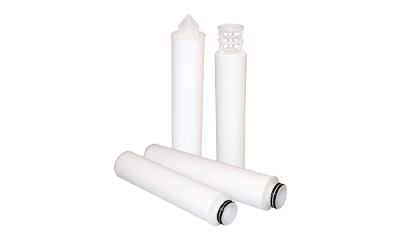
Industrial processes don’t always run at comfortable, room-temperature conditions, and stainless steel housings handle that reality better than most alternatives. Elevated temperatures and pressure swings that would warp plastic or weaker metal housings barely faze stainless construction. This matters especially in facilities running hot process fluids or systems paired with teflon cartridge filter media designed for high-temperature chemical resistance. Housing and filter media working together under demanding conditions is exactly the combination most engineers are after.
Easier Maintenance and Faster Bag Changeouts
Nobody enjoys filter maintenance, but stainless steel bag filter housing designs tend to make the process quicker and less messy than older housing styles. Quick-opening lids, smooth internal surfaces, and consistent seal design all reduce the time technicians spend elbow-deep in a dirty housing during changeouts. Less downtime per maintenance cycle adds up fast across a facility running multiple filtration points, and honestly, maintenance staff notice this difference immediately once they’ve worked with a well-designed housing.
Hygienic Performance for Sensitive Applications
Food processing, pharmaceuticals, and beverage manufacturing all demand filtration equipment that doesn’t introduce contamination risks of its own. Stainless steel resists bacterial growth better than porous materials, and smooth interior surfaces mean fewer places for residue to hide between cleanings. Facilities running strict sanitation protocols lean on stainless bag housings specifically because they meet compliance standards without much extra effort. It’s one of those benefits that doesn’t get talked about enough outside regulated industries, but it matters a ton there.
Versatility Across Micron Ratings and Filtration Needs
One housing design can accommodate a wide range of bag filter micron ratings, meaning facilities aren’t locked into a single filtration approach as process needs shift over time. Swapping between coarse and fine filtration bags within the same housing saves money compared to installing separate systems for different applications. Some setups even integrate teflon cartridge filter elements alongside bag filtration for specific process stages, giving facilities flexibility to fine-tune filtration without overhauling the entire system every time requirements change.
Long-Term Cost Savings Despite Higher Upfront Price
Stainless steel bag filter housing costs more initially than plastic or carbon steel alternatives, there’s no getting around that. But the extended service life, reduced corrosion-related failures, and lower replacement frequency usually make up the difference within a few years of operation. Facilities that calculate total cost of ownership instead of just sticker price tend to land on stainless almost every time. It’s a classic case of spending a bit more now to avoid spending a lot more later.
Compatibility With Advanced Filtration Media
Stainless steel housings pair well with specialized filtration media, including teflon cartridge filter options for facilities dealing with aggressive chemicals or high-purity requirements. This compatibility means a single housing investment supports multiple filtration strategies depending on what’s flowing through the system at any given time. Facilities that anticipate changing process needs down the road often choose stainless specifically for this flexibility, avoiding the cost of replacing housing hardware every time filtration requirements shift even slightly.
Better Flow Rates and Reduced Pressure Drop
Well-designed bag filter housing minimizes turbulence and pressure loss compared to older or poorly engineered alternatives, keeping flow rates steadier across the filtration cycle. This translates into less strain on pumps and more consistent output, which matters in facilities running continuous processes where fluctuations cause downstream problems. Reduced pressure drop also extends filter bag life somewhat, since the media isn’t fighting against inefficient housing geometry the whole time it’s in service.
Durability Under Repeated Use and Cycling
Facilities that change filter bags frequently need housing that can handle constant opening, closing, and cycling without wearing out seals or hinges prematurely. Stainless steel construction holds up under this repeated use far better than plastic housings, which tend to crack or warp after enough cycles. This durability translates directly into fewer housing replacements over the equipment’s lifetime, which is honestly one of the more underrated benefits people don’t think about until they’re dealing with a failed hinge mid-shift.
Choosing the Right Housing for Your Application
Not every facility needs the most expensive stainless configuration available, and picking housing size, port configuration, and bag compatibility correctly matters more than just buying premium equipment blindly. Talking to a filtration specialist before purchasing helps match housing specs to actual flow rates and process conditions instead of guessing. Oversizing wastes money, undersizing creates bottlenecks, and getting it right the first time saves a lot of hassle during installation and beyond.
Conclusion
Stainless steel bag filter housing earns its reputation honestly, corrosion resistance, temperature tolerance, easier maintenance, and long-term cost savings all stack up in its favor compared to cheaper alternatives. Pairing that housing with the right filtration media, sometimes a teflon cartridge filter for tougher applications, gives facilities a setup built to handle demanding conditions without constant headaches. It costs more upfront, sure, but most facilities that make the switch don’t look back. Reliability tends to do that.