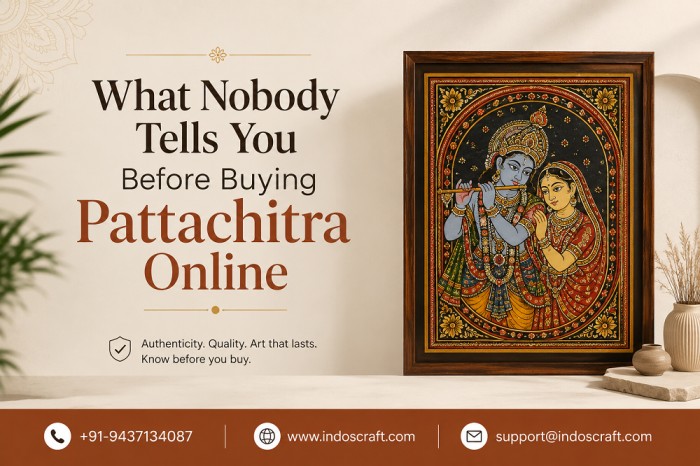
The Pattachitra art doesn’t start with a brush. It starts with cloth and tamarind paste, cotton fabric layered and dried until it turns stiff enough to hold pigment for centuries. That’s the part most buyers never think about when they’re scrolling for wall art.
Spending over a decade around this craft, mostly in and around Odisha’s pattachitra belt, and the one thing that still gets me is how little people know before they buy. They see a peacock or a Jagannath motif online and assume it’s printed. It isn’t. Every line is hand-drawn with a brush made from mouse or squirrel hair, tied to a bamboo stick by the artist himself. No two pieces come out identical, even when the theme repeats.
Where the Craft Actually Comes From
Raghurajpur village near Puri is where much of this tradition still lives, though plenty of skilled hands work quietly in Bhubaneswar and in smaller hamlets too. Natural colours come from stone, conch shell powder for white, lamp soot for black, and a particular yellow that’s genuinely made from hartal stone ground down for hours. Chemical paints exist now, sure, and they’re faster. But the older buyers, the collectors, can spot the difference in under five seconds. The natural pigment has a slight, uneven matte finish. Machine prints don’t.
Why Sourcing Matters More Than People Think
When people search to buy pattachitra online, they’re usually hunting for two things at once — authenticity and something that won’t fall apart in a year. Fair concern. A genuine piece, properly stored away from direct sunlight and dampness, holds its colour for generations. I’ve seen scroll paintings passed down in families that are eighty, ninety years old, and still readable.
Indoscraft sources these directly from artisan clusters instead of running its own workshop, which matters more than people realize. It means the person who painted your piece actually gets paid for it, not a middleman three layers up. The pieces move through a documented sourcing chain from Odisha’s craft villages, so what reaches your wall has a traceable origin rather than a vague “handmade in India” .
What to Check Before You Buy
Buying patachitra online without knowing what to check can go wrong fast. Look at the border work first. Traditional pattachitra art carry a decorative floral or geometric border running the full frame, painted freehand, not stamped. Then check the base — cotton canvas coated in tamarind gum should feel slightly textured, almost like fine sandpaper, never glossy or plastic-smooth. If a seller can’t tell you which village or artist cluster a piece came from, that’s usually a sign it’s mass-produced.
Palm leaf pattachitra is a separate category worth knowing too. Etched with a stylus rather than painted, using dried palm leaves stitched together, sometimes running six or seven feet long when unfolded. Slower to make. Harder to source in bulk, which is exactly why quantity from a single seller should raise questions rather than reassure you.
Patience Is Part of the Purchase
Shopping for pattachitra handicrafts online comes down to patience more than anything. Good pieces take weeks to finish, sometimes months for larger scrolls depicting the full Jagannath narrative or Krishna Leela scenes. If a listing promises next-day dispatch on a “hand-painted heirloom,” something’s off.
Let’s make it simple: this craft deserves buyers who ask questions before they add to the cart. The eight-hundred-year lineage tied to the Puri Jagannath temple tradition isn’t a marketing line; it’s documented history, and it’s worth treating the purchase that way.
FAQs
Is a pattachitra painted or printed?
Hand-painted, always, in genuine pieces. Printed reproductions exist but should be labeled as such.
How long does one painting take to make?
Depends on size and detail. Smaller pieces might take a week; large narrative scrolls can run into months.
What makes the colours last so long?
Natural, mineral, and stone-based pigments are bonded into the tamarind-primed cloth base. They don’t fade the way synthetic dyes do over decades.
Can I get a pattachitra with a custom theme?
Some artisans take custom orders, particularly for regional deities or specific mythological scenes, though turnaround times are longer than for stock pieces.
Does Indoscraft sell only paintings, or other Odisha crafts too?
Paintings are one part of it. Stone and metal decor from Odisha artisans falls under the same sourcing network.